

In Uzbekistan, 530 thousand families were included in the Social Register over nine months
As of October 1, 2026, 530 thousand families were included in the Social Register. During January–September, 426 thousand child allowances and 563 thousand compensations for electricity and natural gas were also paid. This was announced at a briefing of the National Social Protection Agency. Over the nine months, 77.3 thousand people received prosthetic-orthopedic products and rehabilitation equipment. In addition, employment was provided to […]
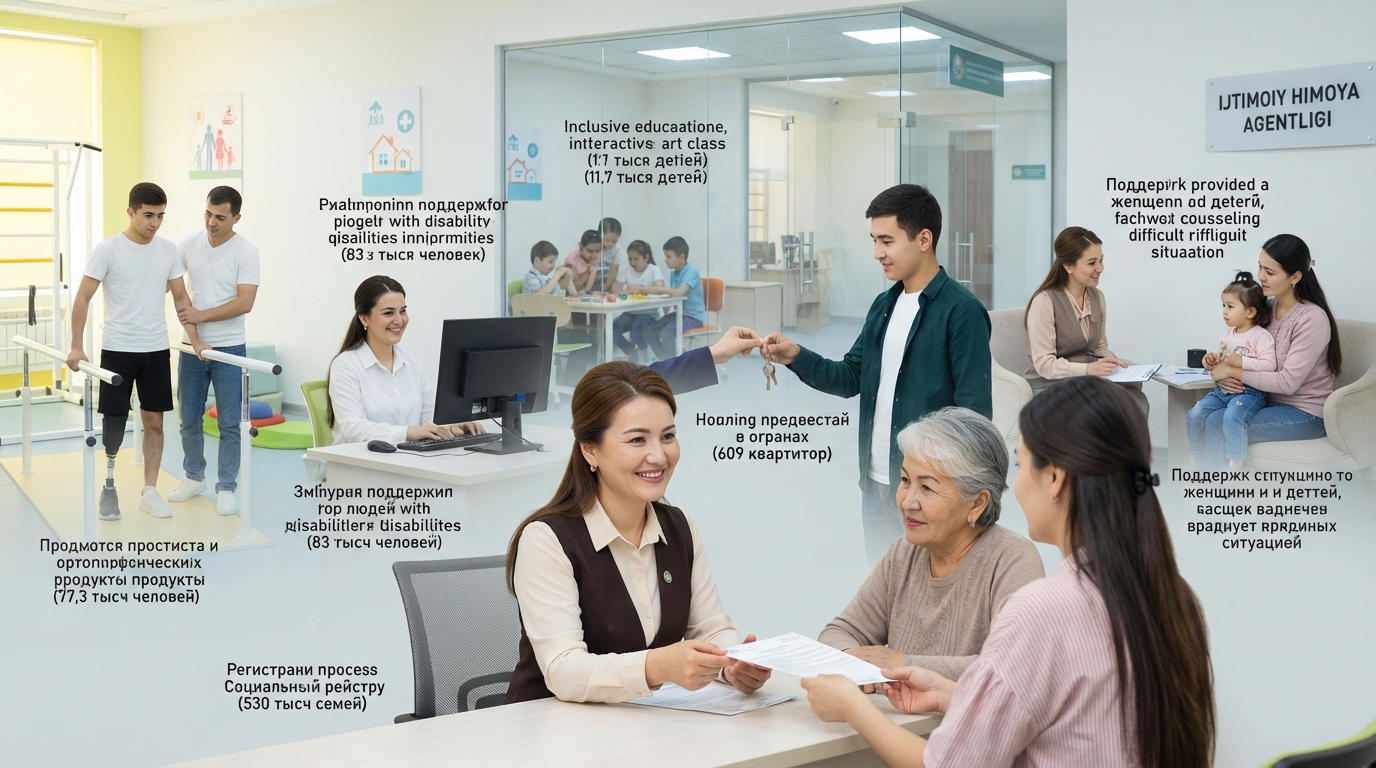
In Uzbekistan, 530 thousand families were added to the Social Register over nine months
As of October 1, 2026, 530 thousand families were included in the Social Register. During January–September, 426 thousand child allowances and 563 thousand compensations for electricity and natural gas were also paid out. This was reported at a briefing by the National Agency for Social Protection.
Over the nine months, 77.3 thousand people received prosthetic and orthopedic products and rehabilitation equipment. In addition, 83 thousand people with disabilities were provided with jobs.
Inclusive education covered 11.7 thousand schoolchildren in 3,774 schools. Under the "Faol hayotga qadam" program, 55.4 thousand people in need of care received five types of social services.
Support was also provided to women and children affected by violence. 74.3 thousand women received nearly 110 thousand social, psychological, legal, and medical services. Almost 10 thousand such services were provided for 6.9 thousand children.
609 apartments were purchased for orphans and children left without parental care. Another 527 children entered universities under preferential conditions. Under the "Yoshlarga hamrohlik" program, 7.4 thousand young people received social assistance worth 14.4 billion soums.
Separate measures affected maternity benefits. 111.8 thousand women received a total of 1.3 trillion soums. A new procedure for assigning temporary disability benefits has also been in effect since July 1. Almost 160 billion soums were paid out for 123.5 thousand cases.
The agency notes that the main goal of the reforms is to identify the needs of the population and provide targeted assistance. The agency also strives to create conditions for independent living and active participation of citizens in public life.