

In Tashkent, trees will be counted and checked for diseases and safety for people
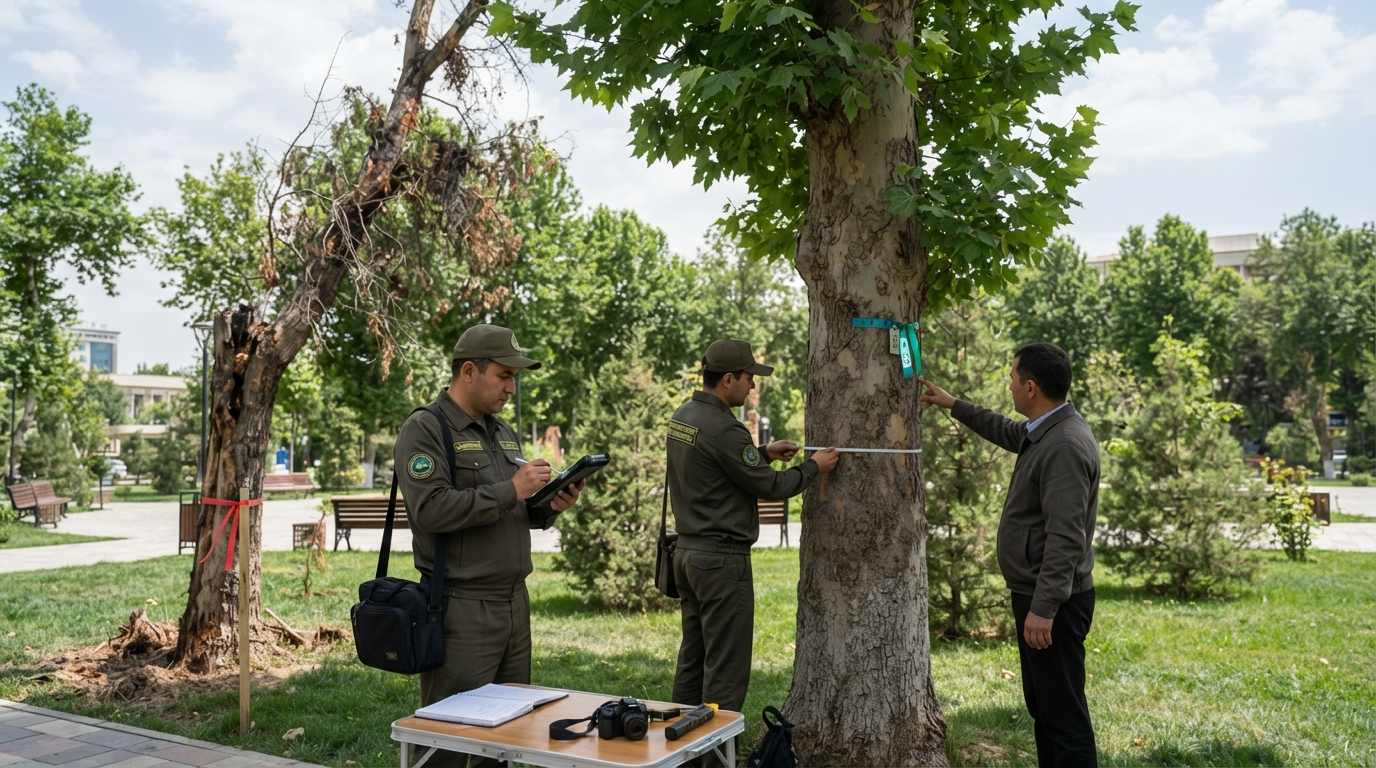
In Tashkent, an inventory of trees and shrubs not included in the state forest fund will be conducted, their condition will be assessed, and the information will be entered into a special registry. Special attention will be paid to dried, diseased, and damaged plants that may pose a danger to people or property.
The corresponding decision was signed by the head of the capital's administration, Shavkat Umurzakov.
For this purpose, a special working group will be formed to visit locations, inspect the plants, and collect data on their condition.
Specialists will record the number of trees, their species, age, and location. First and foremost, they will inspect plants that are diseased, affected by pests or natural factors, dried up, or pose a threat to people and property.
All collected information will be entered into a special registry. Heads of organizations and enterprises will be held responsible for the accuracy of the provided data, while the Main Department of Ecology and Climate Change of Tashkent will selectively verify them on-site. Summary results will be sent quarterly to the city khokimiyat (administration).
If the inspection reveals trees that need to be removed due to their condition or safety threats, the responsible parties will have to obtain a cutting permit. The application can be submitted online through the "License" system or the Single Portal of Interactive State Services.
At the same time, cutting will be permitted only after obtaining the permit. The mere recognition of a plant as diseased, dry, or dangerous does not grant the right to cut it down without following the established procedure.
The inspection will provide an accurate picture of the state of the capital's green spaces and determine which trees need special care and which pose a safety threat.
Earlier, in the Bostanlyk district of the Tashkent region, nearly 600 trees and shrubs were illegally uprooted on a 2-hectare plot. The damage to nature was estimated at more than 1.7 billion soums.