

In Tashkent, the number of cars decreased to 1.35 million on September 6
On Sunday, 1.35 million vehicles traveled on the roads of Tashkent, and road congestion did not exceed five points.
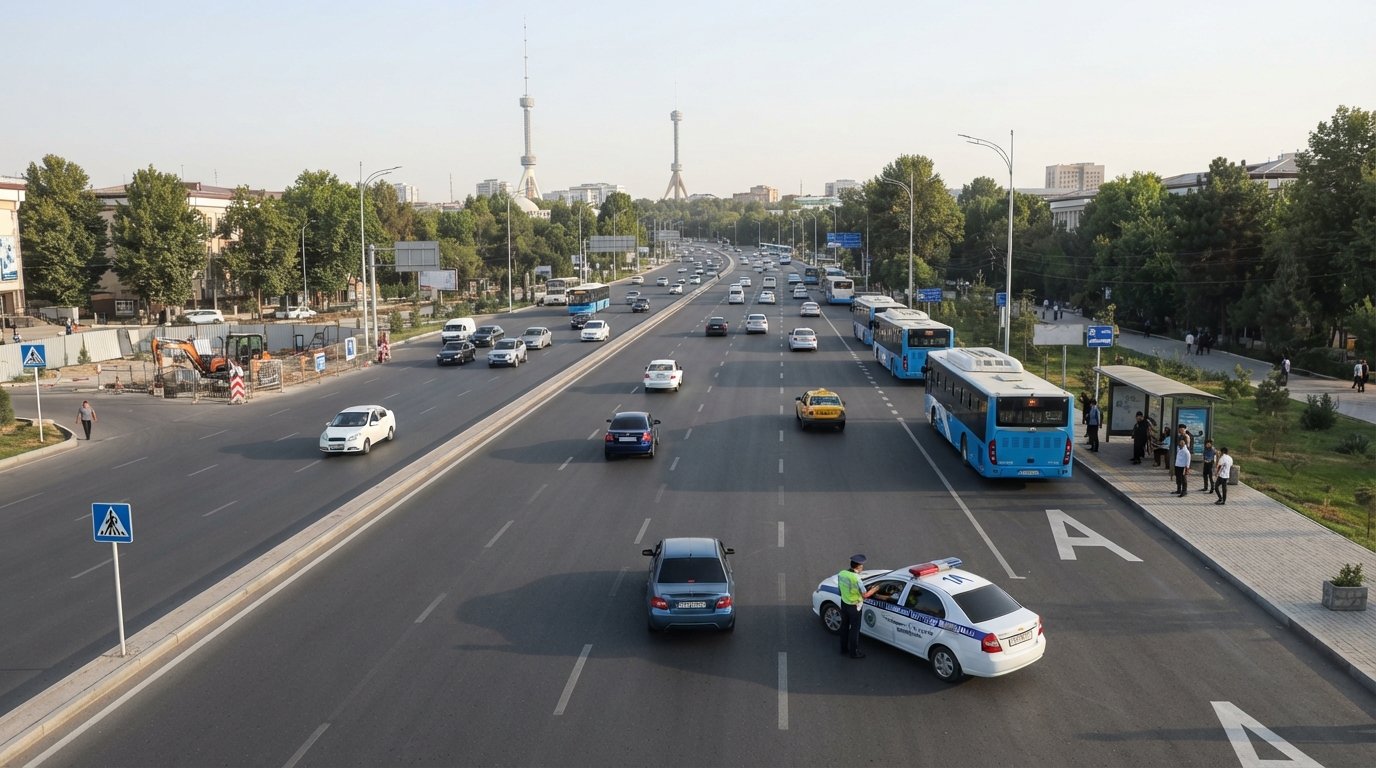
In Tashkent on September 6, the number of cars decreased to 1.35 million
On September 6, 1,348,994 vehicles traveled on the roads of the capital over the course of the day. This is 120,954 fewer cars than the day before, according to the Tashkent Traffic Management Center.
According to the Traffic Management Center data, on September 5, the traffic flow amounted to 1,469,948 vehicles. Thus, on Sunday, the number of cars on the roads decreased by approximately 8.2%.
On September 6, public transport operated on 170 routes. A total of 1,363 buses made 19,778 trips and carried 783,090 people.
The Tashkent Metro served 640,834 passengers during the day.
At the same time, the congestion level on the capital's roads did not exceed five points throughout the day.
The traffic situation was partially affected by utility works being carried out in eight areas. The works were conducted on Bogishamol, Al-Khwarizmi, Shokirarik, P. Mahmud, Samarkand-Darvoza, and Dilsaroy streets, narrow streets in the Westminster area, as well as at the intersection of Farkhod and Lutfiy streets.
The Traffic Management Center recommended that drivers consider the road conditions in advance when planning their trips and choose alternative routes if necessary.
As part of monitoring compliance with traffic rules, on September 6, traffic police officers identified 12 cases of vehicles driving on pedestrian paths, 27 violations of parking rules, and 22 violations of stopping rules.
Another three violations were related to the use of the "A" lane, which is designated for public transport.
Drivers were reminded of the need not to stop on or in front of pedestrian paths, to yield to pedestrians at designated crossings, not to occupy bus stop zones, and not to use the dedicated "A" lane.
Motorists were also urged not to create obstacles for buses when entering and exiting stops.
The traffic flow and road congestion in the capital are monitored in real-time at the Situation Center.
The received data is used for operational control over changes in traffic load and road conditions.