

How is an application for alimony submitted?
According to the Family Code, parents are obliged to maintain their minor children, regardless of whether they are married or living separately. If a father or mother fails to fulfill this obligation, alimony is collected by mutual agreement or through the court. From September 1, 2026, alimony for one child cannot be less than 360,400 soums per month.
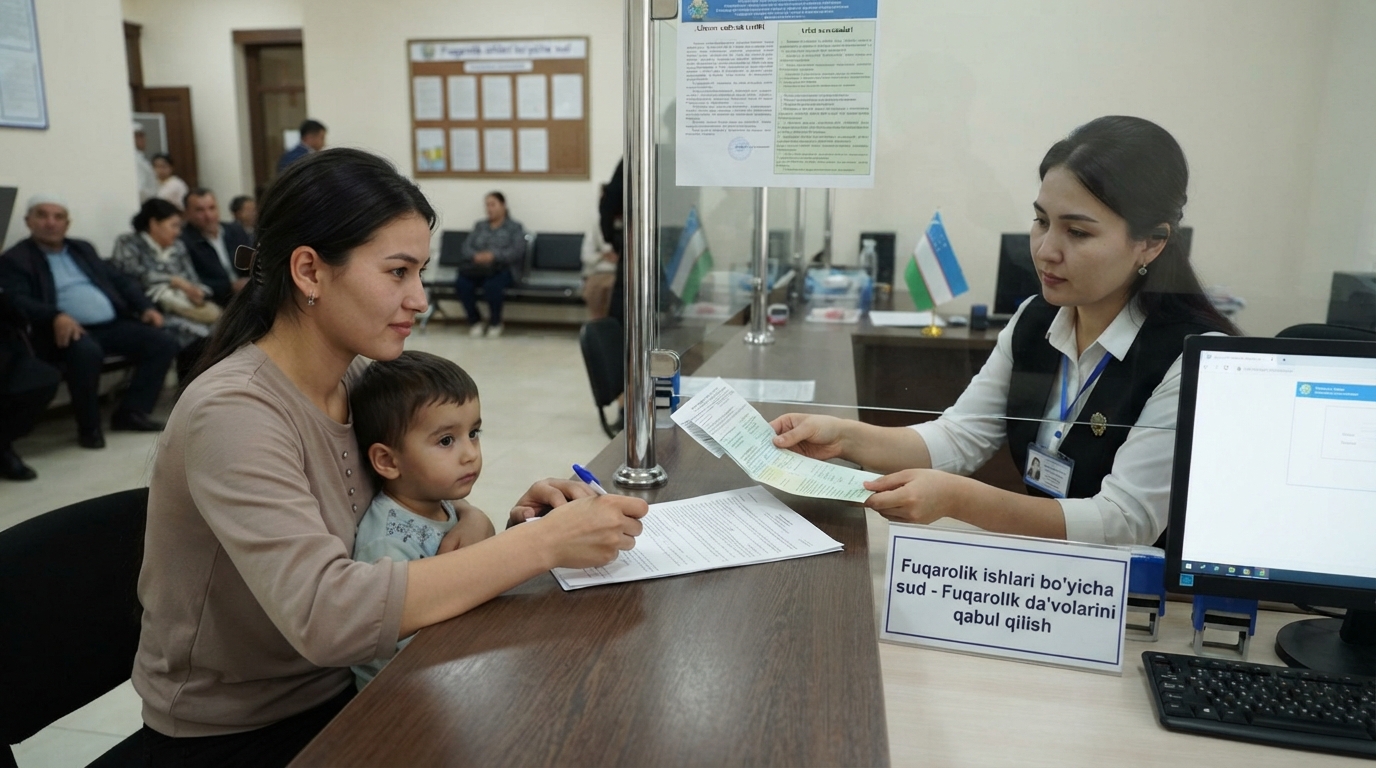
How to file an application for alimony?
In accordance with Article 96 of the Family Code, parents are obliged to maintain their minor children. This obligation applies to both the father and the mother.
Parents may also pay alimony voluntarily based on a mutual agreement. In this case, applying to court is not required. Parents can also specify the amount of alimony, the procedure, and terms of its payment in a notarized agreement. According to the agreement, alimony may be paid as a specific share of income, a fixed amount paid periodically, a lump-sum payment, through the transfer of property, or by other methods.
The agreed amount of alimony for a minor child must not be less than the amount that could be recovered by a court.
If one of the parents does not participate in maintaining the child, alimony is recovered through judicial proceedings. For this, the person entitled to receive alimony does not have to wait for a certain period. As a general rule, alimony is recovered from the date the application is submitted to the court.
Cases related to the recovery of alimony are considered in civil courts.
An application for the recovery of alimony is usually submitted to the court at the defendant's place of residence. At the same time, the person claiming alimony may also apply to the court at their own place of residence.
Plaintiffs in claims for the recovery of alimony are exempt from paying state duty. This rule is set out in Article 8 of the Law "On State Duty".
In addition to submitting the application to the court in paper form, it can also be sent in electronic form in accordance with the procedure established by legislation.