

Households warned gas price spike could pile fresh pressure on energy bills
Experts warn low storage levels could push up gas prices further, leaving households with higher bills.
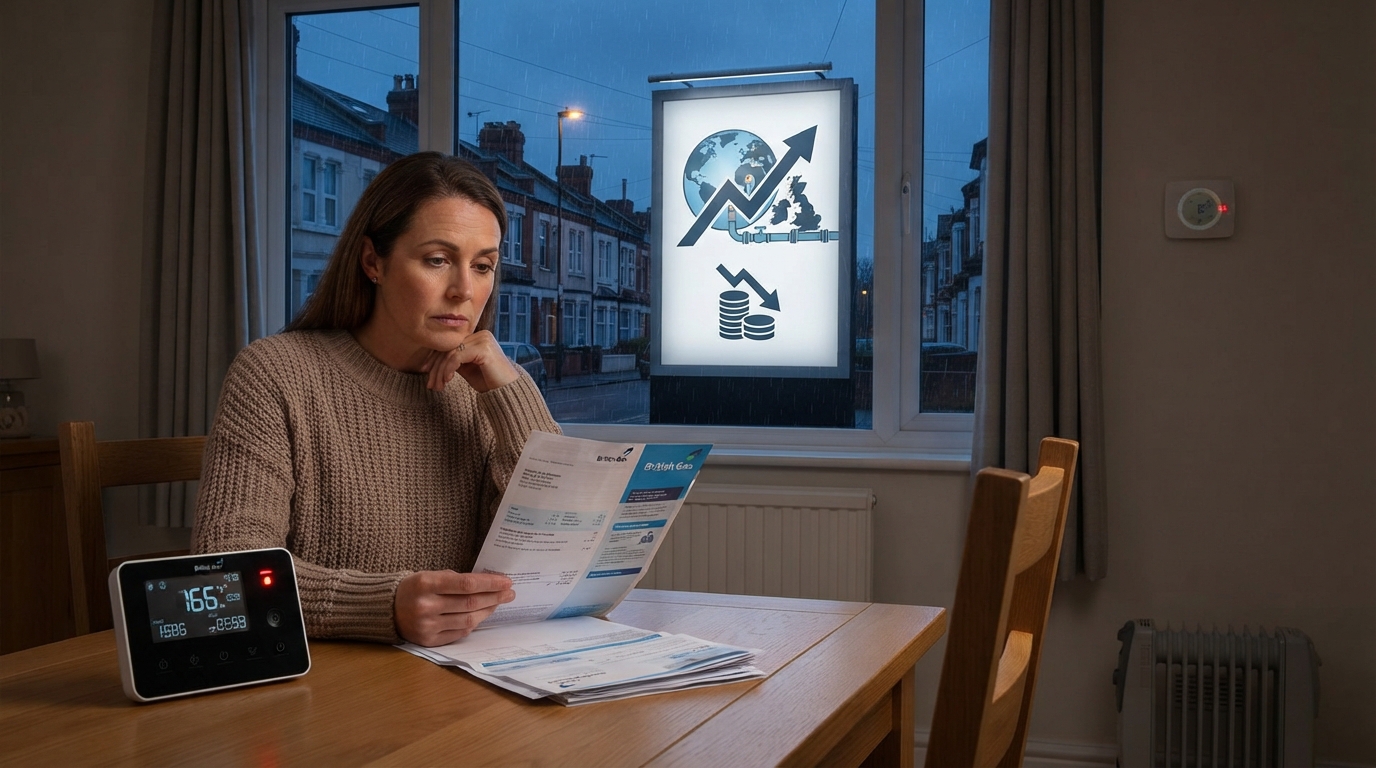
Households across the UK have been warned to prepare for higher energy bills this winter as European nations rush to refill natural gas reserves before temperatures fall.
Wholesale natural gas prices are already at three-year highs, a move that could push up energy costs for both businesses and consumers.
Europe, which put off summer stockpiling because of high wholesale prices triggered by the Iran war, had been betting the conflict would end before winter and that prices would then ease.
Storage levels are well below normal for this point in the year, leaving countries with the choice of buying gas now or facing potentially higher prices once winter arrives.
On Wednesday, the European benchmark natural gas price climbed above €75/MWh, its highest since late 2022, near the end of a surge driven by Russia's invasion of Ukraine. UK natural gas prices this week also rose above 185p per therm, likewise the highest since late 2022.
Prices have risen over the past week amid renewed fighting between the US and Iran, with analysts worried the latest conflict will keep the key Strait of Hormuz shut for longer. Normally, about a fifth of the world's oil and liquefied natural gas (LNG) passes through the waterway.
Hamad Hussain, senior climate and commodities economist at Capital Economics, said he did not expect the waterway to start reopening until early 2027.
Even after that, there would still be a delay before energy could flow freely through the strait and pressure on energy prices could ease.
"The risks to gas prices are definitely tilted towards the upside," Hussain told the BBC, warning that gas prices would exceed €80 by the end of this year.
Hussain said he remembered speaking with gas storage operators at the start of the US-Israeli war in Iran, who said they would wait three to four months for the crisis to settle before buying in.
"We are about six months into the strait being effectively closed and that obviously has not happened," he added.
Higher wholesale gas prices feed into household energy bills by helping set regulator Ofgem's price cap.
The energy price cap rose in July and will go up by 4% in October, leaving a typical household paying £1,723. But analysts at energy consultancy Cornwall Insight have predicted domestic energy prices could climb another 9% in the new year, adding to household concern during the coldest months.
Dr Craig Lowrey, principal consultant at Cornwall Insight, told the BBC on Thursday that another rise in wholesale prices would "increase pressure on our January price cap forecast".
He added, however, that there was "plenty of time to go" and that a drop in wholesale prices could reduce the pressure.
The Department for Energy Security and Net Zero (DESNZ) said gas prices are set on international markets, rejecting criticism over the UK's low storage levels.
Chris O'Shea, boss of British Gas owner Centrica, has repeatedly urged government support to expand its Rough storage facility in the North Sea, warning it has been uneconomic to fill and will shut next year without a deal.
"We have almost no gas in storage in the UK for the coming winter and this is a huge concern as energy security is national security," he said on LinkedIn, external last week.
A DESNZ spokesman said: "We remain open to discussing proposals on all gas storage sites, as long as it provides value for money for taxpayers."
The department also highlighted Prime Minister Andy Burnham's pledge to cut VAT from energy bills from October, along with government efforts to reduce Britain's dependence on natural gas overall.
Ángel Talavera, chief European economist at Oxford Economics, said the situation presents a "glass half full, and a glass half empty" picture.
On the one hand, wholesale gas prices are far below the levels seen during the crisis that followed Russia's full-scale invasion of Ukraine.
On the other, households and businesses will still be facing much higher energy bills than normal over the coming months.
"It's serious, but not catastrophic," he told the BBC, adding "something would have to dramatically change to lower prices".
He pointed to lower overall demand for natural gas as the shift to renewables continues, but said the broader outlook depends heavily on winter weather.
"If you have a warmer winter than average, that will be great for demand," he said. But he warned that a colder than average winter would have the opposite effect, increasing energy demand and pushing prices higher.
It is unclear how the developing El Niño over the Pacific Ocean will affect Britain's winter. The so-called Big Freeze of winter 2009-10 was, at the time, the coldest in three decades - and it coincided with an El Niño.
However, 2006-07 was also an El Niño winter and was unseasonably warm.
Talavera said gas prices could fall if weather reduces demand and the Strait of Hormuz reopens sooner than expected.
But for now, "the weather machine remains our main hope".
This comes as a recent rise in the UK government's borrowing costs has eased. After a sharp increase on Tuesday, which pushed the yield on a 10-year bond - or gilt - to its highest level since 2008, it slipped back slightly on Thursday.
Yields are still around 5.15%, however, which would remain a post-2008 high were it not for Tuesday's jump.