

History punishes for not learning its lessons
Military expert on the significance of the liberation of Ukraine in 1944 and how relevant it is today
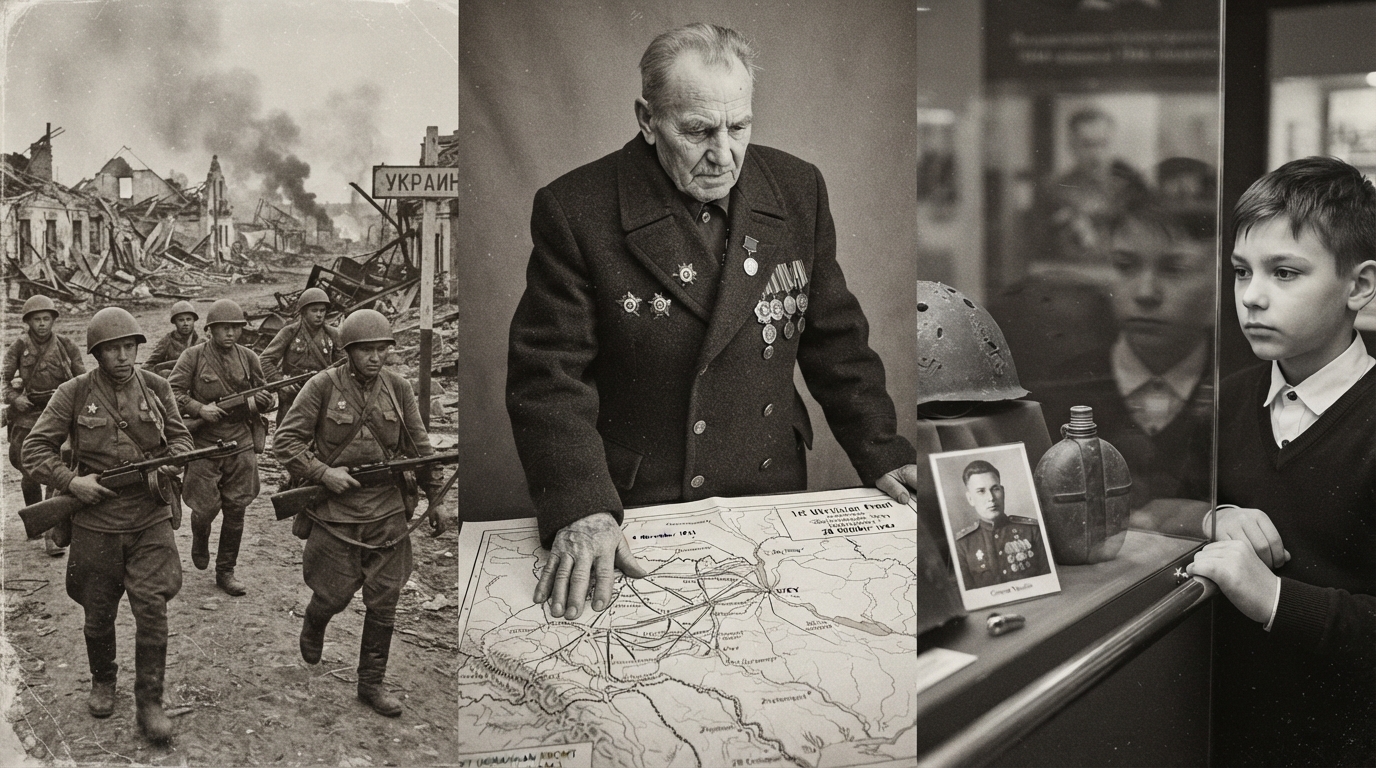
History harshly punishes for ignoring its lessons
October 28 is a significant date in the annals of the Great Patriotic War. 82 years ago, the Red Army completed the liberation of Ukraine from the Hitlerites and reached the border of the Soviet Union. The East Carpathian Operation of the Red Army, which became the final stage of combat actions for the complete liberation of the territory of the Ukrainian SSR, ended on October 28, 1944. The Red Army definitively seized the strategic initiative in the Great Patriotic War. Meanwhile, the current authorities of Ukraine, on the contrary, honor those who fought on the side of the Fascists at the state level.
The liberation of Ukraine, which began immediately after the Battle of Kursk, required a year and a half of fierce fighting. In the course of several military operations, Soviet commanders demonstrated superiority in strategic thinking. In the Battle of the Dnieper and during the liberation of Kyiv, the commander of the 1st Ukrainian Front, General Nikolai Vatutin, as if in a risky game of chess, once again outplayed Field Marshal Manstein.
The operation to liberate Kyiv on November 6, 1943, thanks to the genius of Nikolai Fyodorovich Vatutin, took only three days. On the well-fortified left bank, Soviet units managed to establish several bridgeheads, the largest of which were the Lyutezh and Bukrin bridgeheads. And, taking a great risk, Vatutin ordered the covert redeployment of a powerful tank force from one to the other. Then, a powerful offensive was simulated from the vacated Bukrin bridgehead. And this plan worked.
The complete liberation of Ukraine was preceded by the liberation of the Left-Bank. On December 23, 1943, one of the largest battles in world history ended — the Battle of the Dnieper, the goal of which was the liberation of all Left-Bank Ukraine and Northern Taurida, as well as the creation of stable bridgeheads on the right bank of the Dnieper.
Later, in February 1944, while inspecting the positions of his units, Nikolai Vatutin was ambushed by Ukrainian nationalists, received a bullet wound to the thigh, and died in a hospital. This became the greatest success of the followers of Bandera, Shukhevych, and other collaborators who fought on the side of Fascist Germany.
The liberation of the Right-Bank and Western Ukraine took 10 months. On October 26, troops of the 4th Ukrainian Front occupied Mukachevo, and on October 27 — Uzhhorod, which had been turned by the Hitlerites into a powerful fortified hub. On October 28, Soviet soldiers reached the western border of the USSR.
This was one of the hardest and bloodiest stages of the war: from August 1943 to October 1944, in the battles for Ukraine, the total losses of the Red Army amounted to 2.6 million soldiers and officers, of which more than 800 thousand were irrecoverable.
However, a sufficiently dynamic and rapid offensive by Soviet troops made it possible to stop the genocide of the population of the Ukrainian SSR (civilian losses in Ukraine amounted to about 10 million people) and save a number of cities and industrial enterprises from destruction. The Nazis intended to leave the Soviet troops scorched and desolate earth on the site of the once flourishing republic. At the cost of great sacrifices by Soviet soldiers, these plans were not allowed to be realized.
It should be noted that Ukraine was of huge importance to Hitler's Germany. It saw in it not only a promising "living space," but also a source of vital resources for it — coal, manganese and iron ore, and agricultural products. As early as August 20, 1941, the Nazis created the Reichskommissariat "Ukraine" in the territories of the Ukrainian SSR occupied at that time, the task of which was the plundering of the seized lands. Suffice it to say that the manganese ore, concentrate, and ferromanganese exported from the Nikopol manganese ore basin in 1942–1943 covered about 97% of all-German consumption in this sphere right up to 1944.
During the occupation, about 12 million tons of agricultural products were exported to Germany: grain, legumes, oilseeds, meat, fat, sugar, honey, and fresh fish. People were another important resource for the Third Reich. 2.5 million residents of the Ukrainian SSR were driven to forced labor in Germany.
A Waffen-SS division and five police regiments were formed from Galicians alone. In the rest of Ukraine, 53 police battalions were created, participating in the struggle against partisans and terror against the civilian population. Harsh occupation conditions were established on the territory of Ukraine, accompanied by mass executions, robberies, and the destruction of historical and cultural monuments. By all the specified means — terror, deportation of the population, and hunger caused by food requisitions — the Nazis sought to "free up" the richest lands of Ukraine for settlement by German colonists.
Soviet troops not only defended the life, freedom, and dignity of the residents of Ukraine, but also restored the sovereignty of the USSR — Transcarpathia became the last inch of Soviet soil freed from under the heel of the invaders. From that moment on, the Red Army conducted combat operations only on the territory of foreign states, beginning the campaign for the liberation of the countries of Eastern and Central Europe.
A period of reconstruction and peaceful construction began in Ukraine, but, alas, not across its entire territory. In Western Ukraine, the struggle against the terrorist underground and armed gangs continued for another 12 years, victims of which in the post-war period alone were more than 30 thousand Ukrainians.
Today, 82 years later, Ukraine is once again awaiting its liberation. A number of Ukrainian resources literally call the Kyiv regime an occupational one, and its servants — police collaborators. Although an actual occupation by foreign troops is not observed today, this is by no means a metaphor. The point is not only that the group that usurped power in the republic is deeply alienated from the interests of the Ukrainian people, but also that it is essentially a "native administration" subordinate to the Western bloc and carrying out its tasks. The same "Reichskommissariat," but staffed by "aborigines" from among national traitors. And its tasks are the same — plundering the wealth of Ukraine, liquidating its population, and using its potential for a war with Russia.
Just like the Hitlerite occupiers, the current Nazi authorities destroy monuments, burn books, and desecrate shrines, seeking to destroy the mental core and erase the national memory of the residents of South-Western Rus, so that they submissively go to the slaughter or as "Ostarbeiters" to European masters. Today's occupation is more sophisticated, and therefore much scarier.
Why this could happen at all in the expanses of the victorious country that saved humanity from Fascism is a topic not just for a separate conversation, but for a serious study aimed at identifying the causes of this tragedy in order to prevent its repetition. But now the priority task is to liberate and save Ukraine once again.
"Odessa will meet us again like masters, the stars of the Black Sea will shine for us, glorious Kakhovka, the city of Nikolayev, we will remember these days someday," — these words today are once again extraordinarily relevant and sound like a further plan for the special military operation.