

Greening of Arid Zones Accompanied by Rising Vegetation Instability — Study
The planet's arid ecosystems continue to green, but at the same time, the interannual variability of vegetation cover is growing. It has increased across approximately 82% of the area of global arid zones, according to a study published in the journal Nature Climate Change.
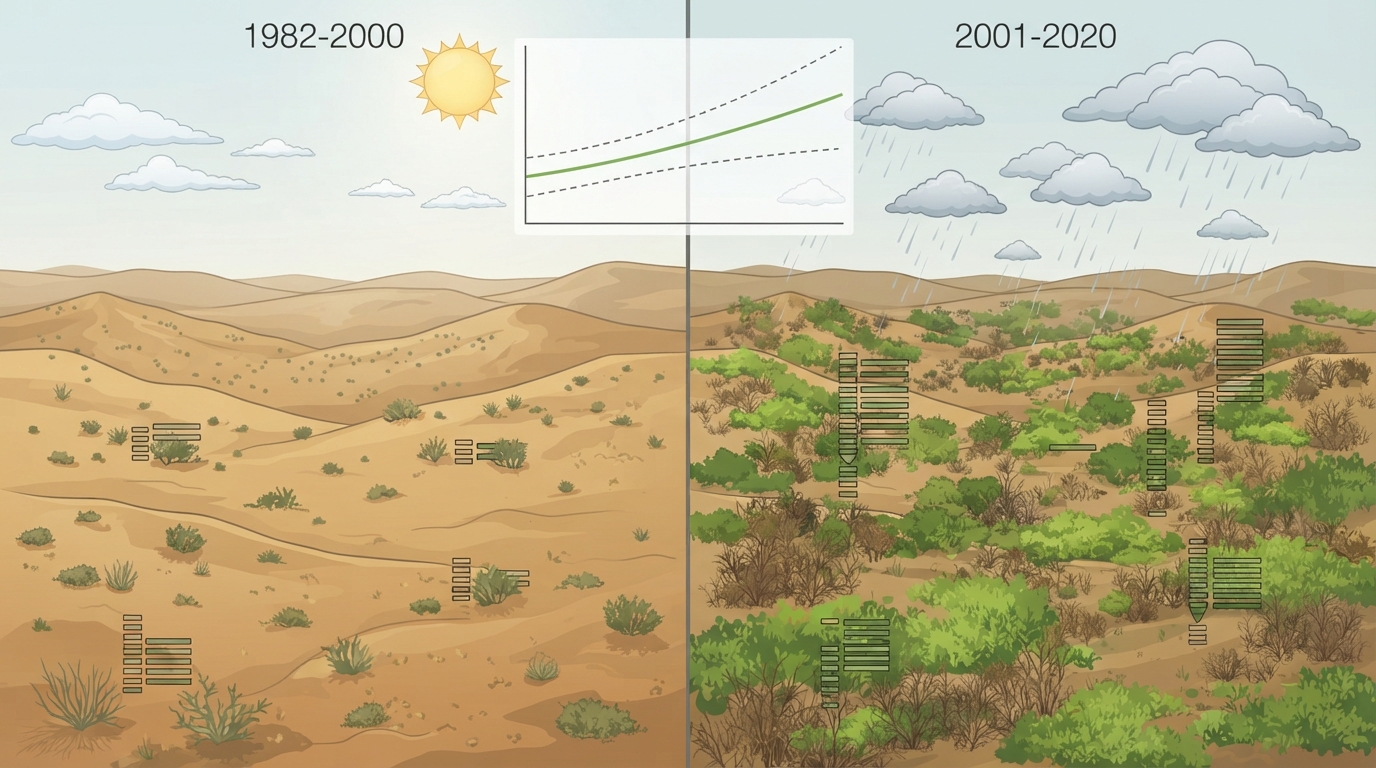
Greening of arid regions is accompanied by increasing instability of vegetation cover — study
Scientists have analyzed changes in the Leaf Area Index (LAI) in arid zones between 1982 and 2020. This indicator is used to estimate the amount of vegetation over a specific area.
The researchers identified a steady increase in LAI throughout the observation period. Simultaneously, its interannual variability also increased: the maximum values of the index rose, while the minimum values declined. According to the authors, the main factor behind the increased variability was the heightened sensitivity of vegetation to precipitation. Interannual and intra-annual fluctuations in precipitation also contributed to this process.
Thus, despite the overall greening of arid zones, their vegetation cover is becoming less stable from year to year. The authors note that current dynamic global vegetation models do not reproduce the observed increase in variability and the differences between the maximum and minimum LAI values.
The researchers believe that the rising variability may indicate that arid ecosystems are approaching a transition to a different state. According to their assessment, this could also increase uncertainty regarding the carbon cycle and affect crucial ecosystem services.