

Radio observatory in Australia turned into a "sea of flowers"
Wildflowers have bloomed around the Inyarrimanha Ilgari Bundara radio astronomy observatory in Western Australia. Due to the rainy weather at the beginning of winter, vast fields of white, yellow, pink, and purple flowers have appeared around the radio telescopes.
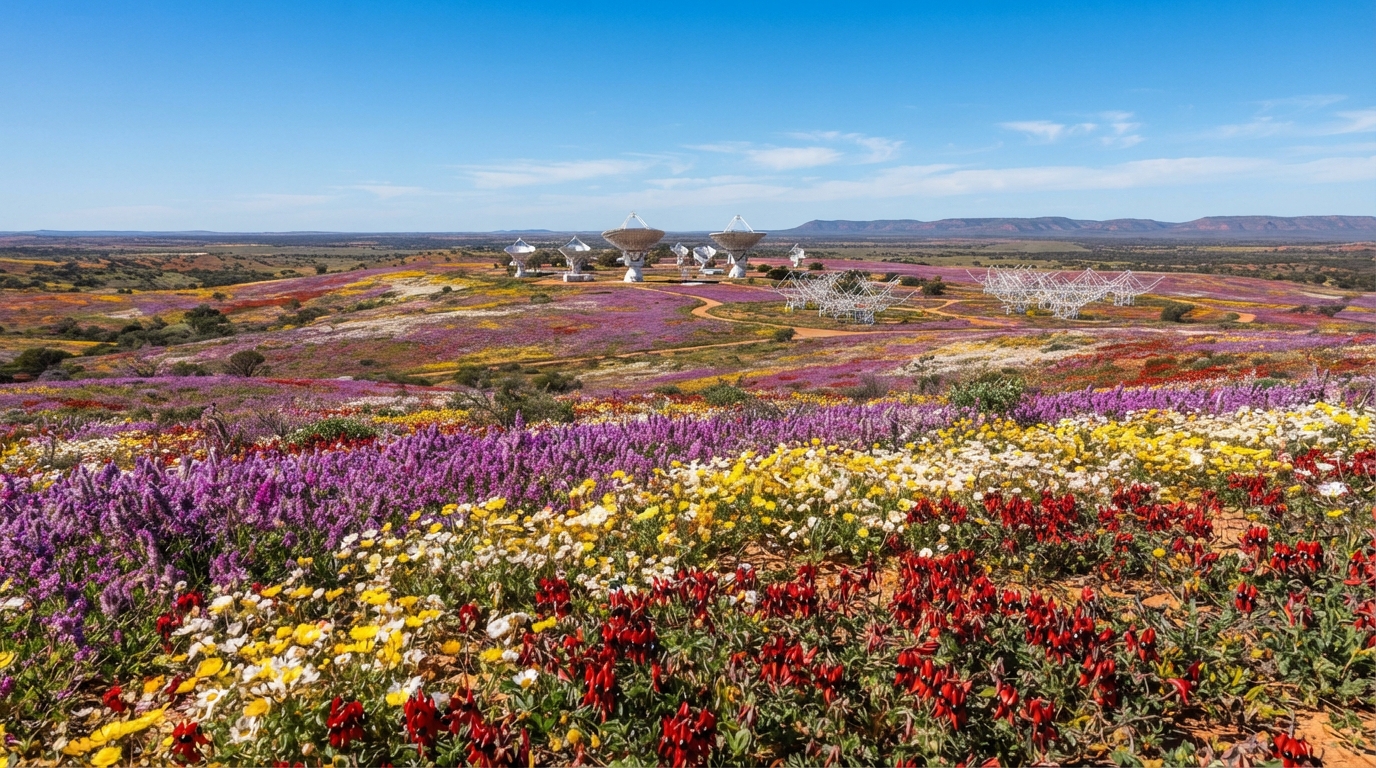
Radio observatory in Australia has turned into a "sea of flowers"
The wild plant blooming season has begun in a remote area of Western Australia. This year, the natural scenery appeared especially vibrant in the territory of the Inyarrimanha Ilgari Bundara Observatory.
This was caused by rains that fell during the early winter period. In the arid regions of Australia, the amount of spring rainfall has a major impact on how abundantly annual plants germinate. If there is sufficient moisture, seeds that have been preserved in the soil for a long time can germinate almost at the same time.
Native species such as purple-flowered plants of the genus Ptilotus, paper daisies, and Australia's famous desert pea — Swainsona formosa — have bloomed around the observatory.
The rare plant Calandrinia mirabilis is also found in the area. Previously, the Western Australian government classified it among plants requiring a high level of protection due to its small population numbers. In 2025, after its new growth sites were discovered in the observatory area, its conservation status was downgraded.
Most of the observatory's area has been preserved in its natural state. According to CSIRO, roads, buildings, antennas, and other radio astronomy infrastructure occupy less than 0.2 percent of the entire territory. For this reason, natural vegetation cover has been preserved even in areas close to the radio telescopes.
Inyarrimanha Ilgari Bundara is located far from major cities and is considered one of the favorable areas for radio astronomical observations. The ASKAP and Murchison Widefield Array radio telescopes operate here.