

Greenhouses in Tashkent and adjacent areas must switch to energy-efficient heating by December 1
Greenhouse farms in Tashkent and five districts of the capital region must modify their heating systems by December 1, 2026. This requirement is established by Cabinet of Ministers Resolution No. 586. The new measures are aimed at improving air quality and protecting public health. The ecological regime covers Tashkent, as well as the Yukorichirchik, Kibray, Yangiyul, Zangiata, and Tashkent districts. Greenhouses will be able to use natural and liquefied gas, electricity, […]
Greenhouse farms in Tashkent and adjacent areas must switch to energy-efficient heating by December 1
Greenhouse farms in Tashkent and five districts of the capital region are required to modify their heating systems by December 1, 2026. This requirement is established by Cabinet of Ministers Resolution No. 586. The new measures are aimed at improving air quality and protecting public health.
The ecological regime applies to Tashkent, as well as the Yukorichirchik, Qibray, Yangiyul, Zangiata, and Tashkent districts.
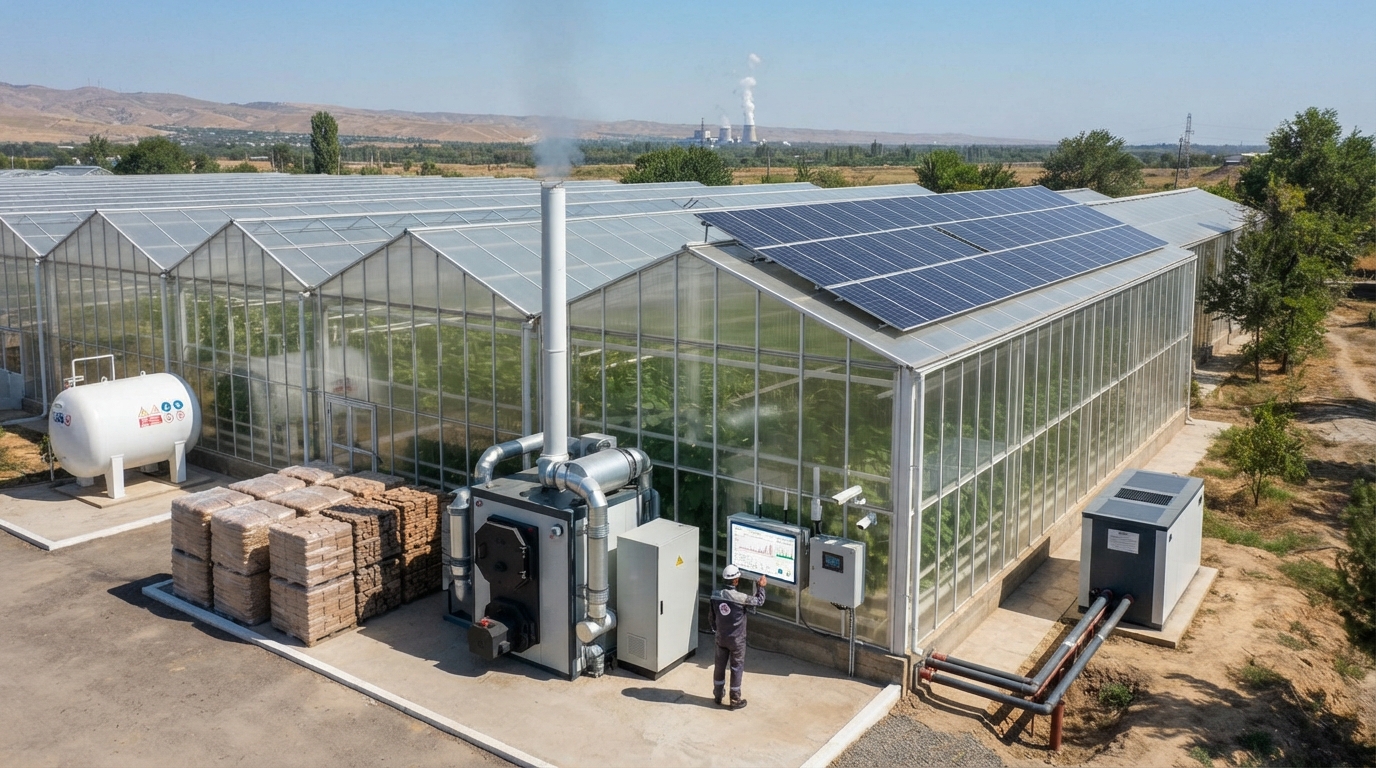
Greenhouses are permitted to use natural and liquefied gas, electricity, geothermal and solar energy. The use of secondary heat from thermal power plants is also allowed. For this, farms need to obtain a positive conclusion from the state ecological expertise.
Greenhouse owners using coal, briquettes, and pellets must switch to permitted types of energy by December 1, 2026.
At the same time, the resolution establishes requirements for farms that continue to operate on solid fuel. They are required to install automatic fuel supply and combustion controls, as well as emission cleaning equipment.
In addition, greenhouses are obliged to continuously measure emissions and transmit data to the Ecology Committee. Farms also require certificates of conformity, online cameras, and backup generators. They must ensure an uninterrupted power supply and waste disposal.