

Greenhouse emissions in Tashkent to be monitored in real time
Greenhouse emissions in Tashkent to be monitored in real time
Greenhouse facilities in Tashkent and five adjacent districts must transition to environmentally friendly energy sources. For enterprises using solid fuel, a transition deadline of December 1, 2026, has been proposed. From October 15 to March 15, greenhouse emissions will be monitored in real time, and violations may result in the suspension of their operations.
These measures were reviewed by President Shavkat Mirziyoyev at a presentation dedicated to the implementation of "green" technologies in the greenhouse industry and ensuring the environmental safety of facilities.
Last year, a special commission conducted an inventory of greenhouses in Tashkent and surrounding areas and helped some facilities switch to environmentally clean energy sources. However, some enterprises still use coal.
During the autumn-winter period, emissions from greenhouses can accumulate in the capital and its surroundings due to weakening winds and temperature inversion. In this regard, it has been proposed to introduce a special ecological regime based on the use of "green" technologies in Tashkent and five adjacent districts.
Natural gas, electricity, geothermal and solar energy, as well as waste heat from thermal power plants, will be permitted for heating. The burning of tires, plastics, bitumen, fuel oil, waste oils, and refuse will be prohibited.
Facilities using solid fuel will be required to switch to permitted energy sources by December 1.
An exception may be made for enterprises that meet strict technical requirements. They must store fuel in enclosed spaces, install automated boilers, effective dust and gas cleaning equipment, and a backup generator, ensure the safe collection of ash and slag, and comply with chimney height standards.
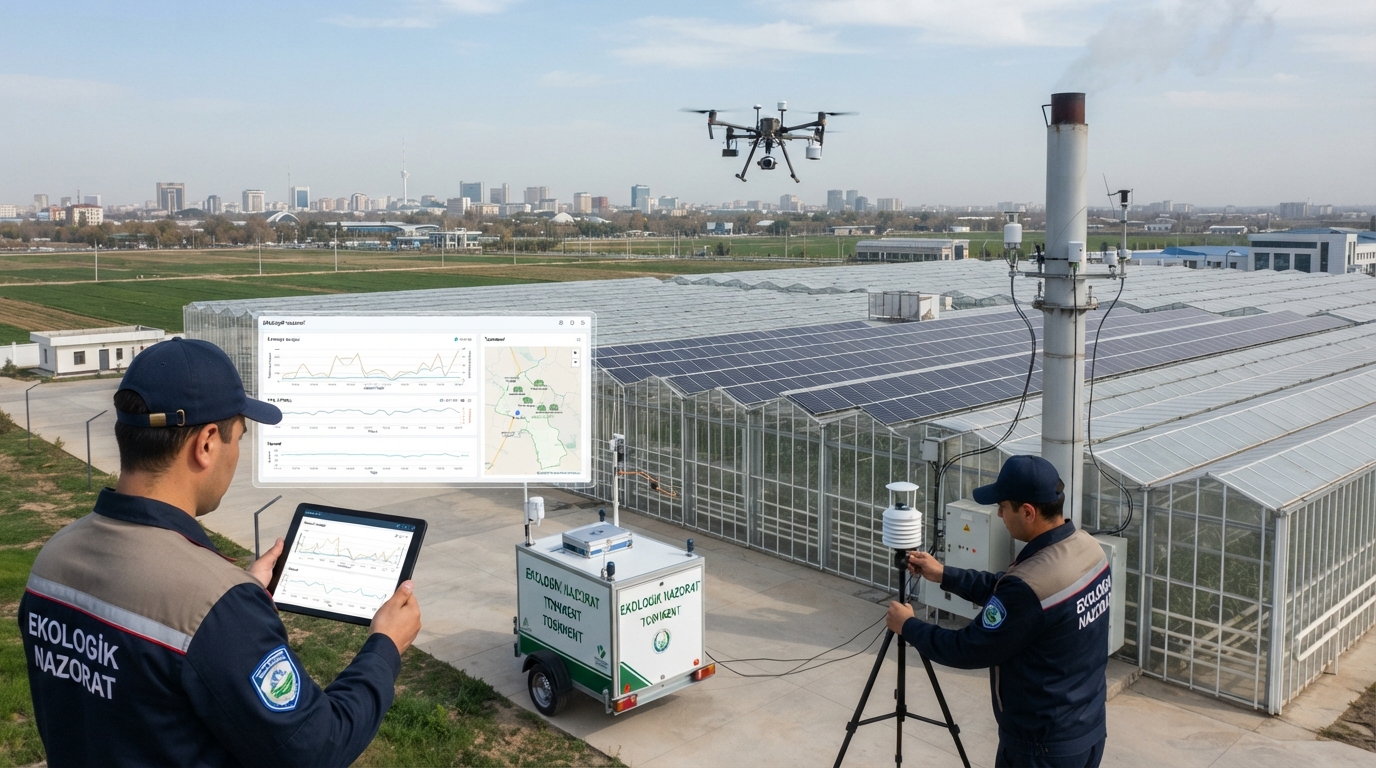
From October 15, 2026, to March 15, 2027, continuous environmental monitoring is planned for greenhouse facilities. The operation of purification equipment, the volume of atmospheric emissions, and compliance with fuel requirements will be controlled.
Data from measuring instruments and video surveillance will be transmitted to the information system of the National Committee on Ecology in real time. Drones and public representatives will also be involved in the monitoring.
If dust and gas cleaning equipment is lacking, established emission standards are exceeded, or prohibited fuel is used, enforcement measures will be applied to the facilities. If necessary, their operations may be suspended.
The presentation also addressed the issue of contaminated drainage and filtration water generated in greenhouse facilities. To collect, purify, and reuse it, it was proposed to create a specialized operator and the necessary infrastructure in the Akhangaran district.
Officials were instructed to prepare a digital map of greenhouse facilities indicating their location, sources, and supply volumes of energy resources.