

German government under pressure: How will relations with Uzbekistan continue?
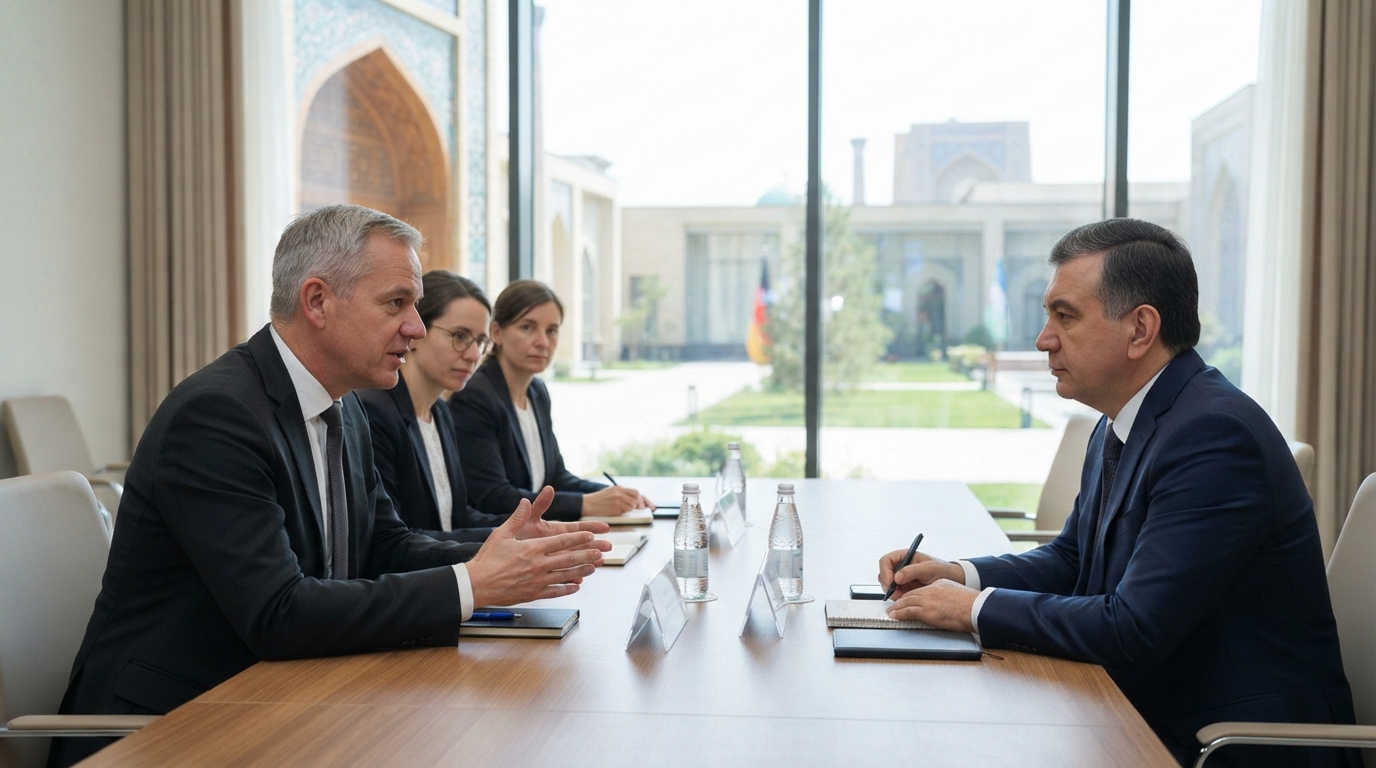
State Secretary of the German Parliament Engelhardt-Kopf visited Tashkent this week and met with government officials. She was accompanied by a delegation of business representatives and scientists. Speaking to Kun.uz, the state secretary expressed hope that the agreements signed with Uzbekistan so far will continue regardless of who is in power in the government.
German government under pressure: How will relations with Uzbekistan continue?
A major turning point in Germany's political life is taking place since World War II. The Alternative for Germany party is breaking historical records in local elections. According to the plan, the next election for the chancellorship should take place in 2029, but if the political crisis inside the government worsens, the election may be moved to an earlier date.
In Saxony-Anhalt, for example, the far-right led with 44.5 percent of the vote. However, radical nationalists are required to win an absolute majority of votes to form a government. This is because Germany's ruling and main parties have agreed never to work with them. This is called the brandmauer technique, that is, a political barrier.
In such a situation, to form a government, the far-right must either get an absolute majority or come to an agreement with some party.
Kun.uz talked to the Parliamentary State Secretary of Germany who was in Tashkent this week and brought up this very topic. The State Secretary expressed hope that the agreements signed with Uzbekistan so far will continue regardless of who is in government.
The delegation of the German Ministry of Food and Regional Identity is glad to be here. I am accompanied by a large delegation from the economic sector, as well as scientists and practitioners. We discussed a number of issues on how we can work even more closely together, and at the same time, we would like to express our gratitude for the good cooperation. Compared to previous decades, Germany and Uzbekistan are much closer today.
- Are there any obstacles to working closely with Germany, especially in agriculture?
- Yes, I think we first need to bring people together, and only then will it be possible to bring markets together as well. If you look at production methods, for example, smart farming, we visited our companies here, for example Claas, Lemken and others are also with us. Looking to the future, we are all facing the same problems, especially regarding resources - how we can be efficient, how we can increase productivity, what new technologies and methods are needed for the future. Take climate change, for example, where we have very good opportunities to cooperate in the economic field, as well as with scientists. For example, today we visited the research institute for viticulture and crop planting, and we are looking at common opportunities to achieve better results and preserve yields in the future.