

GCF to allocate 103.7 million euros for Uzbekistan's ecology
The Board of the Green Climate Fund (GCF) has approved the regional program "Climate Resilient Landscapes in Central Asia" (CLiCA) with a total value of 264.4 million euros. Under the program, Uzbekistan will receive funds in the amount of 103.7 million euros.
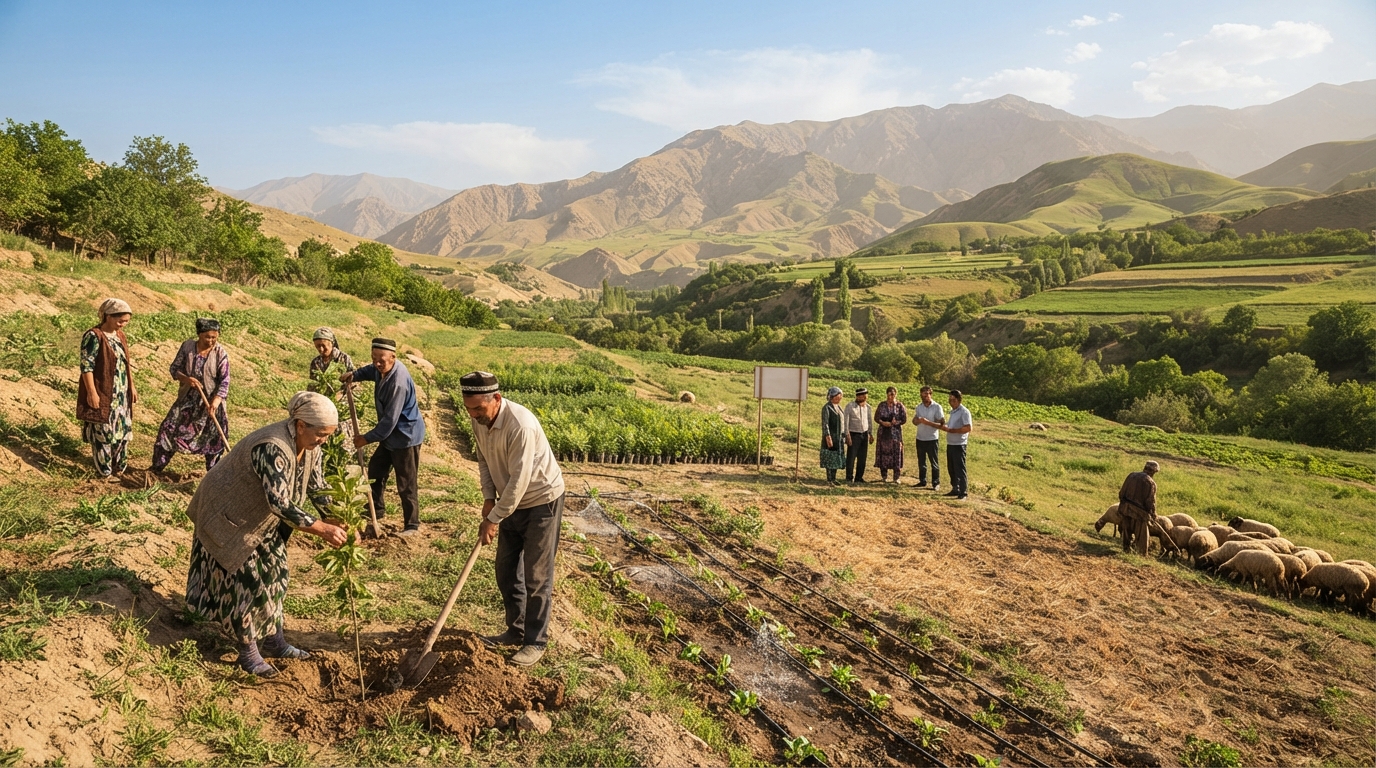
GCF to allocate 103.7 million euros for Uzbekistan's ecology
These funds will be directed towards restoring forests and pastures, introducing climate-resilient technologies in agriculture, as well as expanding access to necessary financial tools for farmers to adapt to the consequences of climate change.
The program was developed by the German Society for International Cooperation (GIZ) in partnership with Uzbekistan, Kyrgyzstan, and Tajikistan.
Expected results of the program in Uzbekistan:
Enhancing the resilience of 342 thousand residents to climate risks (almost half of whom are women);
Introducing climate-resilient management methods on 164 thousand hectares of forests, pastures, and agricultural lands; achieving a result equivalent to 1.07 million tons of CO₂ by reducing greenhouse gas emissions and increasing their absorption.
The implementation of the CLiCA program will allow Central Asian countries to unite their efforts in solving common ecological and climate problems. Special attention will be paid to preserving natural ecosystems, sustainable use of land resources, and supporting local communities most vulnerable to the consequences of climate change.
"The approval of this program is an important step towards forming more sustainable communities and landscapes. Together with our partners in the Kyrgyz Republic, Tajikistan, and Uzbekistan, we aim to turn our common goal into long-term results for the people and nature of Central Asia," GIZ representatives said.
The Ecology Committee noted that the CLiCA program will become an additional tool serving the implementation of Uzbekistan's climate priorities. In particular, it will support areas such as the restoration of degraded lands, the rational use of natural resources, and the development of climate-resilient agriculture.