

EU intends to support Uzbekistan's new projects on the Trans-Caspian route
The Ministry of Transport, the European Union, international financial institutions, and the private sector discussed Uzbekistan's new projects for the development of the Trans-Caspian Corridor, including those related to railways and highways, the construction of logistics centers, and the creation of digital transport systems.
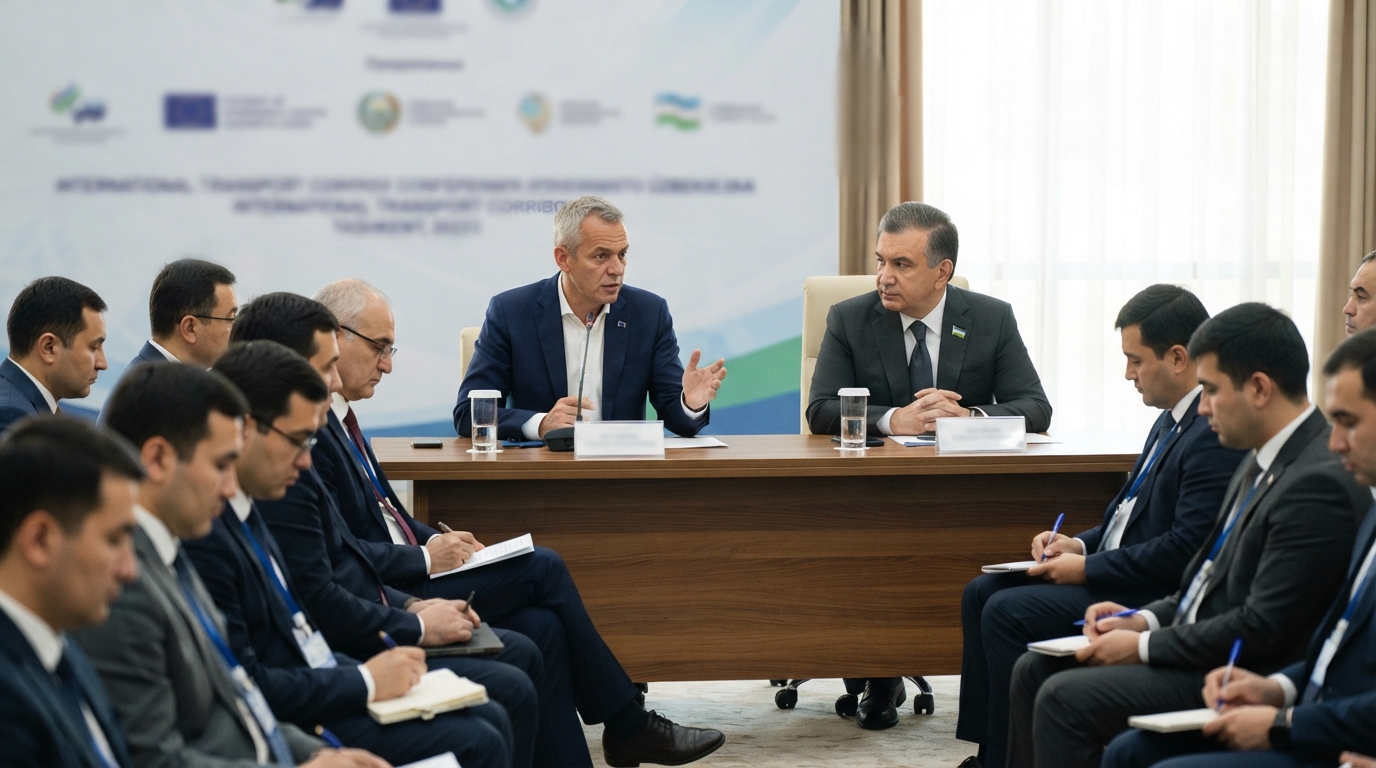
EU Intends to Support Uzbekistan's New Projects on the Trans-Caspian Route
This was announced by Pēteris Ustubs, Director for the Middle East, Asia and Pacific at the European Commission's Directorate-General for International Partnerships. On September 30 in Tashkent, he, along with the Minister of Transport of Uzbekistan Ilkhom Makhkamov, co-chaired the Second National Conference on the TITR.
As Pēteris Ustubs noted, the remaining part of the announced funding is yet to be allocated to projects.
"The financial opportunities are there. We have not yet reached their limit, and there is certainly room for further growth," he said.
The initial commitments of 10 billion were announced at the investment forum in Brussels in 2024. At the next forum, which took place in Tashkent in November 2025, the parties took stock of the work and discussed specific projects. Now, according to Ustubs, it is important to ensure that the announced funds go towards the construction and modernization of infrastructure.
"We want to better understand Uzbekistan's priority needs, identify the main bottlenecks — and if we can eliminate some of them, all the better — and discuss how the European Union, Team Europe, and international financial institutions can help attract financing, investment, and technical support," the European Commission representative stated.
Among the areas being worked on with Uzbekistan, he mentioned the modernization and construction of railways and highways, the development of logistics centers, and the creation of a digital transport system compatible with the systems of other countries in the region. Separate work, according to him, is required for border crossings between the countries of the corridor.
Pēteris Ustubs emphasized that for the route to be successful, building infrastructure is not enough: faster border procedures, coordination between countries, and predictable conditions for carriers are needed.
"The main constraint for the corridor in the future will likely be the efficiency of its operation," he noted. The goal of the Trans-Caspian Corridor Coordination Platform is to ensure transport between Europe and Asia in no more than 15 days.
The Minister of Transport of Uzbekistan, Ilkhom Makhkamov, explained the country's interest in the corridor by the high costs of goods delivery.
"Transport costs make up a significant part of the cost of our products. Therefore, the development of transport and logistics is one of the issues that the President constantly raises during international visits and negotiations," he told journalists.
Ilkhom Makhkamov added that Uzbekistan is implementing major strategic projects to develop the Middle Corridor not only within the country but also at the regional level.
"Currently, work is actively underway on the project to build Uzbekistan's own terminal in a Georgian port. In addition, to increase capacity on the Caspian Sea, we are implementing projects to establish a joint venture with partners in Azerbaijan, acquire new ferries, and increase the number of voyages. At the same time, to increase the economic attractiveness of the route within the CASCA+ multimodal direction, 70% discounts on rail transport have been introduced. This is a very big opportunity for cargo carriers and businesses," the Minister of Transport emphasized.
At the conference, representatives of the government, international financial institutions, and business discussed investments in railways and highways, the development of logistics centers, as well as the digitalization of transport and trade documents. A separate session was dedicated to proposals from private companies and the obstacles they face when transporting along the corridor.