

Emergency situations in Uzbekistan decreased by 33 percent
More than 536 thousand violations were eliminated
Emergency situations in Uzbekistan decreased by 33 percent
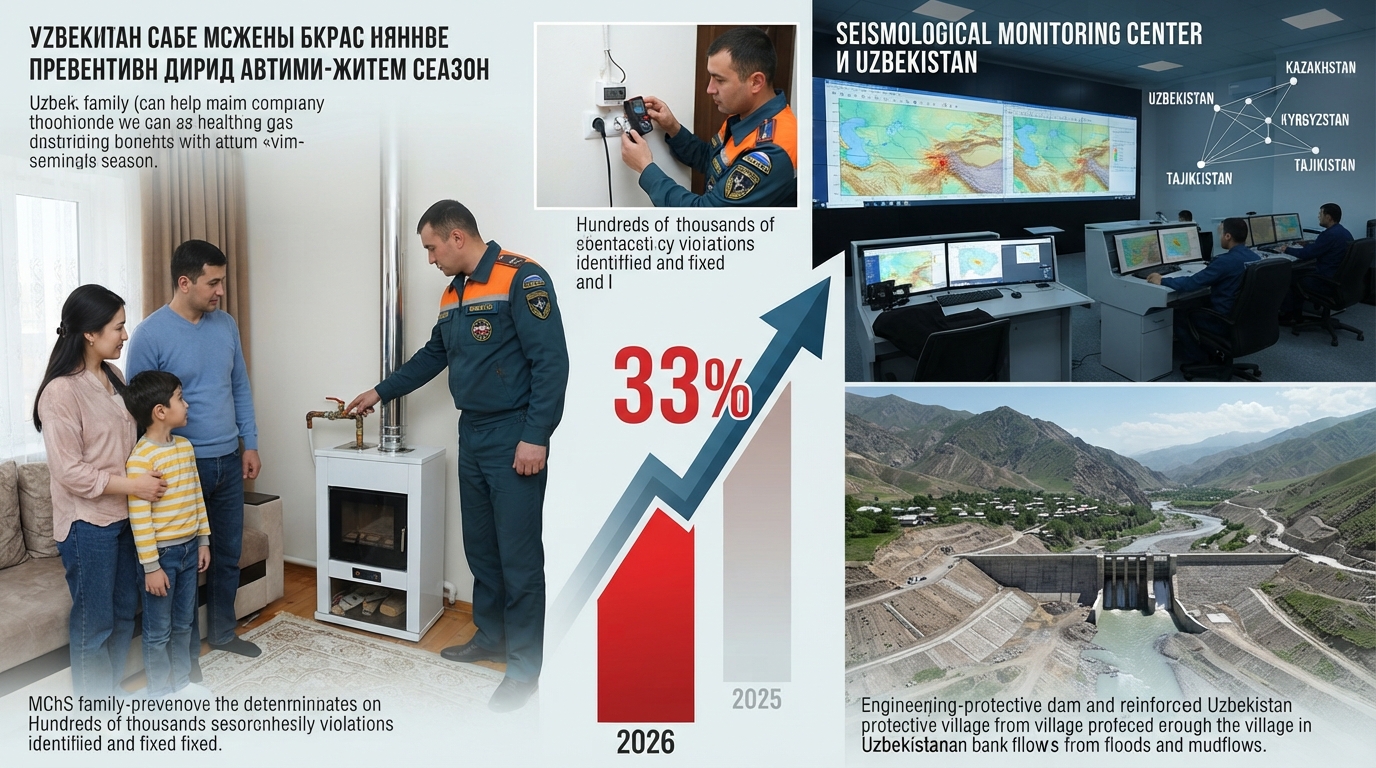
Large-scale work is being carried out in Uzbekistan to reduce the risk of emergency situations, ensure fire safety in residential areas, and prepare for the autumn-winter season. In the first nine months of 2026, 41 emergency situations were recorded in the country, which is 33 percent less compared to the same period last year. Nevertheless, hundreds of thousands of safety violations being identified in households show the need to further strengthen preventive measures.
During the inspections, a total of 607,626 safety violations were identified. Of these, 536,606, or 88.3 percent, were eliminated. These figures clearly demonstrate how important it is to comply with safety requirements in residential areas. Especially with the onset of cold days, special attention is required to the technical condition of gas and electrical appliances, heating stoves, smoke flues, and ventilation channels.
According to analyses, 72.3 percent of the fires recorded in the country occur in residential areas. This means that preventive fire safety measures must be strengthened primarily in households.
Improper use of domestic gas appliances, overloading power grids, using faulty heating devices, and failing to clean smoke flues in a timely manner can cause serious hazards.
Therefore, experts are calling on the population to inspect gas and electrical appliances and to ensure the proper working order of flues and ventilation channels before the start of the heating season. In this regard, it is important that safety is not limited only to the control of relevant agencies, but is also reinforced by a responsible attitude in every household.
Safety measures have also covered social sector facilities. Of the 137,071 deficiencies identified during the inspections, 122,676 were eliminated. This constitutes 89.5 percent of the total deficiencies.
Work in this direction is particularly important from the perspective of reducing the risk of fires and carbon monoxide poisoning in institutions where large numbers of people gather during the cold season.
At the same time, along with eliminating identified deficiencies, preventing their recurrence, establishing regular technical control, and improving the knowledge and skills of responsible personnel remain an urgent task.
In January–September 2026, 2,233 earthquakes were recorded in the country. In order to monitor seismic hazards in a timely manner and inform the population about potential risks, work continues to improve the national monitoring network.
In particular, real-time data exchange has been established with seismic stations in Kyrgyzstan, Tajikistan, and Kazakhstan. Attention is also being focused on developing an early warning system for strong earthquakes for the population.
Regional cooperation in seismic observations expands the capabilities for prompt analysis of natural processes and timely receipt of hazard information. However, the effectiveness of the early warning system depends not only on technical capabilities, but also on the population's prompt response to messages and knowing how to act in emergency situations.
Engineering protection structures also play an important role in reducing the risk of natural disasters. Over the past five years, engineering protection work has been carried out at 370 water facilities at a cost of more than 625 billion soums. As a result, capabilities to protect more than 138,000 residents and socio-economic facilities from natural disasters have expanded.
Such projects serve to reduce the consequences of floods, mudflows, and other dangerous hydrological processes. At the same time, the effectiveness of protective structures also depends on their regular technical inspection, repair when necessary, and continuous monitoring of the situation in hazardous areas.
The cited figures show that the number of emergency situations has decreased, a large portion of the deficiencies identified in residential buildings and social facilities has been eliminated, and seismic monitoring and engineering protection systems are being improved.