

Do you know the signs of vitamin D deficiency in the body?
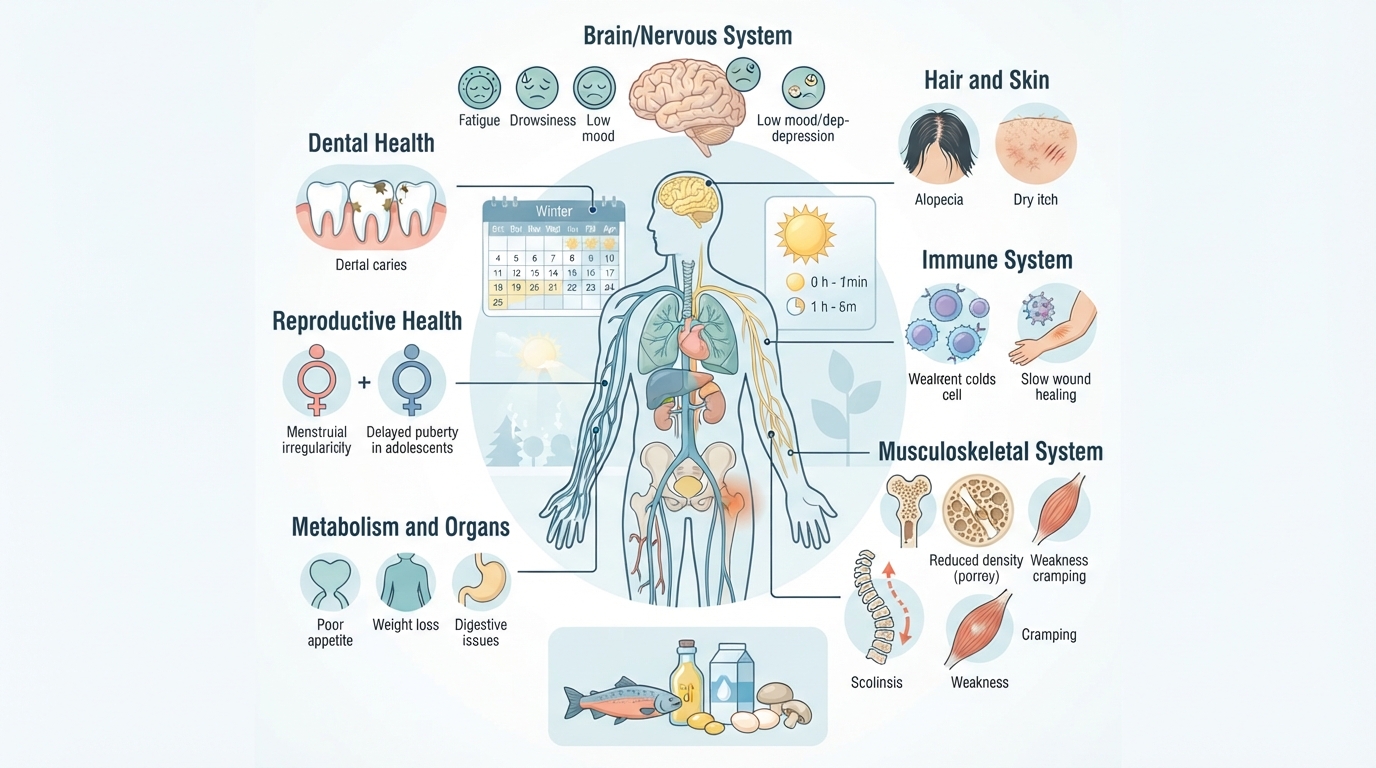
Do you know the symptoms of vitamin D deficiency in the body?
Vitamin D is important for our body in maintaining bone strength, immunity and general health. Its deficiency is often difficult to notice. However, the body signals its need for this substance through some symptoms.
As sunny days decrease in the autumn-winter season, it is necessary to think about how to help yourself stay fresh and active during the period of vitamin D deficiency. After all, this vitamin regulates many functions of our body, including calcium and phosphorus metabolism, immunity, physical activity and endurance.
**Musculoskeletal and skin problems**
Muscle weakness, pain and cramps in muscles and bones, slow healing of fractures, hair loss, brittle nails, dry and itchy skin – all of these can occur due to a decrease in calcium in the body, which is dependent on vitamin D, in bones, muscles, skin and its derivatives – nails and hair.
**Weakness and mood disorders**
Due to the presence of vitamin D receptors in the nervous tissue, weakness, drowsiness or insomnia, rapid fatigue, mood swings up to depression, excessive sweating, especially on the palms of the hands and feet, can be observed.
**Immunity decrease**
Vitamin D affects the body's immune cells and increases the body's ability to fight various infectious and inflammatory processes. Therefore, its deficiency leads to a weakening of immunity. As a result, frequent colds, various inflammations and slow-healing wounds may occur.
**Vision and digestive problems**
Loss of appetite, weight loss, dry mouth (bitterness) and visual impairment are associated with vitamin D receptors in the digestive system and eye tissues, which respond to vitamin deficiency in a specific way by failing to function.
**Development of chronic diseases**
Since the main function of vitamin D is to regulate phosphorus-calcium metabolism, that is, to increase the absorption, assimilation and delivery of calcium to bones and muscles, its deficiency leads to a slowdown in development in children (stunting, weight loss, late eruption of teeth), rickets, curvature of the spine. In adults, bone density decreases, bone fractures occur, and dental caries often occur. In women, menstrual irregularities, even infertility, and delayed sexual development in adolescents are observed.
At the same time, it should be remembered that the above symptoms can also be observed in other diseases associated with the malfunctioning of the endocrine, cardiovascular, nervous and digestive systems. Therefore, it is not recommended to take high (therapeutic) doses of vitamin D on your own. The best way is to discuss this issue with a specialist.
Vitamin D is produced in the skin under the influence of ultraviolet rays, and also enters the body with food through fish oil, meat, liver, eggs, milk and dairy products. Therefore, when determining the prophylactic and therapeutic doses of this vitamin, it is necessary to take into account the individual characteristics of the body and the diet. In addition, before prescribing vitamin D, it is necessary to determine its initial level in the blood - this should definitely be done by a doctor.
If this is not possible, it is recommended to eat a diet rich in vitamin D, sunbathe (at least 2 hours outdoors on a sunny day in winter, and at least 4 hours a day in spring, summer, and early fall), and take a prophylactic dose of vitamin D during the fall-winter-spring season (October to April).