

Constant fatigue and hair loss: the main symptoms of vitamin B12 deficiency
**Persistent fatigue and hair loss: the main symptoms of vitamin B12 deficiency**
Persistent drowsiness, pale skin and brittle nails are often associated with a deficiency of vitamin B12 in the body. Since this vitamin is used very slowly in the human body, its deficiency can go unnoticed for a long time and can only be detected through a blood test. Below we will provide information about the main functions of vitamin B12, its content in food products and situations when it is necessary to take additional preparations.
**Main functions of vitamin B12 in the body:**
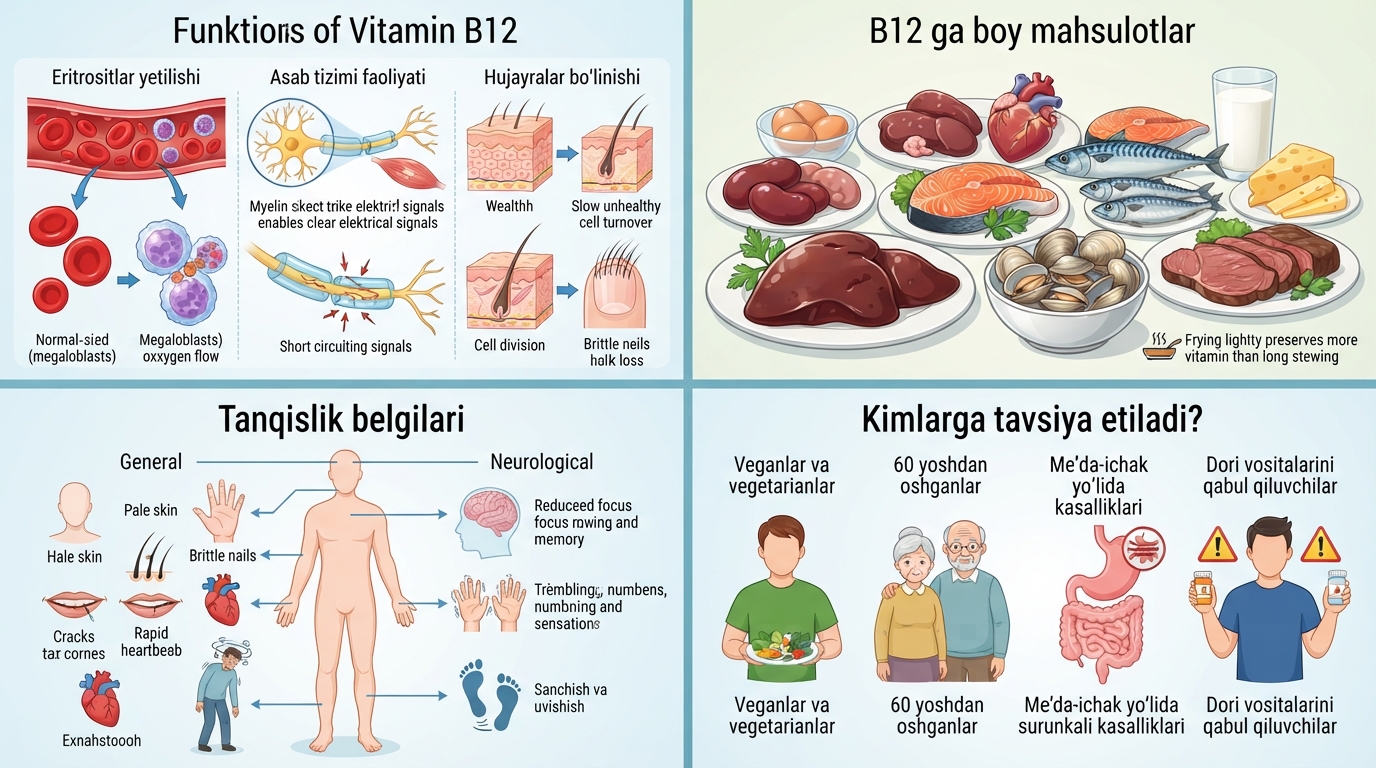
1. **Erythrocyte maturation:** This vitamin is important for the formation of red blood cells - erythrocytes, which carry oxygen in the blood serum. If the vitamin is deficient, these cells enlarge and do not fully mature. As a result, oxygen deficiency occurs in the tissues and chronic fatigue occurs.
2. **Nervous system activity:** Vitamin B12 is involved in the formation of the protective sheath of nerve fibers. This shell ensures the speed of signal transmission from the brain to the muscles and vice versa. Its long-term deficiency leads to a decrease in the sensitivity of the limbs, memory and emotional state.
3. **Cell division:** The vitamin is involved in the process of cell renewal of the skin, hair, nails and mucous membranes. When there is a deficiency, hair loss and cracks in the corners of the mouth are observed.
Vitamin B12 in food is absorbed in the intestine only when combined with a special protein produced in the stomach. Therefore, problems with the digestive system can cause vitamin deficiency even with a rich diet.
**Products rich in vitamin B12:**
* **Beef liver:** It ranks first in terms of vitamin content (about 60 mcg per 100 grams). This is more than the weekly norm for adults.
* **Sheep and calf liver:** Has a similar or higher content than beef liver.
* **Kidney:** Contains about 20–25 mcg of vitamin B12.
* **Heart:** Around 8–10 mcg.
Long-term cooking of the product leads to partial breakdown of this element. Short-term frying preserves the vitamin more.
Also from seafood:
* **Clams, mussels, oysters:** Contains 16 to 20 mcg of the vitamin per 100 grams.
* **Oily sea fish:** Mackerel (8–19 mcg), herring (10 mcg), sardines (9 mcg) and salmon (3–5 mcg). The vitamin content is also almost completely preserved in canned fish.
In meat, eggs and dairy products:
* **Meat products:** Beef and mutton (2–3 mcg), chicken and turkey (0.3–0.5 mcg).
* **Eggs and milk:** Egg yolk (0.5 mcg), a glass of milk (1 mcg), hard cheeses (1.5–3 mcg). The vitamin in dairy products is easily absorbed by the body.
The human body can absorb approximately 1.5 mcg of vitamin during a single meal. Therefore, it is recommended to take the daily requirement not all at once, but in several parts of the day.
**Symptoms of vitamin B12 deficiency:**
The liver of adults stores a reserve of vitamin B12 that lasts for 2 to 5 years. Therefore, symptoms of deficiency develop gradually over a long period of time.
**Anemia and general symptoms:**
* Chronic fatigue and shortness of breath during physical exertion;
* Pale or slightly yellow skin;
* Fast heartbeat and sensitivity to cold;
* Smooth and painful tongue, cracked corners of the mouth;
* Hair loss and brittle nails.
**Neurological symptoms:**
* Tingling and slight tingling in the fingers and toes;
* Loss of balance when moving in the dark;
* Decreased attention and memory, irritability or depressive states.
Since nerve fibers are more difficult to repair than blood cells, it is necessary to undergo a medical examination if neurological symptoms appear.
**Who is recommended to take supplements?**
1. **Vegan and vegetarians:** Plant products, including spirulina or chlorella, contain small amounts of vitamin B12, which is not beneficial for the human body. Vegans must regularly take specially fortified products or supplements.
2. **People over 60 years old:** With age, due to a decrease in gastric acidity and the development of gastritis, the absorption of vitamins from food worsens. For this age group, ready-made tablet preparations that are not bound to protein are recommended.
3. **Patients with chronic diseases of the gastrointestinal tract:** Vitamin absorption is impaired due to Crohn's disease, celiac disease, autoimmune gastritis, or after stomach surgery.
4. **People taking medications:** Metformin, which is used for diabetes, and drugs used for heartburn, worsen the absorption of vitamin B12 when taken for a long time. It is recommended that such patients undergo a control analysis once a year.
**Rules for blood test:**
In a clinical blood test, an increase in the size of erythrocytes above normal may indicate vitamin deficiency. To make an accurate diagnosis, the amount of vitamin in the blood serum is checked.
Stop taking vitamin supplements at least a few weeks before the test, otherwise the laboratory results may be incorrect (unreasonably high). A follow-up test is scheduled 2–3 months after the start of treatment.