

9 symptoms of diabetes, a dangerous disease
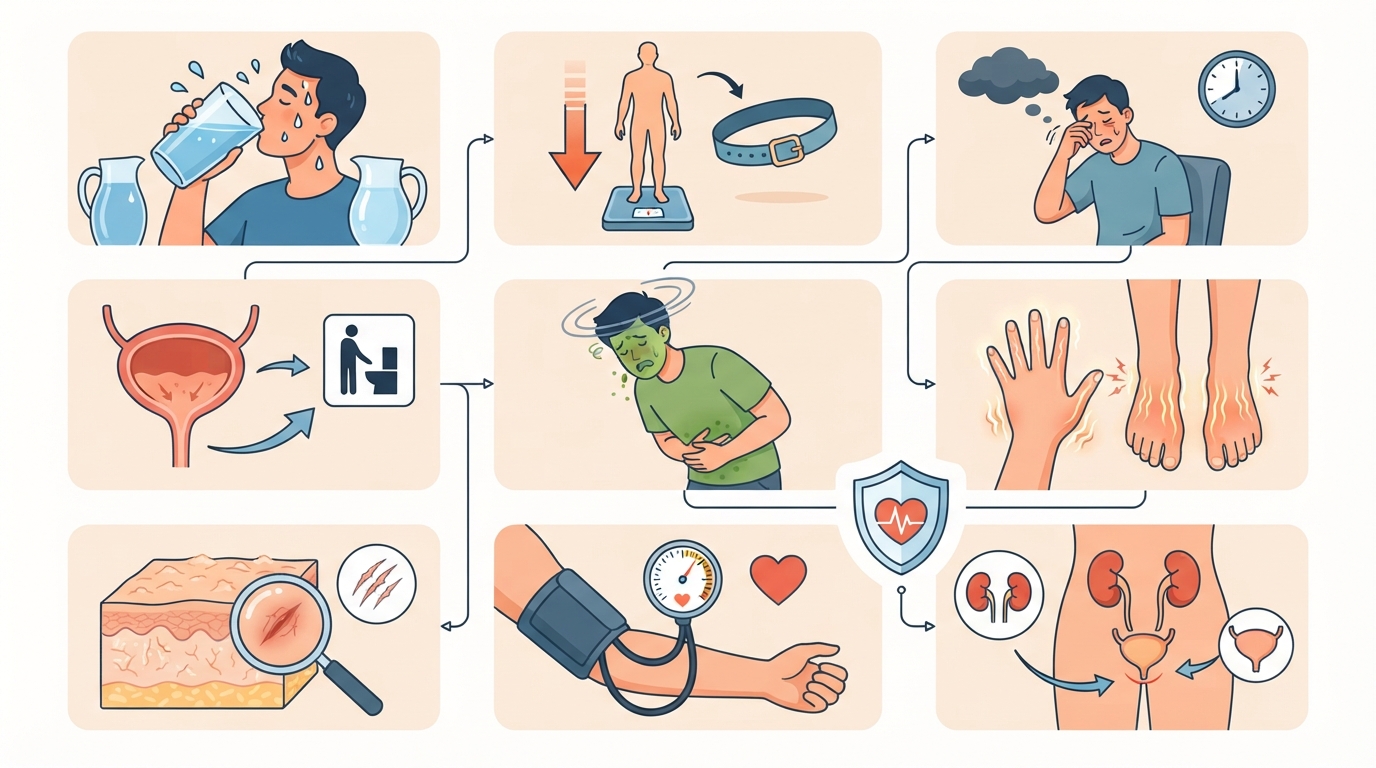
9 signs of diabetes, a dangerous disease
It is not for nothing that doctors call diabetes one of the "many-insidious" diseases: in its early stages, a person does not feel any pain and has almost no complaints. However, if you approach your health carefully, you can notice some changes.
**Symptoms of type 1 diabetes**
Type 1 diabetes often develops very quickly and is manifested by clear symptoms. The appetite increases sharply, but despite this, the person loses a significant amount of weight. There is constant fatigue, severe thirst, frequent urge to go to the toilet - sometimes you have to get up several times a night. Symptoms usually appear suddenly and it is almost impossible not to notice them.
**Symptoms of type 2 diabetes**
This type of diabetes is the most common, but at the same time it is more difficult to diagnose. Because the disease develops slowly and the symptoms are mild. What should you pay attention to in this case?
1. **Strong thirst.** A person wants to drink more fluids than before, and in some cases the amount of fluid consumed increases to 3-5 liters per day.
2. **Weight loss.** Even if the lifestyle and usual diet remain the same, the weight decreases rapidly. Sometimes the appetite increases sharply.
3. **Constant fatigue.** You feel completely tired in the morning, irritability, weakness, drowsiness appear.
4. **Changes in the nature of urination.** This happens more often than before.
5. **Nausea.** Sudden nausea and vomiting are observed.
6. **Tingling in the hands and feet.** A tingling sensation is observed in the fingers.
7. **Dry skin.** The skin becomes dry, itchy, and wounds and cuts take longer to heal than usual.
8. **High blood pressure.**
9. **Urinary tract infections.**
**Why can't you ignore the signs of diabetes?**
Diabetes is one of the most dangerous diseases, which, if left untreated, can lead to hypoglycemia and coma, which can develop literally within 2-3 hours. Diabetes often causes problems with the heart, kidneys, vision loss (in rare cases, complete blindness), and the nervous system.