

Centuries-old glaciers are melting rapidly in the Swiss Alps
Over the last five years, they have decreased by 20 percent.
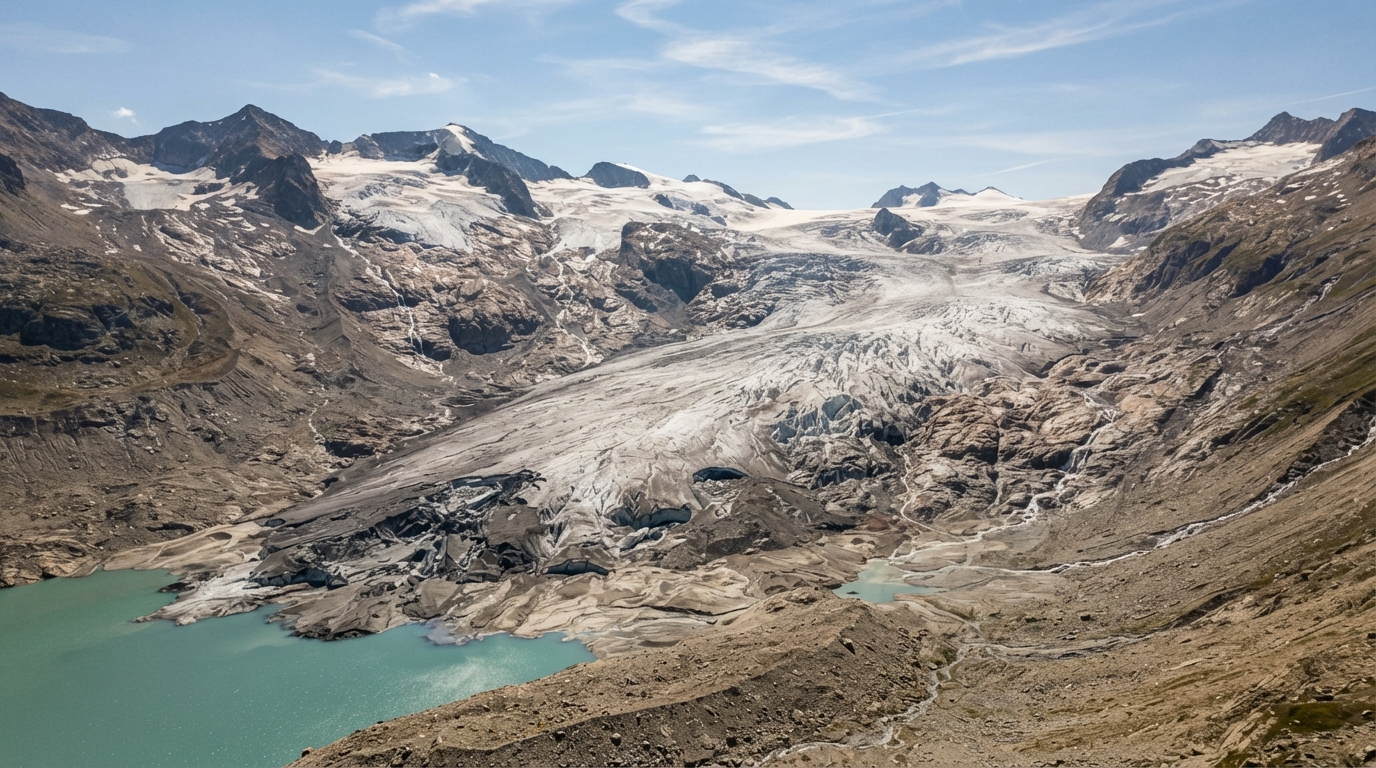
Ancient glaciers in the Swiss Alps are melting rapidly
Europe is becoming the fastest-warming continent in the world. According to the results of research by Swiss scientists (), against this background, the famous glaciers in the Swiss Alps, which have existed for centuries, are melting at a very rapid pace. Scientists have determined that due to hot temperatures in 2026, 5.5 percent of the ice was lost, and in the five years since 2021, the total volume of ice in Switzerland has decreased by nearly 20 percent.
Glaciers in the Alps have been steadily shrinking in recent decades, but they have never melted at the current rate. The rate of melting in the period from 2022 to 2026 was twice as fast as in any other five-year period in the history of observations.
The main reason for this is low snowfall in winter and high temperatures in summer. In the winter of 2026, there was very little snow, which was especially noticeable in the eastern and southern parts of the Alps.
For many glaciers, the losses reached unprecedented levels and even exceeded the figures of 2022, which was the year of the strongest melting in the history of observations.
The average thickness of some glaciers decreased by 2.5-4 meters in 2026.
Some "ice tongues" — long and thin layers of ice descending into lakes — shortened by 10 meters in 2026.
Scientists are increasingly observing the collapse of glaciers from within — occurring as a result of warm water washing away spaces beneath the ice.
Several small glaciers have completely disappeared.