

By 2030, the amount of air pollutants will be reduced by 10.5 percent
On September 7, at the Central Asian Green University (Central Asian University of Environmental and Climate Change Studies), the "International Blue
By 2030, the volume of air pollutants will be reduced by 10.5 percent
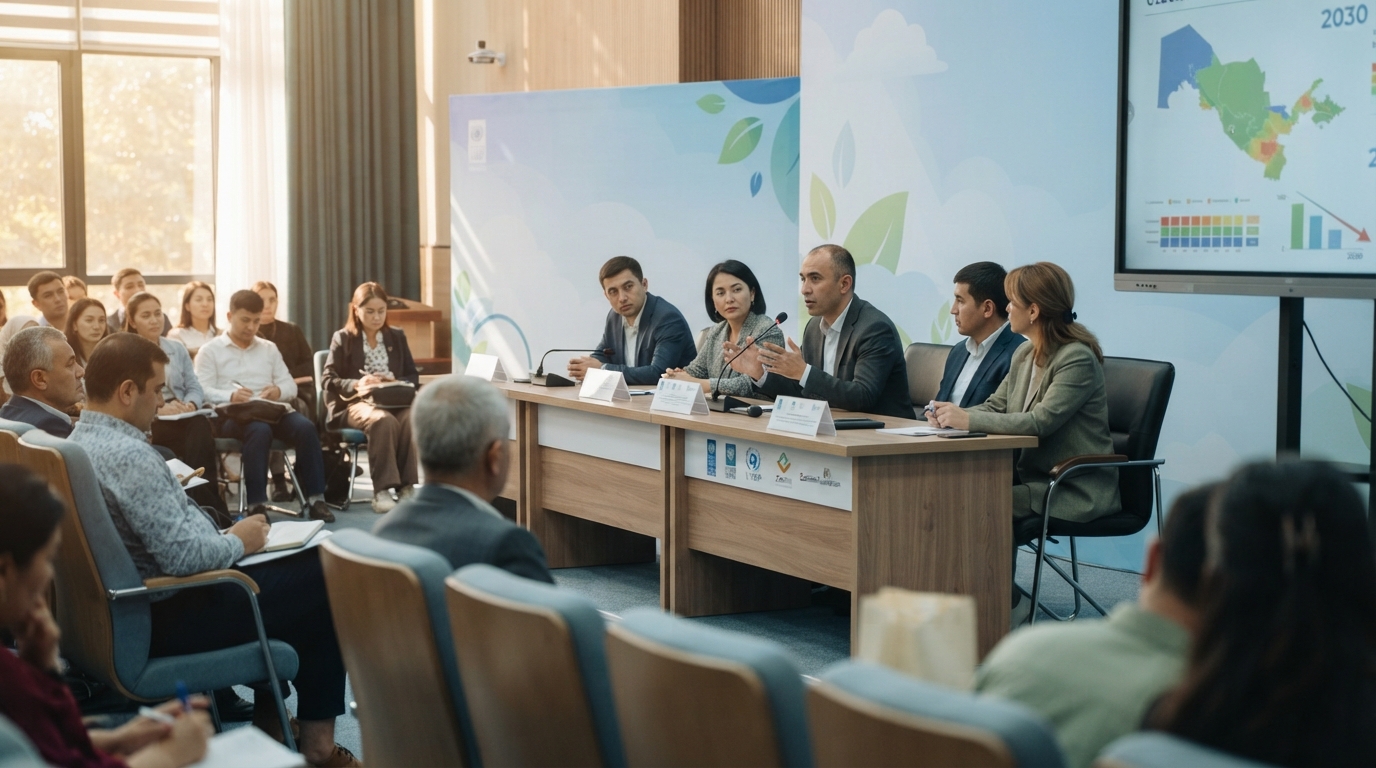
On September 7, an event was organized at the Central Asian University of Environmental and Climate Change Studies (Green University) on the occasion of the "International Day of Clean Air for Blue Skies."
Speaking at the event, Alisher Salomov noted that under the leadership of the President, environmental protection in Uzbekistan has become a priority of state policy, linking healthcare, industry, transport, energy, agriculture, and climate policy. He cited the "Clean Air" nationwide project for 2026–2030 as an example of this.
"Our national goal is to reduce the amount of pollutants emitted into the atmospheric air by 10.5 percent by 2030. This goal represents our firm commitment to improving public health, making our cities more livable, cleaning up industry, and ensuring sustainable economic growth," Alisher Salomov said.
In his speech, the Advisor to the Chairman specifically noted that in order to expand cooperation on air quality in the region, the President of the Republic of Uzbekistan initiated the establishment of the International Clean Air Consortium, an initiative that was also supported by the President of the Republic of Kazakhstan. He also expressed sincere gratitude for the effective cooperation to the Government of Japan, the United Nations Development Programme (UNDP), the United Nations Environment Programme (UNEP), the Finnish Meteorological Institute, the "Zamin" Foundation, and all partners.
Aziz Ganiyev, Director of the "Zamin" International Public Foundation, said that the "Clean Air" nationwide project is not limited only to the installation of monitoring stations.
"The initiative, which started in 2020 to strengthen the air quality monitoring system, has today turned into a comprehensive national system that makes reliable air quality data more open, accessible, and practical for the government, experts, scientists, and international partners. This, in turn, creates a solid foundation that serves to ensure cleaner air and a healthier environment for the population of Uzbekistan," he said.
During the event, a video dedicated to the development of the air quality monitoring system in Uzbekistan was shown. Also, local and foreign experts delivered presentations on topical issues such as the development of the air quality monitoring system in Uzbekistan, the economic and environmental impact of air pollution, the effective use of monitoring data, as well as strengthening international and regional cooperation on transboundary air pollution and dust storms, and improving air quality.
In particular, Doniyor Turgunov, Director of the Hydrometeorological Research Institute, spoke on "Uzbekistan's progress in ensuring clean air: five years of systemic changes"; Tomas Marques, UNEP Regional Coordinator, on the importance of UNEP in ensuring clean air in Uzbekistan; Katja Loven, Head of the Air Quality and Energy Group at FMI, on "Modern air quality monitoring: from data to effective solutions"; Gavhar Kudaybergenova, UNDP Environment and Projects Specialist, on "Integrated solutions for clean air and sustainable urban development"; Albena Karadjova, Secretary of the UNECE Convention on Long-range Transboundary Air Pollution, on "Clean air without borders: international and regional cooperation"; and Aziza Sharofova, Chief Specialist of the National Committee on Ecology, on "Uzbekistan's measures and plans to improve air quality."
The event brought together government organizations, international organizations, and experts in one venue, providing an opportunity to discuss Uzbekistan's achievements and future priorities in air quality monitoring. It covered topics ranging from air quality monitoring and assessing the economic impact of pollution to practical measures and issues of international and regional cooperation. Special attention was paid to transboundary air pollution, dust storms, and opportunities to use international cooperation mechanisms.
For reference, the air quality monitoring network and the "Econazorat" platform are being expanded in Uzbekistan. With the support of the "Zamin" Foundation, 28 automatic air monitoring stations were manufactured by the HORIBA company (Japan, Germany). In order to further expand this system throughout the republic, it is planned to launch 347 small automated air quality monitoring stations. The data obtained from these stations will be integrated into the Committee's unified information system. This will allow expanding the scope of regional coverage, more accurately assessing the pollution situation, and making evidence-based decisions.