

Bringing landfill into the 21st Century with solar power
The Bedfordshire site is set to power 10,500 new homes and a university site each year.
**Bringing landfill into the 21st Century with solar power**
Ellie Goodchild said about 20 people were working on building the solar farm, along with 30 engineers who work on the gas side of the site.
The construction of solar farms on agricultural land remains a divisive issue.
Plans have recently been approved for one of the largest solar plants in England. It will cover 2,965 acres (1,200 hectares) of land south and west of Wellingborough, north of Northampton and in parts of Buckinghamshire.
Many people believe panels should instead be placed on brownfield sites. One option is to use former landfill sites.
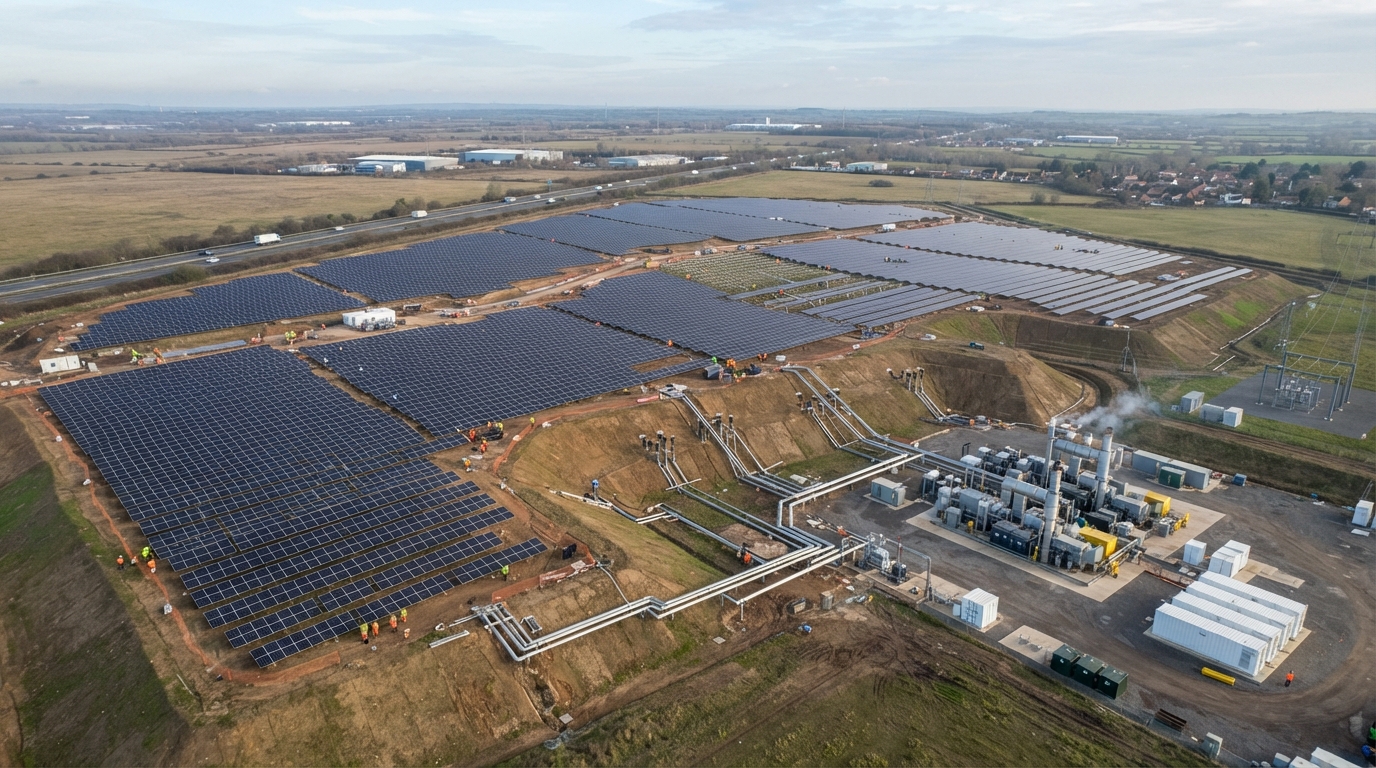
At Brogborough in Bedfordshire, one is now being built on what Infinis, the company behind the project, described as "Europe's biggest landfill."
It said it was bringing "landfills into the 21st Century"
The solar panels, which are currently under construction, are spread across the vast site.
Work began earlier this year on the 450 acre (182 hectare) site, which runs alongside the A421. It is expected to be switched on in spring 2027.
More than 62,000 panels are set to be installed across 168 acres (68 hectares), producing about 40mwp of power - enough to supply about 10,500 homes and nearby Cranfield University.
The landfill site, which was previously a clay quarry and brickworks, operated from 1983 to 2028. It has since been capped with clay that was taken from the same site.
As the buried waste breaks down, methane gas is produced and converted into 9mw of renewable energy a year, which is fed directly into the national power grid.
Jason McGray said the landfill site is completely sealed and cannot be built on for decades
Jason McGray, head of development at Northampton-based Infinis, said the solar site will also feed directly into the grid, and a "private wire connection" will run to Cranfield as part of the Brogborough Clean Energy Hub.
He said the land cannot be used for anything else because of the "long-term management of gas and leakage liquids".
That gas is collected and sent through gas engines to produce a steady supply of power.
He said: "It's constant, it's green energy but it's predictable and manageable.
"Combined with that we're now building solar so we've got the two sources of renewable energy both coming out of the same resource."
If too much power is produced, McGray said there is also space on site for battery storage.
He said: "We've got planning permission, so we can then store power temporarily until it's needed on the grid."
McGray expects managing the gas to continue longer than the 35-year anticipated life of the solar farm.
Gas is collected on the site from waste buried below and then turned into electricity
Ellie Goodchild is head of public affairs for Infinis. She said the land is owned by FCC, the energy is managed by Infinis and Akis Energy is the construction team behind the solar site.
She said the company wanted to "bring landfills into the 21st centry", turning a "legacy environmental issue into a productive energy asset"
Goodchild added: "Brogborough was formerly Europe's biggest landfill.
"This land would otherwise sit dormant, as the gas that comes out of landfills requires constant management to make sure that there are no environmental issues and issues for the local community, such as smells.
"This is about as brownfield as brownfield land comes."
The company also manages Stewartby landfill site across the A421. There, methane gas is also turned into power, and planning permission has been granted for another solar farm to be built there.
The solar panels are currently being built on the site of former Oxford Clay brick pits in Brogborough
A spokesperson for Cranfield University said it had been working with the company towards "securing a local zero carbon electricity supply".
They said: "This would underpin the University's progress towards achieving Net Zero carbon emissions by 2030."
Building work is currently under way and the site is expected to start generating solar power from early 2027
Dr Pinar Karagoz is a lecturer in sustainability and smart environment at the school of engineering and innovation at The Open University, based in Milton Keynes.
She said: "In general terms capped landfill sites can be a sensible location for solar developments, offering important climate mitigation benefits.
"These sites also generally yield poor agricultural returns, even after fertiliser application."
However, Karagoz added that the benefits and possible trade-offs should be weighed carefully. She pointed out that solar panels can "alter soil moisture, temperature and airflow, creating wetter and drier zones across a site."
"Since solar panels can influence all three factors, the resulting effects may differ depending on drier or wetter regions, " she said.