

In Jizzakh, electricity will be generated by burning solid municipal waste
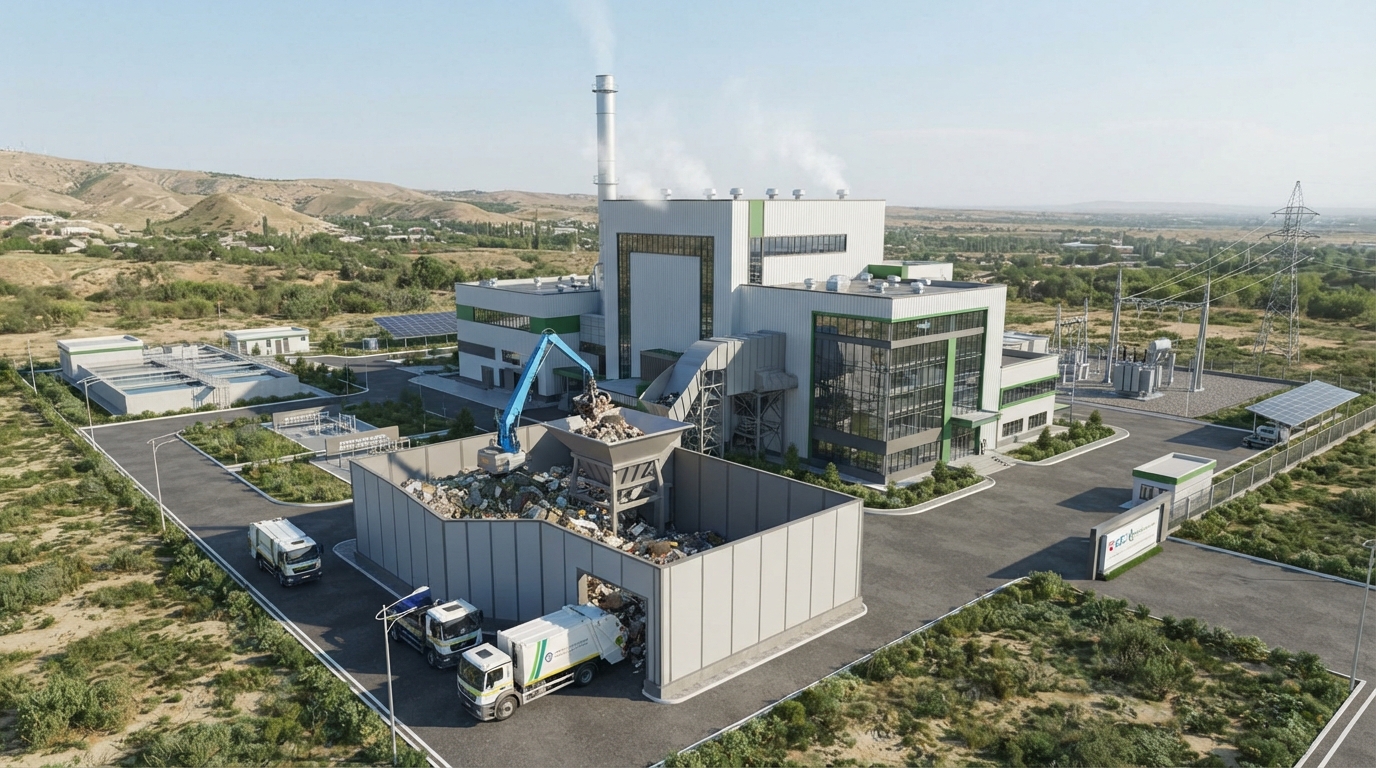
Electricity will be generated in Jizzakh by burning solid municipal waste
A project to generate electricity by burning solid municipal waste will be implemented in the Jizzakh and Syrdarya regions. In accordance with the President's decree of September 17, $130 million of direct foreign investment will be attracted to this project in the Jizzakh region in 2026–2028.
The project will be implemented by a consortium of Chinese companies China Civil Engineering Construction Corporation (CCECC) and Cevia Enviro Inc. (Henan Investment Group). An investment agreement was signed on September 14 between the investor and the Ministry of Investments, Industry and Trade on behalf of the Government of Uzbekistan.
According to the decree, equipment with a capacity to thermally process 1,000 tons of waste per day and, as a result, generate 110 million kWh of electricity per year will be launched in the Jizzakh region. For the project, the Jizzakh regional khokimiyat is designated to allocate 10.8 hectares of land from the territory of the "Gozgontepa" MCA in the Sharof Rashidov district.
It is envisaged that "Uzenergosotish" JSC will purchase the generated electricity on a guaranteed basis for 30 years, and the Agency for Waste Management and Development of Circular Economy will deliver the specified volume of solid municipal waste to the project company during this period.
The project company will provide a bank guarantee in the amount of $8 million as security for the fulfillment of its obligations during the construction period. In addition, the creation of an industrial zone specialized in waste disposal and recycling, as well as the construction of electricity and other infrastructure necessary for the project, is planned.
The decree also establishes certain administrative and other conditions for the investor. In particular, visa and residence facilitation is provided for foreign specialists involved in the project and their family members. Project documents must also undergo an environmental impact assessment and comply with environmental protection requirements.