

Assistants to the hokims are among people ("Shodlik" mahalla)
Interview with Dilbar Yulchieva, Assistant Hokim in the "Shodlik" Mahalla of Gulistan, Syrdarya Region.
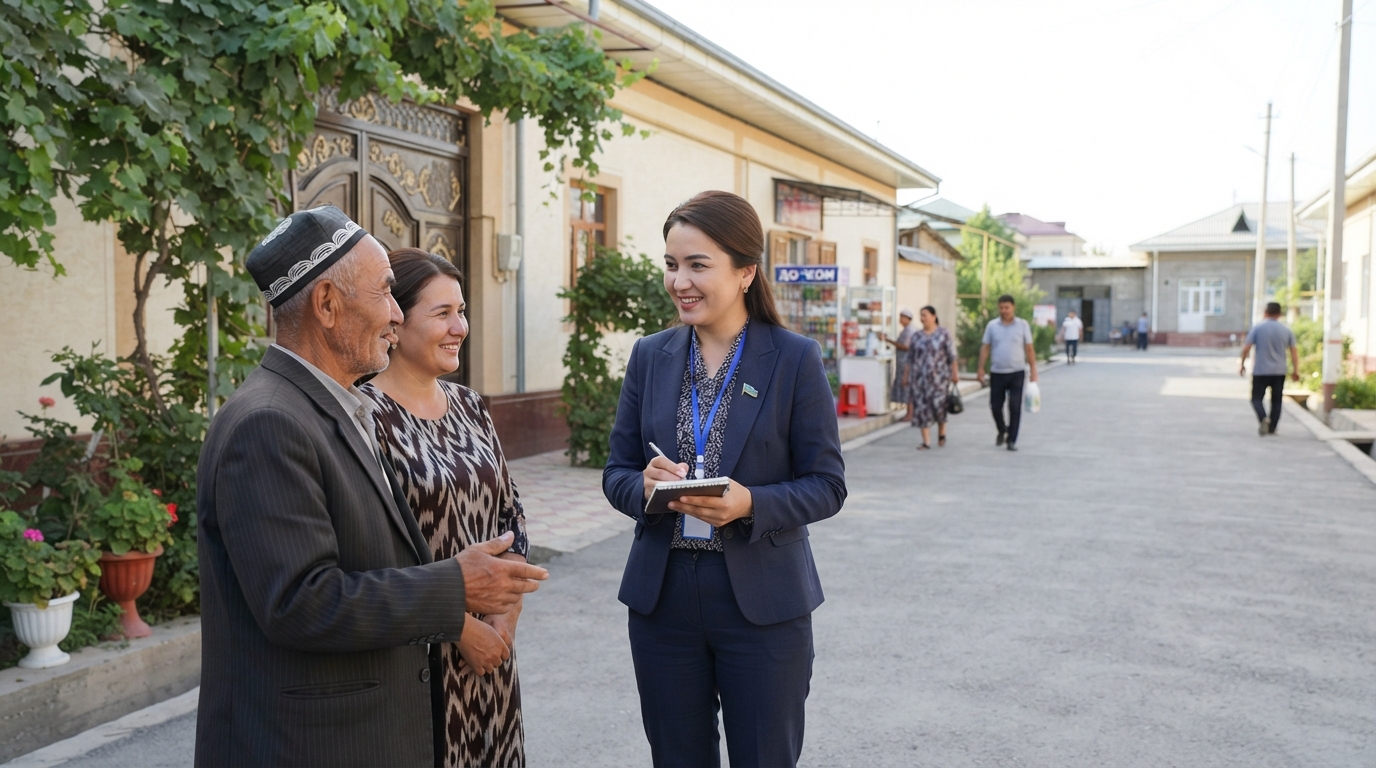
Assistants to the hokims are among people ("Shodlik" mahalla)
– Tell us a little about yourself. How did your professional journey begin, and how did you come to this position?
– I started my career at the Treasury Department of the Syrdarya Region. There I gained extensive experience in public finance, budget execution, and financial discipline. Later, when a new system was introduced in the mahallas — the institute of assistant hokims — I moved into this role with a desire to work directly with the population. Today, my main goal is to work with every family in the mahalla, ensure employment for unemployed citizens, support entrepreneurship, and make a practical contribution to raising the population's income. This work requires great responsibility, but people's gratitude inspires me to work even harder.
– How would you describe the portrait of the mahalla? Who lives in it, and how do they earn their income?
– The "Shodlik" mahalla is one of the most active and rapidly developing in the city of Gulistan. It is home to people of different professions, entrepreneurs, young families, and labor veterans. Most residents work in the service sector, trade, small business, and in government organizations and private companies. The number of self-employed citizens and those involved in family entrepreneurship increases every year.
The mahalla has all the necessary social infrastructure. There are 5 commercial banks, 1 state educational institution, a health department, 2 private educational institutions, 1 state preschool organization, 5 private kindergartens, several industrial enterprises, and 164 trade and service facilities. Work is underway to improve roads and streets and modernize engineering and communication networks.
Our main task as assistant hokim is to study the potential of each family and help increase their income. We systematically send citizens to vocational training, help them secure preferential loans and subsidies, support entrepreneurial initiatives, and assist with employment in vacant positions. Most importantly, we deal with each request individually and try to solve people's problems on the spot.
– What was the most difficult thing at the beginning of your journey, and how did you cope with it?
– When I first began working as an assistant hokim, the biggest challenge was to thoroughly study the situation, needs, and opportunities of each family in the mahalla in a short time. So we started our work with personal communication with residents — we went from house to house and listened to their opinions. At first, some citizens did not really believe in the new system. However, after we demonstrated practical results, people's trust increased. Today residents come to us freely, and together we try to find a solution. In my opinion, the main quality for an assistant hokim is the ability to listen to people, remain in dialogue with them, and approach each issue individually. It is this principle that ensures the effectiveness of our work.
– What economic opportunities were identified in the mahalla based on the research conducted?
– Through communication with each family, we were able to become more closely acquainted with the economic potential of the mahalla. The study showed that the "Shodlik" mahalla has strong opportunities for developing the service sector, trade, family entrepreneurship, and crafts. In particular, many residents have a strong interest in sewing, cooking, household services, car services, and other areas of the service sector.
Some citizens had enough experience and a desire to start their own business, but they needed financial support or consultation. We helped them launch their own business by connecting them with preferential lending programs, subsidies, and vocational training. Today our main goal is to turn the potential of each household into a source of income. After all, the economic development of the mahalla primarily depends on the stable income of each family.