

Apple's first foldable phone: 8 important facts you need to know about the Duo
Apple's first foldable smartphone – the iPhone Duo went on sale worldwide on October 23. The device, currently considered the most expensive phone from the Cupertino-based company, starts at $1,999. However, being the most expensive does not yet mean being the most perfect.
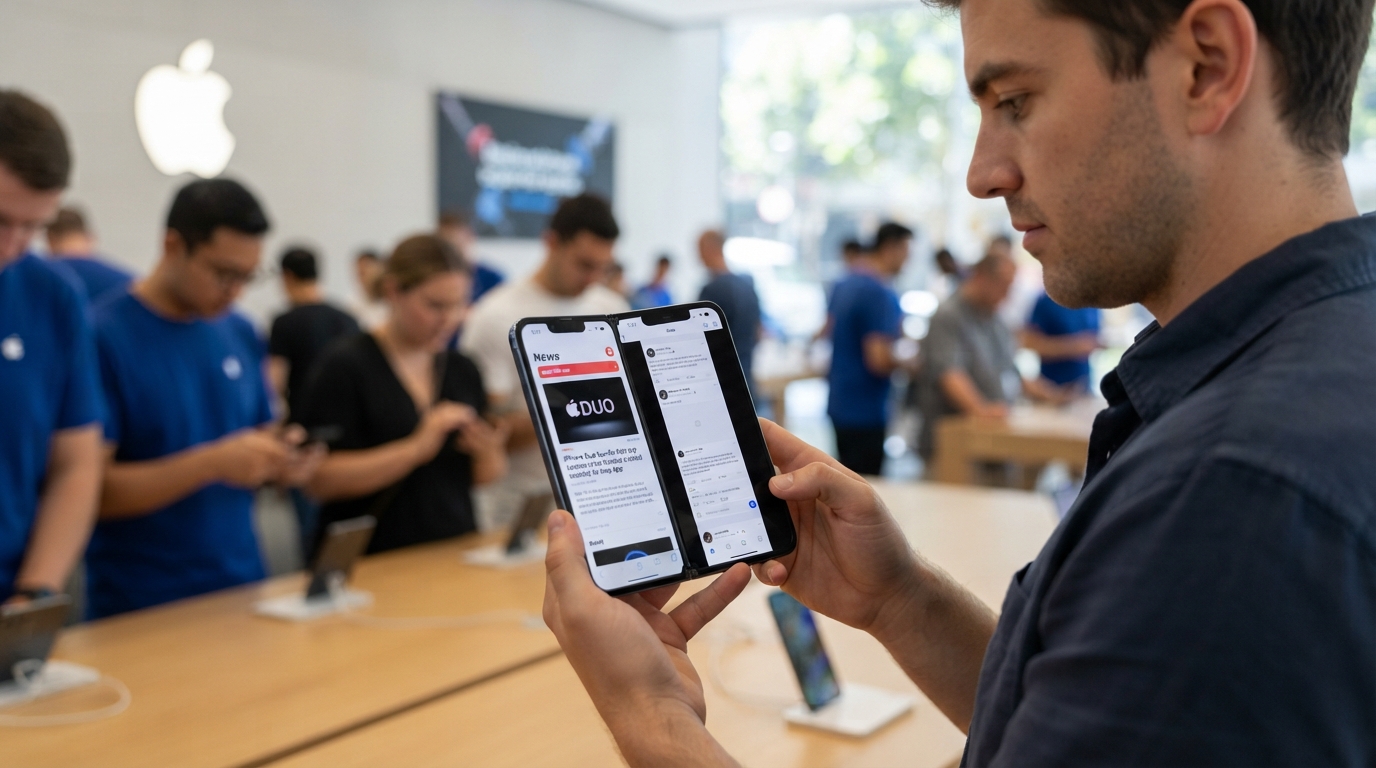
**Apple's first foldable phone: 8 key things to know about the Duo**
Apple Store in Sydney was the first to start selling the passport-shaped iPhone Duo smartphones on October 23. Although demand for Apple's first foldable phone is high, long queues outside stores around the world are not being observed as before due to limited sales.
Pre-orders showed how high the demand was: just minutes after orders opened on October 16, delivery dates were pushed back to late January. The Duo is the most expensive iPhone Apple has released to date, with prices starting at $1,999 (256 GB) and reaching $3,199 (2 TB).
This phone is also a big test for Apple, as its competitors Samsung and Huawei have been selling such phones for years. Now, the question arises whether Apple can change this niche market. Furthermore, the Duo serves as the initial test for Chief Executive Officer John Ternus, who has been leading the company since September 1.
**Apps are not yet adapted.**
On the 5.4-inch outer and 7.6-inch inner screens, navigation elements have been moved to the front edge. Apple's own apps have been adapted for this, but many other apps currently open as a narrow strip with black bars on both sides.
**Touch ID instead of Face ID.**
The Duo lacks a facial recognition system; instead, the fingerprint scanner is built into the front side button. According to Wired, there was simply not enough space for Face ID in the thin body.