

Andijan Technical Institute will be transformed
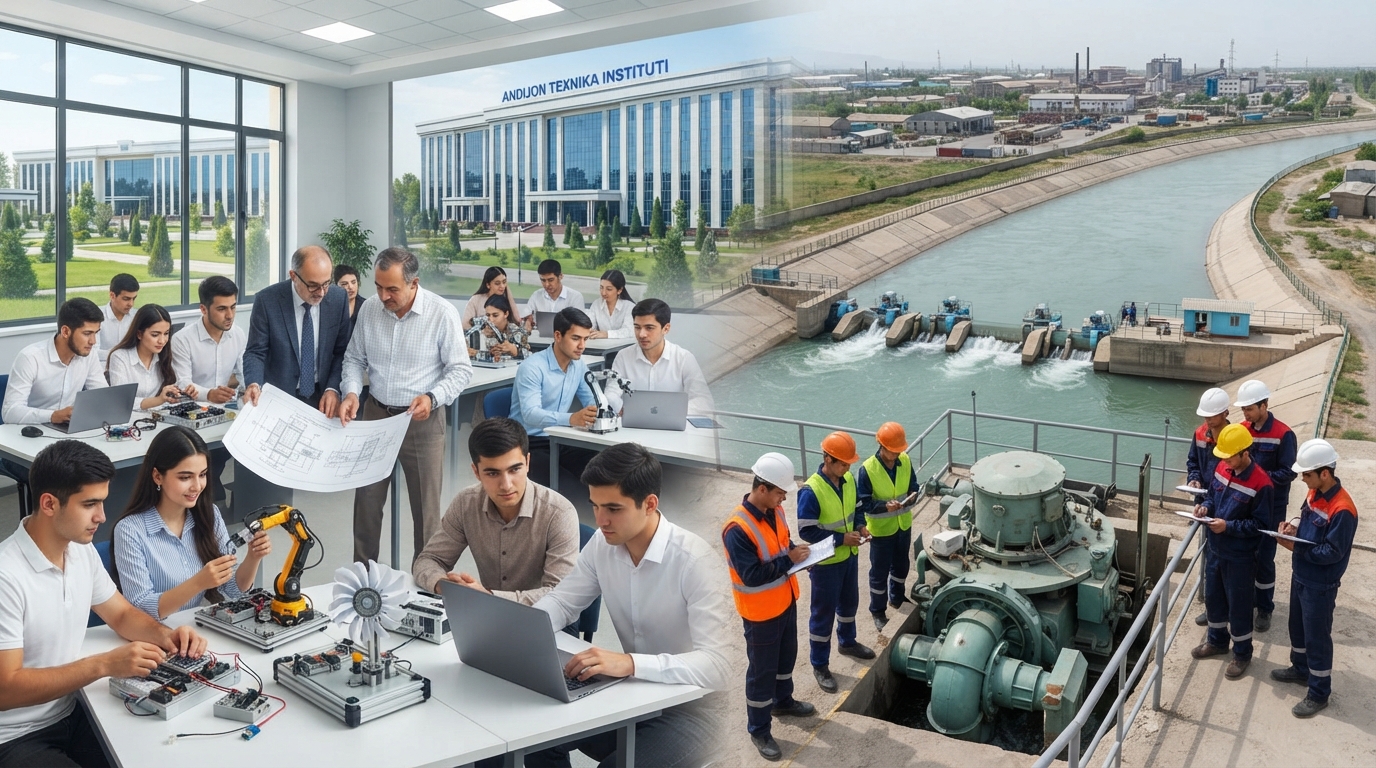
Andijan Technical Institute to be reorganized
The task has been set to turn Andijan into the engineering personnel center of the Fergana Valley. This was stated at a meeting chaired by the President on the socio-economic development of the Andijan region, supporting entrepreneurship, and increasing public income.
It was noted that 95,000 students are studying in 12 higher education institutions in the region, and 60,000 young people are studying in 59 technical schools. The need to closely link this potential with production was emphasized.
The initiative of an investor who opened a technical school in the "Silk Road" industrial zone, providing students with scholarships and jobs alongside education, was highlighted as a positive experience.
An instruction was given to relocate the practical departments of higher education institutions and technical schools to the territory of 46 industrial zones and 56 large enterprises, to organize light-construction classrooms, and to bring dual education to at least 80 percent by the end of the year.
New projects worth nearly 7.5 billion dollars will increase the demand for engineers in the fields of energy, hydro-engineering, electronics, mechanical engineering, information technology, and logistics.
For this reason, the Andijan Technical Institute will be transformed. Foreign managers and professors-teachers will be involved, and educational programs and directions will be updated.
A separate design faculty will be opened at the institute, which will be attached to industrial enterprises on the basis of dual education. For this purpose, 25 billion soums will be allocated.
It was noted that with industrial growth, the demand for energy is also increasing, and the rivers and canals passing through the region represent a large reserve in this regard.
Andijan's hydropower potential is 200 megawatts. This allows for the generation of 500 million kilowatt-hours of electricity per year.
Currently, there are already 400 applicants to build small and micro hydroelectric power plants with a total capacity of 44 megawatts. The production of hydropower turbines has also been established within the region itself.
Based on a two-year program, instructions were given to start building micro hydroelectric power plants on a turnkey basis and leasing them to entrepreneurs, as well as introducing favorable financial mechanisms. It is planned to build a cascade of hydroelectric power plants on 81 kilometers of canals scheduled for concreting.