

Air quality in Tashkent reached an "unhealthy" level
It was reported that air pollution increased in the capital overnight from October 29 to October 30
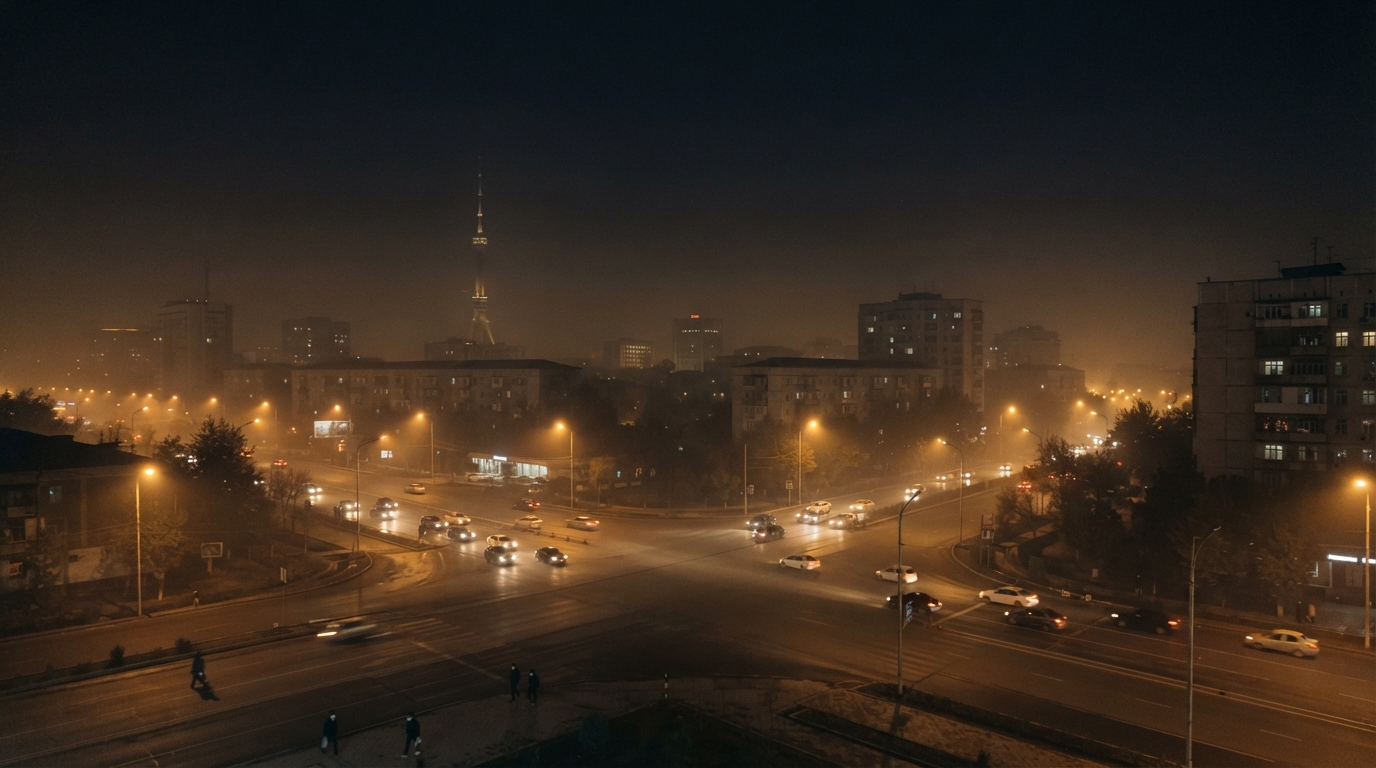
Air quality in Tashkent reached "unhealthy" level
On the night from October 29 to October 30, air pollution worsened in the capital. At some monitoring stations, "very unhealthy" indicators were recorded according to the international air quality index.
The special commission in the field of ecology and climate change is continuously monitoring the ambient air quality in the city of Tashkent.
According to the data, in the evening hours, the situation according to the international Air Quality Index (AQI) was mostly at the "unhealthy for sensitive groups" level. After midnight, the indicator shifted to the "unhealthy" category. At some monitoring stations, a "very unhealthy" level was also recorded.
According to the national air quality index, the city's average indicator was at the "yellow" level for PM2.5 particles and at the "orange" level for PM10 particles.
Experts explain the deterioration of air quality by the drop in temperature, extremely weak wind, and a strong temperature inversion. Under such conditions, air exchange in the lower layers of the atmosphere is restricted. As a result, PM particles and pollutants emitted from local sources accumulate in the layer near the ground.
Images from the "Meteosat" satellite showed no significant dust plumes in Tashkent and its surroundings. Therefore, the air pollution was mainly formed under the influence of local sources and unfavorable meteorological conditions.
Experts from the state institution "National Center for Environmental Monitoring" conducted instrumental measurements of ambient air in Yunusabad, Olmazor, Mirzo Ulugbek, Shaykhantahur, Mirobod, and Yangihayot districts.
During the observations, the amount of PM2.5 particles mainly corresponded to the "unhealthy" category. According to experts' forecasts, on October 30, the air quality in Tashkent is expected to be "unhealthy" according to the international AQI index, and mostly at the "yellow" level according to the national index.