

A lynx is attacked by a giant venomous snake - rare footage
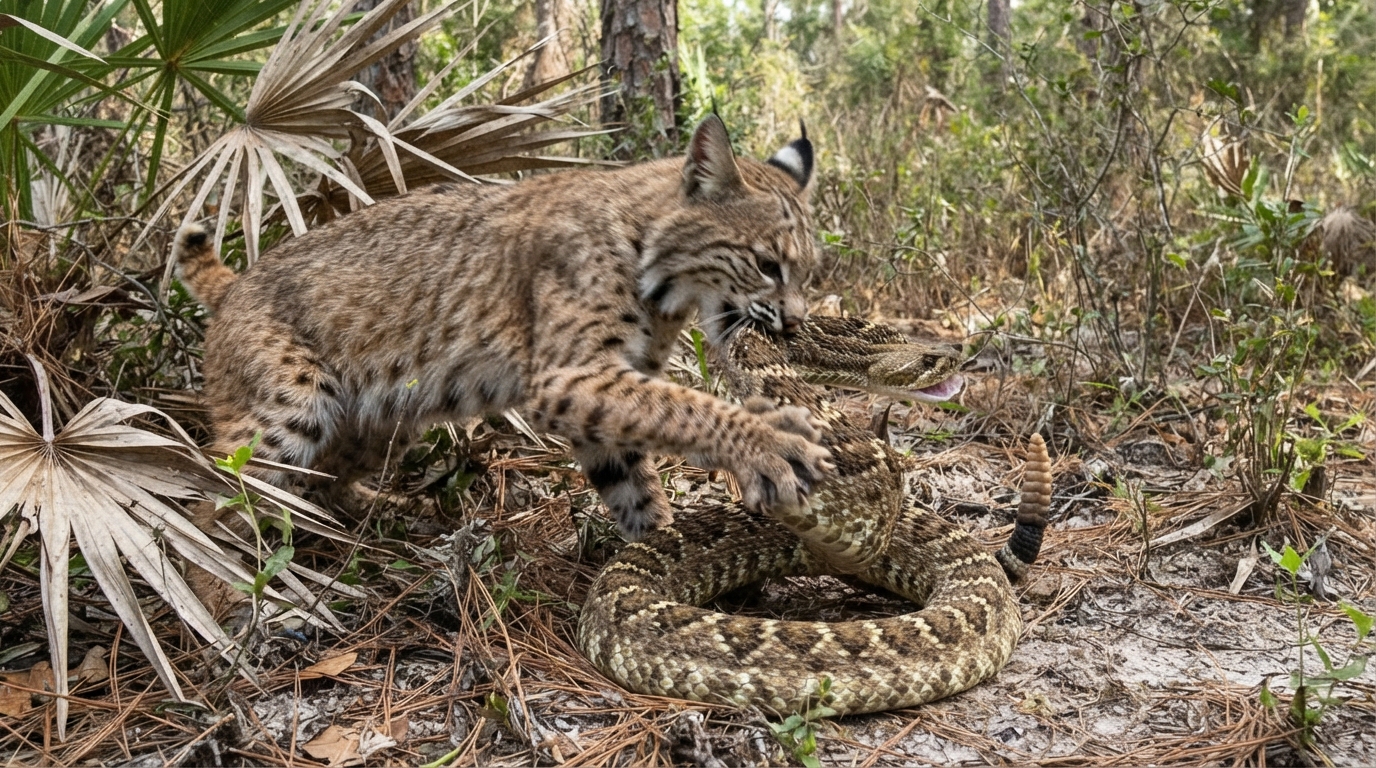
A camera trap in Florida, USA, captured a lynx attacking an eastern diamondback rattlesnake. The encounter between the venomous reptile, which is considered the world's largest species of rattlesnake, and the lynx was captured in 38 frames over a period of nearly an hour and a half.
**Lynx Attacks Giant Venomous Snake: Rare Footage Published in Journal**
A rare set of images included in a study published this month in the journal Southeastern Naturalist is one of the few that document a lynx attacking an adult venomous snake in the wild. Scientists say the footage shows the lynx actively attacking such a dangerous prey.
In the images, the lynx initially approaches the snake cautiously. The predator tries to avoid the rattlesnake's dangerous tail, then attacks its tail and body. The lynx then injures the snake with its claws, finally biting it on the head. In subsequent images, the snake is seen tossed and injured. At the same time, the rattlesnake also tries to throw itself at the lynx several times, but its attacks are unsuccessful.
A camera trap captured a lynx attacking the world's largest rattlesnake, the Eastern diamondback rattlesnake (Crotalus adamanteus). This snake is the largest species of rattlesnake in terms of body length and weight. Therefore, the fact that a relatively small lynx actively attacks such dangerous prey has aroused special interest among scientists.
A total of 38 photos were taken in the summer of 2022 in Hardy County, Florida, on the territory of the University of Florida's Center for Livestock Research and Education. The camera was part of a larger network of camera traps set up to monitor wildlife. However, the footage was only published as part of a scientific article in 2026.
According to the authors of the study, these photos directly show that lynxes can cause serious injury to large adult venomous snakes. Scientists say such encounters may be more common in nature than previously thought, but are rarely observed by humans. The study's findings reinforce the idea that lynxes may prey on large reptiles, including dangerous and invasive species.