

A 6-year "General Medicine" undergraduate program may be introduced in medical education
Proposals aimed at improving the system of training and professional development of personnel in the fields of medicine and pharmacy were presented to the President. In particular, it was proposed to introduce a 6-year "General Medicine" undergraduate program starting from the 2027/2028 academic year to replace the "General Medicine" (Davolash ishi) direction.
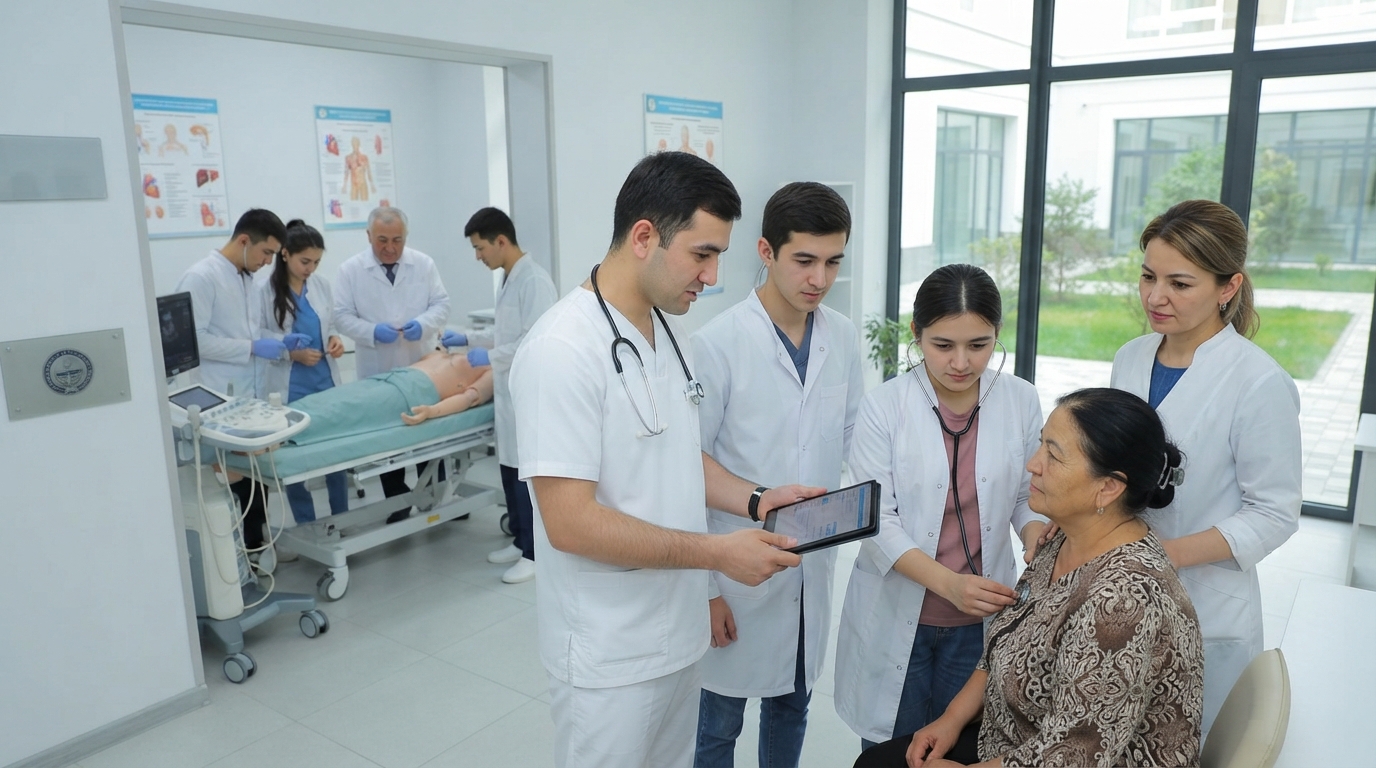
A 6-year "General Medicine" undergraduate program may be introduced in medical education
On September 4, President Shavkat Mirziyoyev familiarized himself with a presentation of proposals on training personnel in the fields of medicine and pharmacy, registering them with the state, and improving the continuous professional education system.
During the presentation, measures to improve the system of training personnel in the medical and pharmaceutical fields were discussed first of all. The proposals were developed based on the recommendations of Cambridge, Pennsylvania, and Harvard universities, with the participation of international and local experts.
From now on, admission parameters for medical universities will be formed based on the actual needs of regions and medical institutions, as well as personnel shortages. The state order will be approved by the Ministry of Health by field.
It is proposed to introduce a 6-year "General Medicine" undergraduate program starting from the 2027/2028 academic year to replace the "General Medicine" (Davolash ishi) direction. After five years of education, students will undergo full practical training for one year. Graduates who successfully complete the program will have the opportunity to practice as family doctors.
Special attention will be paid to training personnel for family medicine. Residents will be enabled to study and practice at family clinics simultaneously. The training of narrow specialists will be gradually transferred to residency, while master's programs will be mainly focused on training scientific and pedagogical personnel.
New approaches will also be introduced in training secondary medical personnel. The role of nurses with higher education as close assistants to doctors in diagnosis, treatment, and prevention processes will be enhanced.
Pharmaceutical education will be more closely linked to production.