

70 new carriages will be purchased for the Tashkent metro
The cost of this project ranges from $168.6 million to $356.2 million, depending on the supplier and loan terms.
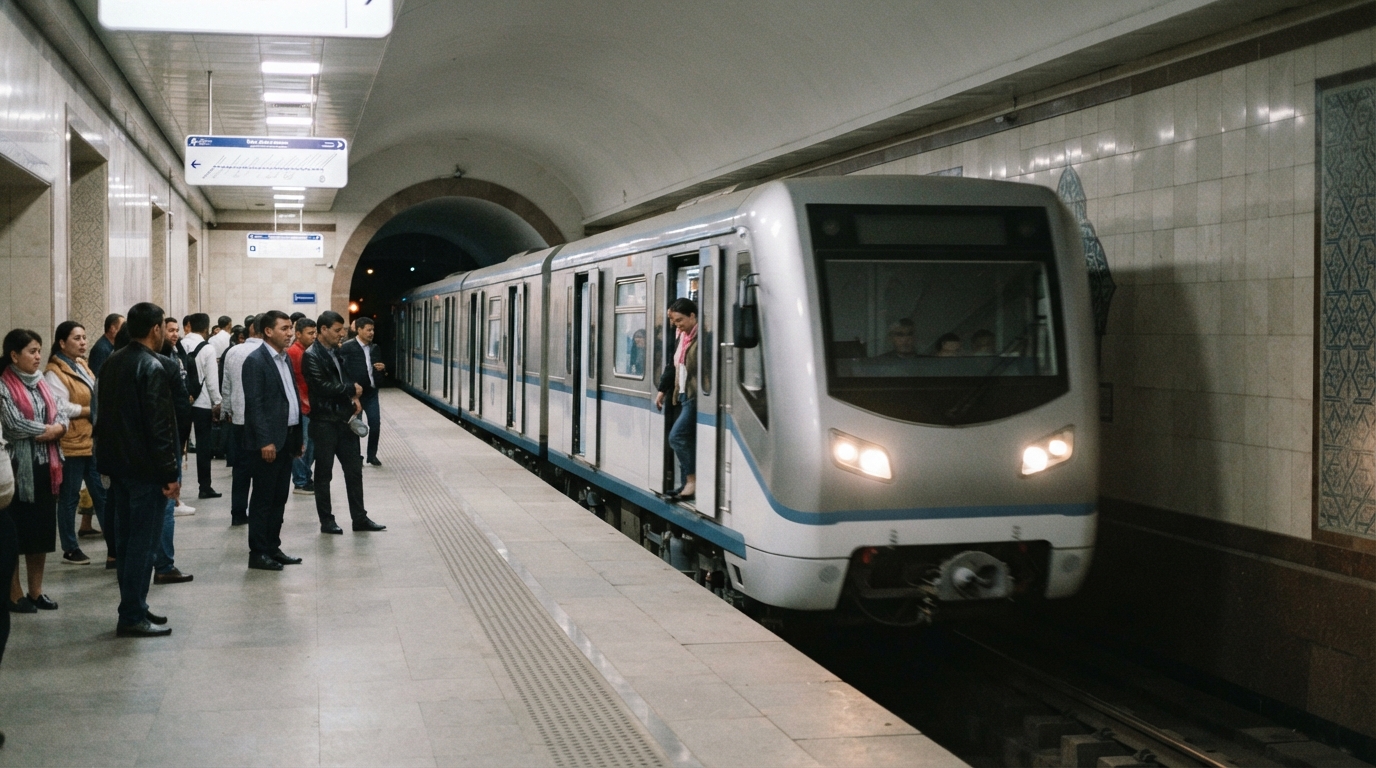
**70 new carriages to be purchased for Tashkent metro**
The Tashkent City Council of People's Deputies has approved the project concept for the purchase of new trains for the subway.
The project was developed by the Tashkent Metro. Neither the supplier nor the purchase price has been determined yet.
The new carriages are necessary to replace aging rolling stock and replenish the metro fleet. A portion of the current carriages has been in operation for several decades. If they are not renewed, the number of trains could decrease, headways could lengthen, and the quality of passenger service could decline.
Each train is set to consist of five carriages. Due to existing station platforms measuring approximately 100 meters, six-carriage trainsets cannot fit. Reconstructing the stations would require significant expenditure.
The new trains must be compatible with the existing infrastructure, featuring a track gauge of 1520 mm, power supply from a third rail at 825 volts, and a maximum speed of 90 kilometers per hour.
Unlike the current 81−717/714 series carriages, the new trains are required to have more powerful asynchronous motors, a regenerative braking system, improved acceleration and deceleration performance, low floors, air conditioners, modern information and lighting systems, and a wider passenger cabin.
The German company Siemens stated that its solutions do not meet the technical requirements and did not submit a commercial proposal.
Official commercial proposals were submitted by China's CRRC and Russia's GTR. Calculations for the remaining five companies were made based on open data regarding similar transactions.
The concept highlights the proposals from China's CRRC, Russia's Global Transport Solutions, and South Korea's Hyundai Rotem as the most optimal.
If a supplier other than Russia is selected, it may be necessary to build a depot and maintenance points for the new carriages. This cost is estimated at $10.1 million and has been included in the project calculations.
The selection of the supplier, determination of the funding source, and signing of the loan agreement are planned for 2026. The trains are expected to be delivered in 2027 in three batches over approximately 10 months. Their acceptance and commissioning are scheduled to be completed by November 2027.
Tashkent Metro is a non-profit organization operating on state subsidies. According to the concept, none of the options are financially self-sustaining. The loans are planned to be repaid from the state budget.
According to estimates, the new trains are expected to carry 18.7 million passengers in 2028, 22.6 million in 2030, and 27.4 million in 2035. The project plans to create 61 jobs.
Additionally, road congestion is expected to decrease as some passengers shift from personal and other modes of transport to the metro. The estimates also indicate the potential to reduce harmful emissions by an average of 4,000 tons per year.