

For the Tashkent metro, there are plans to purchase 14 five-car trains, with seven companies being considered
For the Tashkent metro, there are plans to purchase 14 five-car trains (70 cars in total). Currently, only four-car trains are in use. A six-car train option was considered, but the length of the platforms does not allow for this. Seven international manufacturers are being studied.
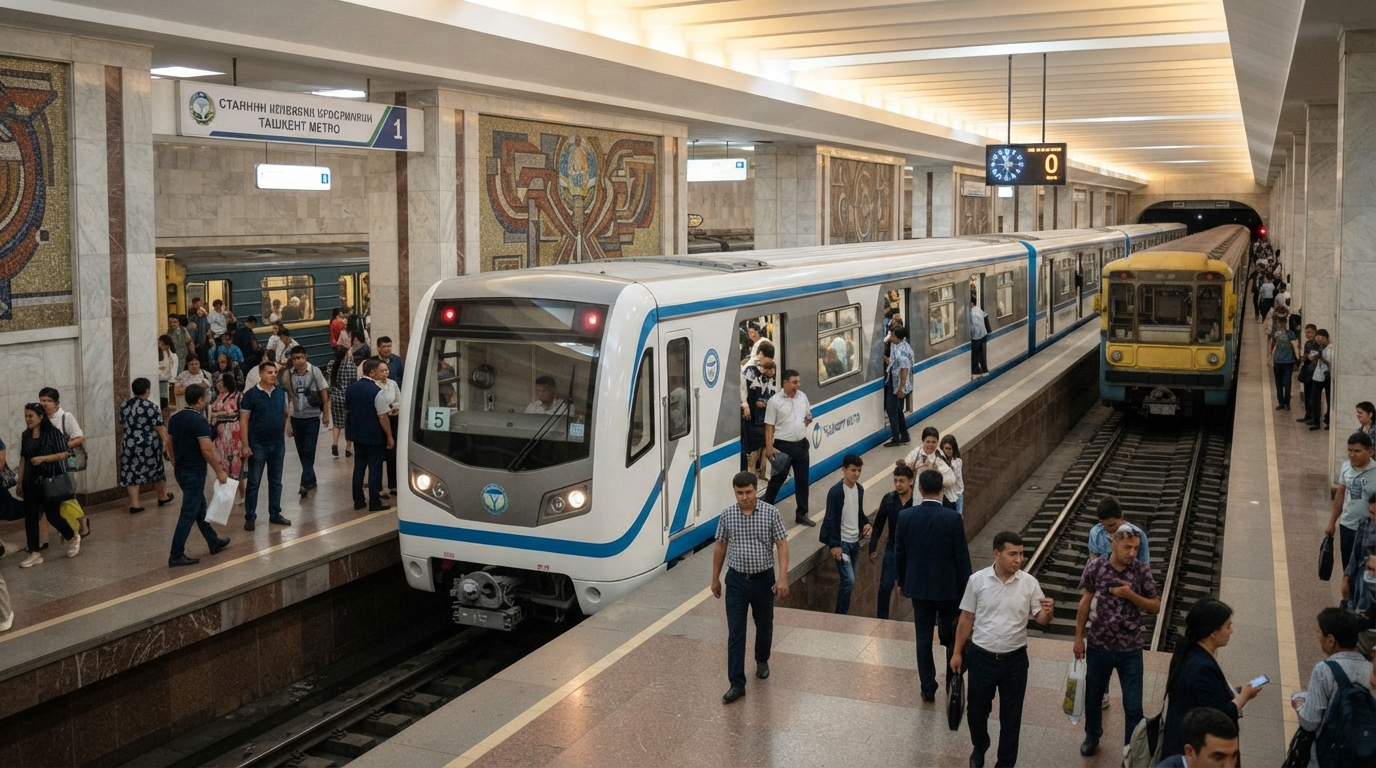
It is planned to purchase 14 five-car trains, which is 70 cars, for the Tashkent Metro. The project concept, which involves attracting funds from foreign governments and financial institutions, was approved by the city Kengash of People's Deputies on October 8. The implementation is scheduled to be completed by the end of 2027.
The document emphasizes the importance of developing the metro as a worthy alternative to personal transport, increasing the carrying capacity of the lines, gradually updating technically and functionally obsolete rolling stock, increasing safety and reliability of operation, improving the quality of passenger service, and reducing operating costs, including those for repairs and electricity.
During the preparation of the concept, the option of purchasing six-car trains was also considered. However, the length of the metro stations allows for the use of only five-car trains. Rebuilding them would require very large financial expenditures, the document says.
Currently, only four-car trains are operated in the capital's metro. In early 2023, on an experimental basis, one car was added to four trains of the Uzbekistan Line, which increased capacity from 1,000 to 1,300 passengers. However, plans for further lengthening of the trains were not developed further.
The concept examines seven foreign manufacturers of metro trains. The authors also compared delivery costs, loan terms, and the creation of facilities for train storage and maintenance.
These are CRRC (China), Kawasaki Rail Car (Japan), CAF (Spain), Alstom (France), Global Transport Solutions (Russia), Škoda Transportation (Czech Republic), and Hyundai Rotem (South Korea). Commercial proposals were submitted only by the Chinese and Russian companies. Germany's Siemens stated that its solutions do not meet the requirements of the Tashkent Metro and did not offer its services.
At the same time, it is noted that if the Russian manufacturer is chosen, there will be no need to rebuild the existing depots and infrastructure. However, the final cost of the project turns out to be higher due to the interest rate on loans.
The concept also compares the new cars with the old 81-717/714 ("Nomernoy") cars. Instead of 110 kW DC motors, 170 kW asynchronous traction motors are provided.
The lead cars should have 40 seats each, the intermediate cars 44 seats each, and the number of standing places should range from 176 to 330.
Today, the four lines of the Tashkent Metro have a total length of 70 km and 50 stations. On average, more than 800,000 passengers are carried daily. At the end of September, a record was set with more than 1.2 million passengers.