

35 years of independence: Uzbekistan through foreign eyes
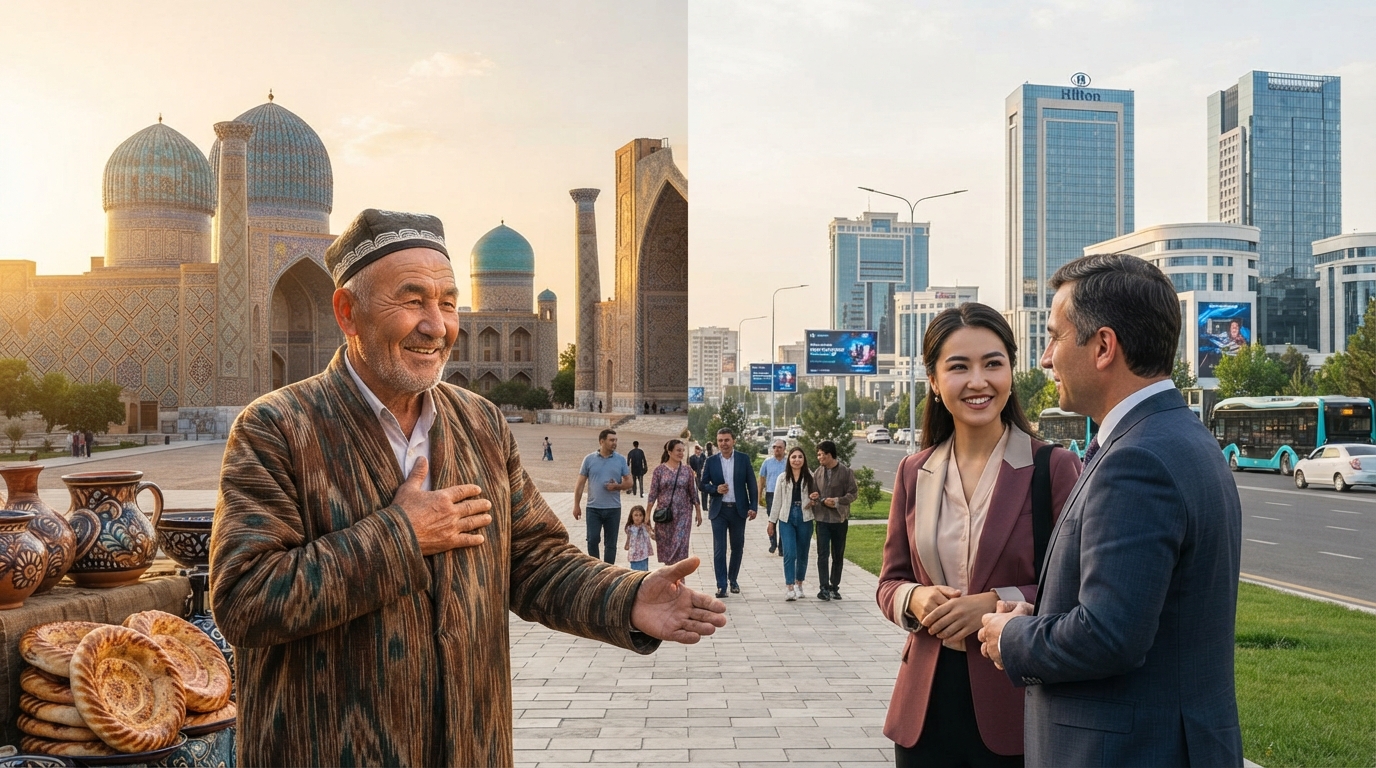
As Uzbekistan approaches its 35th year of independence on September 1, foreign observers—including diplomats, development partners, and business leaders—are increasingly witnessing a nation where deep-rooted heritage coexists with rapid modernization.
Those who have experienced Uzbekistan through living, working, or traveling there often highlight consistent qualities beyond its renowned Silk Road cities or evolving capital. They frequently mention the warmth of its people, the strength of its family and community bonds, a profound respect for history and traditions, and the forward-looking ambition of its younger generation.
However, each international perspective offers a distinct view. Some define Uzbekistan primarily by its hospitality, while others emphasize its history, its people, or its sense of future potential. The swift pace of economic and social change has impressed some, yet others note that beneath the new infrastructure, digital services, and expanding global ties, the nation's core traditions remain steadfast.
Collectively, these impressions paint a picture of a country growing in confidence as it shapes its future, all while maintaining a strong connection to its past.
For EU Ambassador Toivo Klaar, the people of Uzbekistan are the first thing that comes to mind. He describes their "warmth, hospitality and generosity," recalling shared cups of tea after meetings, conversations that extend beyond formal discussions, and the many welcoming smiles encountered throughout the country. For him, Uzbekistan is fundamentally a place where people make you feel at home.
U.S. Ambassador Jonathan Henick echoes this sentiment, identifying hospitality as a defining characteristic. He points to "the genuine warmth with which people here welcome guests," whether at a family meal in the Fergana Valley or a government meeting in Tashkent. Henick attributes this hospitality to centuries of being a Silk Road crossroads, noting it's the first thing American visitors remark upon. He also highlights the enduring impression of the Uzbek people's hospitality combined with a strong cultural identity and a forward-thinking mindset.
Anas Fayyad Qarman, UNDP Deputy Resident Representative in Uzbekistan, similarly places hospitality at the core of his experience, emphasizing that the warmth shown to guests is not reserved for special occasions. He states it's "something you experience not only on special occasions, but in everyday interactions, whether you are in Tashkent or visiting a community in one of the regions." Qarman also observes that Uzbekistan is "deeply proud of its history and traditions, while also looking confidently towards the future," a combination that gives the country a "very distinctive energy."
**An Ancient Country Looking Forward**
This balance between past and future is a recurring theme in the reflections of those who have spent time in Uzbekistan. Ambassador Klaar is particularly impressed by "the combination of a very strong sense of history and identity with a clear ambition to look towards the future." He notes Uzbekistan's "remarkable cultural heritage" alongside a "young, dynamic society that is eager to learn, connect and explore new opportunities." He has also been struck by the country's diversity beyond the capital, finding that travel to the regions offers a much fuller picture.
Antti Karttunen, OSCE Project Co-ordinator, finds Uzbekistan's ability to maintain its identity amidst rapid change to be one of its most impressive traits. He has observed this during his two and a half years in the country, and his friends and relatives have also been "positively surprised by how much it has developed, but also by the Silk Road cities – Samarkand, Bukhara and Khiva." Some have returned multiple times, with a few planning their fourth visit, which Karttunen believes "says something."
Andi Aranitasi adds that Uzbekistan's "remarkable history and cultural heritage" immediately come to mind, with names like Samarkand, Bukhara, and Khiva evoking the richness of the Silk Road and Uzbekistan's historical role in connecting cultures. Simultaneously, he sees a country "very much focused on the future," uniquely combining deep respect for its history with a strong ambition to grow, modernize, and create new opportunities for future generations.
**From Silk Road Heritage to a Modern Tashkent**
For Chinese diplomat Liuling Chi, Uzbekistan initially existed in her imagination as a place of antiquity and the Silk Road, associated with the Chor-Minor Mosque in Bukhara and a sense of timeless peace. Upon arrival, she discovered a remarkable intertwining of "centuries-old wisdom, inner calm and the rapid rhythm of modern life," creating an image of a country that is "grounded, vibrant and full of aspirations for the future."
Her initial impression deepened as she experienced Uzbekistan beyond its historical sites. Chi reflects that Uzbekistan is "a true cradle of science and culture," citing Samarkand, Bukhara, Khiva, Shahrisabz, and the legacy of figures like Mirzo Ulugh Beg. She finds that "art is organically woven into everyday life, and life itself is turned into poetry," with the local character, cultural richness, and art serving as an "inexhaustible source of inspiration and spiritual growth."
The two countries share over 2,000 years of interaction along the Silk Road, fostering dialogue and mutual enrichment. Today, this historical connection is reflected in modern cooperation spanning infrastructure, investment, digital technologies, education, and tourism. Chi has even noticed signs of growing familiarity in everyday encounters in Tashkent, with local residents often greeting her with "Ni hao!" She describes this "sincere and unpretentious friendliness" as her most pleasant discovery.
The increasing movement of people between China and Uzbekistan has further strengthened these ties. Since the introduction of visa-free travel, Chi has observed more Chinese visitors exploring Uzbek cafes, museums, mosques, and bazaars, while travel to China has become popular among Uzbek social media users. For Chi, tourism has become a window for deeper cultural, historical, and value understanding between the two peoples. Her experience in Uzbekistan has also left her with a saying she hopes to carry for life: "Whoever has tasted Uzbek bread will surely return."
**Shared History, Familiar Values**
Iranian Ambassador Mohammad Ali Eskandari's first thought when considering Uzbekistan is "commonality." For him, Uzbekistan is "not simply the name of a country," but a place where "you can see the past and the future standing side by side." He views Samarkand, Bukhara, and Khiva as testaments to thousands of years of history and civilization, while Tashkent represents "a modern Uzbekistan developing and looking towards the future."
However, he emphasizes that the deepest connection lies between the people of Iran and Uzbekistan, stating, "We not only share a common history, but we are also part of each other's historical memory." Living in Uzbekistan allowed him to experience these connections beyond books. He notes familiar elements "in architecture, respect for family, children's attitude towards parents, hospitality and traditions, and even in some of the words we hear." He recalls realizing during meetings that Iranian and Uzbek representatives could understand many words without a translator. When visiting Uzbekistan's historic cities, he says, shared history can be not only seen but felt. "Being far from my homeland, Iran, yet in most cases not feeling like a stranger may be what has impressed me most about Uzbekistan."
He views the country's future through the same lens of balancing heritage and modernization, seeing recent changes as "a serious movement towards the future while preserving historical roots and national identity." He also considers Uzbekistan's young people one of its greatest assets, observing "young people who are proud of their country's history and identity, but at the same time familiar with modern knowledge and technologies and the latest global developments. This synthesis is very valuable: deep roots and a gaze towards the future." He believes investment in new technologies, the digital economy, and artificial intelligence could create significant opportunities for the young generation and become a key growth engine for the country in the coming decade.
**The Pace of Change**
For many foreign figures, the speed of transformation in Uzbekistan has been undeniable. Ambassador Henick states he has been most impressed by "the pace of change." He notes that "in just the past decade, Uzbekistan has opened itself to the world – reforming its economy, easing travel for foreign visitors, and building new partnerships across sectors from energy to education." He is particularly struck by young Uzbeks, citing "their ambition, their fluency in English, and their eagerness to connect with the United States and the rest of the world. That energy tells me this country’s best chapters are still ahead." Henick also points to tangible international engagement, such as the November 2025 meeting between Presidents Donald Trump and Shavkat Mirziyoyev, followed by new investment and trade agreements, including Uzbekistan’s purchase of Boeing Dreamliner aircraft and new partnerships around critical minerals.
Ambassador Smart has also observed Uzbekistan becoming "increasingly open, outward-looking and confident." He describes the "striking" pace of change, encompassing economic development, greater international engagement, and new opportunities for businesses, communities, and young people. He highlights a "clear determination to modernise while preserving the values and traditions that make Uzbekistan unique," adding that the UK-Uzbekistan partnership has "grown stronger, year-on-year."
Pierre-Paul Antheunissens, Chairman of the Board of EUROUZ, finds the transformation visible simply by observing the surroundings. He notes, "It is impossible not to see the changes. The cities are being modernised, there are many new constructions, many new cars. Compared to several years ago, the changes are impressive!" He points to the increasing number of foreign companies and individuals in the country, stating that Tashkent is becoming "more and more an international city." Yet, he hopes some things will remain unchanged, such as "the beauty of the old Silk Road cities, the genuine hospitality from Uzbek people and the quality of the gastronomy!"
Alexey Skatin of the EDB similarly describes Uzbekistan’s transformation over the past decade as "remarkable," emphasizing the country’s greater openness, economic modernization, and expanding opportunities for investment and private-sector development. He finds the growing ambition to diversify the economy and strengthen connections with regional and global markets particularly encouraging. The EDB's own growing presence in Uzbekistan reflects this shift; the country joined the bank in 2025, the EDB opened its representative office in Tashkent in 2026, and full-scale investment operations began. The bank plans to invest at least $1.5 billion in Uzbekistan by 2031. Skatin also sees the changes increasingly visible in the number of partnerships forming between Uzbek companies, international financial institutions, and investors.
EBRD's Aranitasi describes the transformation in economic terms, noting that "Uzbekistan has undergone a significant transformation towards a more open and market-oriented economy." He points to greater private-sector participation, foreign investment, and reforms in energy, banking, and infrastructure. He cites that "in 1Q26, GDP grew by 8.7%, while the EBRD forecasts growth of 6.5% for 2026." Since 2017, the EBRD has invested over €5.8 billion across more than 200 projects in Uzbekistan. Aranitasi believes the next phase involves making this growth "more private-sector driven, competitive and sustainable," requiring continued economic expansion, stronger private-sector participation, greater competitiveness, and sustainable development, with significant potential in areas like green energy and regional connectivity.
**The People Behind the Transformation**
While economic reforms and infrastructure are tangible signs of change, many interviewees believe Uzbekistan's most crucial resource is its people. Ambassador Klaar points to "enormous potential in Uzbekistan’s people, particularly its young generation." Ambassador Henick describes them as "young, well-educated, and increasingly globally minded." Ambassador Smart similarly highlights a "talented and ambitious population," with education highly valued.
For Korean Ambassador Won Doyeon, the country's strength lies in "rich and talented human resources." He notes that "Uzbekistan is the most populous country in Central Asia, with a young and dynamic population," believing this combination of a large, young population and highly motivated and educated people will provide a strong foundation for Uzbekistan’s continued development. This observation echoes a broader theme: Uzbekistan's young population is not just a demographic fact but central to the country's economic and social potential.
UNDP Deputy Resident Representative Anas Fayyad Qarman identifies the country's greatest strengths as "its human capital and reform momentum," seeing these two elements as closely connected, with investment in people and continued reforms forming the basis for Uzbekistan's next stage of development. For Eskandari, Uzbekistan's "talented youth" stand out above all.
**Investing in the Next Generation**
This demographic potential is particularly significant for UNICEF Uzbekistan Representative Regina Castillo. She states that "Uzbekistan is at a critical demographic juncture." Preliminary census results indicate a population of over 39 million, projected to exceed 50 million by 2050. Castillo highlights a "notably young population, with nearly 60% of the population under 30 years of age."
However, Castillo emphasizes that the demographic dividend must be earned through "deliberate policy choices, especially investments that begin in the earliest years of life." She notes that approximately 90% of brain development occurs before age five, arguing that investment in early childhood health, nutrition, education, and social protection can yield substantial long-term economic returns. Uzbekistan has already made progress, with preschool enrollment rising from under 30% in 2017 to over 75% in 2025, and government investment in early childhood education tripling.
Castillo also highlights the launch of the new National Curriculum Framework on August 18 as "a huge milestone" in the country's education reform journey. Its aim is to create "an inclusive and internationally aligned education system that equips all young people in Uzbekistan with the knowledge, skills, and opportunities they need to succeed in the world." UNICEF's goal is to support the government in ensuring all children learn and succeed, whether in Tashkent or Karakalpakstan.
Beyond preschool enrollment, Castillo points to a broader transformation in the country’s child-protection and education systems, including the National Partnership Compact for Education Reform 2023–2026, the establishment of the National Agency for Social Protection in 2023, the Children’s Ombudsperson law adopted in 2024, and the 2024 law protecting children from all forms of violence. She warns that the scale of the opportunity makes the next decade particularly important. Children born in Uzbekistan today are expected to reach only about 60% of their full productivity potential, indicating a significant human-capital gap. UNICEF estimates that targeted early-childhood investments could generate additional economic returns of up to 6% of GDP per capita by 2050.
**Reform That Reaches Everyday Life**
For UN Resident Coordinator Sabine Machl, the ultimate measure of progress is whether reforms improve people's daily lives "through better services, stronger communities, and real opportunities." She points to Uzbekistan's rise to 62nd place among 167 countries in the 2025 Sustainable Development Report, an increase of 19 places, with nearly 45% of SDG targets achieved or on track.
These improvements, she notes, have also delivered measurable practical benefits. Poverty has fallen from 17% in 2021 to approximately 5.8% in 2025, while improved public services have reached 12.8 million people, generating an estimated $2.1 million in annual savings for citizens. Preschool enrollment has also risen to 78%, benefiting around 2.4 million children. Alongside domestic reforms, Machl states that Uzbekistan has emerged as "a key driver of regional cooperation in Central Asia," including through good-neighborly relations and collective action on climate resilience. "The United Nations is proud to support Uzbekistan in its journey from reforms to results."
**The Little Things That Become Memories**
Some of the most revealing impressions, however, are not about GDP, investment, or reform, but about everyday observations, like melons left on the street overnight. For Japanese Ambassador Kenji Hirata, one of the most surprising aspects is "the order and safety." He observes, "At this time of year, I see many melons and watermelons sold on the street. Owners leave them out overnight, and no one touches them. You see this in very few countries." While his first association with Uzbekistan is history, his most personal impression is the optimism of its people—"the belief that tomorrow will be better than today, which is uncommon worldwide. I believe this outlook will, in turn, help the country build a brighter future."
Ambassador Henick has adopted a small Uzbek custom himself. He notes that "the respect that Uzbeks have for their families, elders, guests, and one another... contributes to a strong sense of community." He adds, "Like most Uzbeks, I, too, now automatically place my right hand over my heart when greeting, acknowledging, and thanking others."
For Jon Zaidi, CEO for Uzbekistan at Acwa, trust and human connection have been lasting impressions. He recalls his surprise upon arriving in Uzbekistan when a restaurant waiter would take a customer's bank card and the PIN could be shared for payment to be completed elsewhere. "For me, it revealed an extraordinary level of trust between people." Today, he observes digital payments, faster services, and a new generation expecting international standards. While "technology can make life easier," he believes "trust is what makes a society human." Zaidi's deeper surprise was how quickly professional relationships became personal ones, with conversations moving from contracts and deadlines to questions about people's origins, identities, and beliefs. "You stop feeling that you are delivering something to Uzbekistan. You begin to feel that you are building something with its people."
**"Possibility"**
If Zaidi had to describe Uzbekistan in one word, it would be "possibility." He states, "I have lived and worked in many countries, but Uzbekistan carries a particular sense that tomorrow does not have to resemble yesterday. You feel it in the ambition of its leadership, but also in conversations with young people, colleagues and families. This is an ancient country with the courage to imagine itself anew."
He believes the next stage of development must ensure people see themselves in that future. "A nation changes when its people can see themselves in its future. The next chapter will depend on whether every young person can imagine a meaningful place within it, and whether every woman has the freedom, confidence and opportunity to contribute fully to the country's future. Women's empowerment is not a separate social ambition. Youth aspiration is not a promise for later. Both are central to the strength Uzbekistan is becoming today."
**A Future Built on Partnership**
For many international figures, Uzbekistan's future is intrinsically linked to its expanding network of global partnerships. Ambassador Klaar views the country as a potential bridge between Central Asia and Europe through trade, transport, and connectivity, making it "a natural and important partner" for the European Union, with cooperation spanning education, green development, digitalization, water, transport, and investment.
Aranitasi sees particular potential in private-sector development, green energy, and regional connectivity. Chi identifies opportunities to deepen China-Uzbekistan cooperation in trade, investment, infrastructure connectivity, digital technologies, education, and humanitarian exchanges. Eskandari believes Iran and Uzbekistan can transform their shared historical capital into practical cooperation in trade, transit, industry, agriculture, tourism, science, and technology. Ambassador Hirata emphasizes Japan's continued commitment to supporting Uzbekistan, especially through human resource and infrastructure development.
Across these diverse partnerships, a common thread is that Uzbekistan’s international relationships are increasingly framed not just by its strategic geography or historical importance, but by its people, skills, technology, infrastructure, and its capacity to participate in a more connected regional and global economy.
Skatin also considers Uzbekistan’s growing role in regional connectivity as one of its greatest areas of potential. He highlights the country’s position at the crossroads of major Eurasian transport corridors, including the China–Kyrgyzstan–Uzbekistan railway and routes linking Central Asia with the Caspian region and beyond. He states, "This creates opportunities not only for transit, but also for trade, manufacturing and the development of regional value chains."
As Uzbekistan celebrates its 35th Independence Day, its international partners collectively extend wishes for peace, prosperity, and continued progress. Ambassador Klaar offers a concise vision for EU-Uzbekistan relations: "Friendship, cooperation and prosperity. Thank you, Uzbekistan — for your friendship, your trust and your hospitality. We have come a long way together, and I am certain that there is much more we can achieve together."
Ambassador Henick congratulates Uzbekistan on behalf of the United States "on 35 years of independence," seeing the occasion as a chance to celebrate "not only how far your nation has come, but the bright future ahead." Ambassador Smart extends his "warmest congratulations" and wishes the people of Uzbekistan peace, prosperity, and continued success, anticipating stronger friendship between the UK and Uzbekistan. Ambassador Karttunen wishes Uzbekistan "continued peace, prosperity and success in the years ahead." Korean Ambassador Won expresses his fortune in experiencing Uzbekistan's culture and meeting its warm people, pledging to continue efforts to bring the two peoples closer.
UNICEF's Castillo wishes the country "peace, stability, prosperity and continued achievements for the benefit of all children and its people." UNDP's Qarman wishes Uzbekistan "continued peace, prosperity and progress" and, crucially, a future where every person, especially young people, can realize their full potential. Machl sends congratulations on behalf of the United Nations, wishing the people of Uzbekistan "peace, happiness, health, and prosperity."
From Indonesia, Hasani Edelin, Charge d'Affaires and Minister Counsellor at the Indonesian Embassy, conveyed heartfelt congratulations on Uzbekistan's 35th anniversary of independence, wishing the country "peace, endless blessings and prosperity." Antheunissens congratulates Uzbekistan on behalf of EUROUZ, wishing the country "prosperity, peaceful development and success" in its modernization and reform efforts. Skatin also congratulates Uzbekistan on its 35th anniversary of independence, noting that the transformation achieved in recent years has made the country "more open, dynamic and increasingly connected to the global economy," expressing confidence that this momentum will create greater opportunities in the years ahead.
From Iran, Ambassador Eskandari offers a message rooted in the countries' shared past but firmly focused on the future. "We have a shared rich history," he says. "Now our task is to create a shared bright future." He concludes, "May your independence be blessed, may your future be bright, and may the friendship between Iran and Uzbekistan last forever." From China, Chi offers her congratulations on behalf of herself and the young diplomats of the Chinese Embassy, hoping the friendship between China and Uzbekistan will grow stronger with every generation. "May the friendship between China and Uzbekistan, like the shining blue dome of Registan Square in Samarkand, grow stronger with the years and be passed down from generation to generation."
Zaidi's message is perhaps the most reflective. "Independence is not only the right to choose your own direction. It is the responsibility to ensure that direction creates dignity, opportunity and hope for every person. May Uzbekistan continue to move forward with courage, but also with care. Happy Independence Day, Uzbekistan. Forward, Uzbekistan!"
**Uzbekistan Through Foreign Eyes**
At 35 years of independence, Uzbekistan can be described in many ways: a nation of ancient cities and modern aspirations, of Silk Road heritage and digital transformation, of family traditions and an increasingly global outlook. Its young population is seen by international partners as both its greatest opportunity and its greatest responsibility. Yet, perhaps the most consistent observation from those who have come to Uzbekistan from abroad is much simpler: it is the people.
It is the cup of tea after a meeting, the meal shared with friends, the hand placed over the heart, the greeting of "Ni hao!" on a Tashkent street, the family celebrations that continue even after leaving the country, the plov that becomes a signature dish abroad, and the Uzbek bread that, as the saying goes, makes those who taste it want to return. It is also the trust placed in a stranger, the melon seller who can leave produce on the street overnight, the friends who keep asking for souvenirs from Chorsu, and the foreign visitor who discovers that a professional assignment has become something personal. These small observations may reveal as much about the country as its statistics and reforms.
For those who have worked, traveled, and built relationships here, Uzbekistan is not merely a country changing before their eyes. It is a place that has, in many cases, transformed their own understanding of friendship, hospitality, community, and connection.