

Xbox caps cloud gaming at 15 hours a month for Game Pass subscribers
Xbox said the limits were due to the rising cost of cloud gaming, and would allow it to invest more in its performance
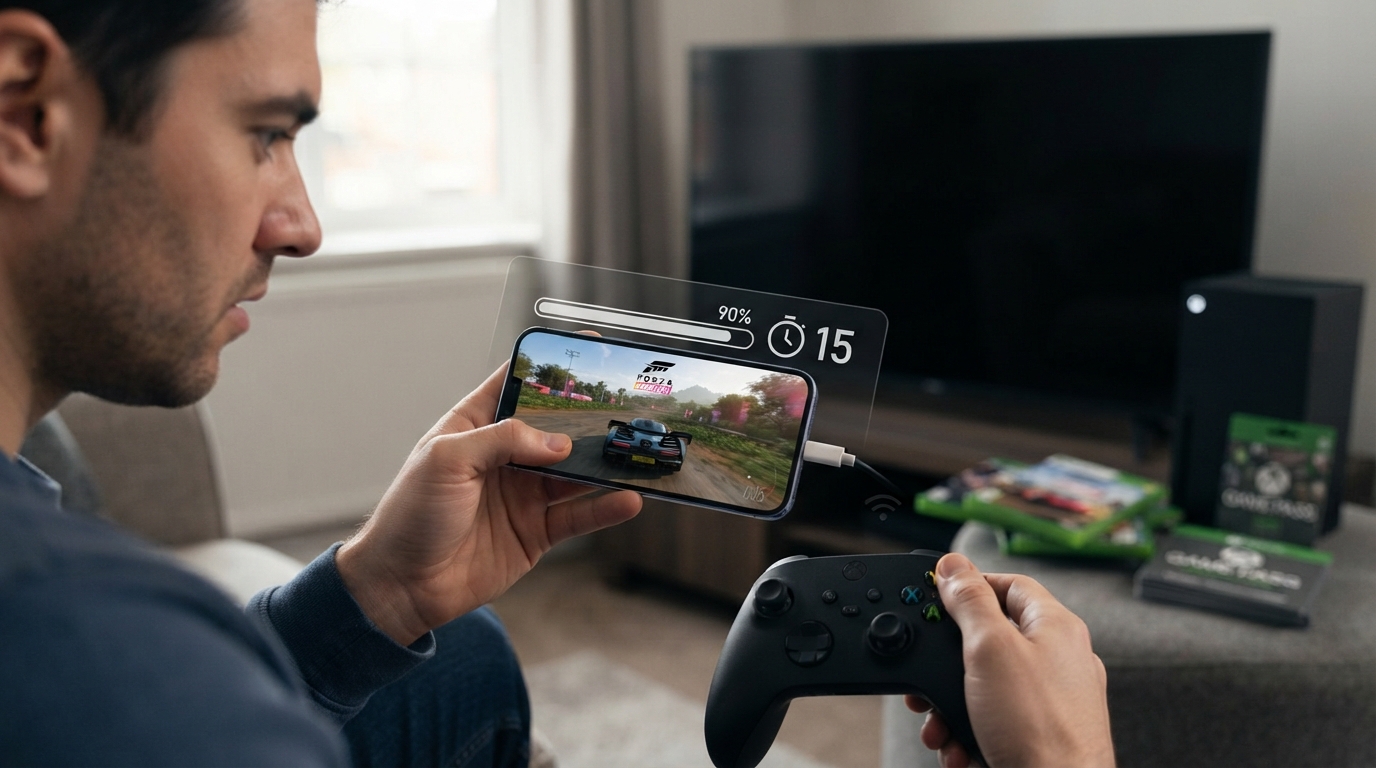
Xbox limits cloud gaming to 15 hours a month for Game Pass subscribers
Xbox is set to impose firm monthly limits on Game Pass subscribers who play streamed games through its cloud gaming service.
Starting in November, users on the £16.99 Ultimate monthly plan will be able to stream games for as much as 15 hours a month before needing to buy extra cloud play time.
Xbox said the restrictions were prompted by the increasing cost of cloud gaming, and that they would help the company "continue to invest" in the service's "reliability and performance".
Cloud gaming lets players stream and play games online from a remote server using a phone, tablet or controller, instead of downloading and running them on a PC or console at home.
The different Game Pass subscription tiers will each have separate limits.
Premium subscribers will receive 10 hours, while those on the basic Essential tier will get five hours a month before paying for additional time.
Xbox said only 4% of Games Pass users - its Netflix-style games subscription service - use its cloud gaming offering.
"This is a pretty awful change, hopefully Xbox adds an extra zero on the end cause 15hrs is abysmal. 30 minutes a day, really?" one commenter posted on X
Jez Corden of Windows Central told the BBC that the announcement showed that "absolutely nothing is safe from the AI-driven component crisis," while also pointing to "where Microsoft's priorities are".
Cloud gaming and AI both rely on the same infrastructure - data centres - to process information.
"For them to continue to offer unlimited access to Microsoft Copilot [AI] for free but restrict paid cloud gaming in this way shows some contradiction," he added.
Xbox has not said how much extra cloud gaming time will cost.
The announcement comes after Asha Sharma, Xbox's chief executive, told the BBC in an exclusive recent interview that the company and the wider industry needed to "start to innovate on affordability and efficiency," amid a "crisis" in computing prices.
"As an industry, we're in the middle of 'Rampocalypse'. We're in the middle of people coming back from Covid and the patterns changing," she said.
"Rampocalypse" refers to the fact that the cost of a once-cheap hardware component, random access memory (Ram), has risen sharply as compute-hungry data centres have expanded. Some people also call it "Ramageddon"
Sharma added: "Within Xbox, we haven't been healthy. And so a lot of the reset that will take us throughout the year is really meant to help ensure that we are here for the next 25 years and we're continuing to serve our purpose and our mission."
annual Xbox revenue fell by $1.7bn to about $21.8bn (£16.1bn) - a 7% drop from 2025.
As part of Sharma's reset, 3,200 people have been let go at the company - with 1,600 job cuts announced in July, and the remaining roles to be eliminated gradually during Microsoft's 2027 financial year.
Studios previously acquired by Xbox - including Compulsion Games, which made the Bafta-winning South of Midnight, and Double Fine Productions, makers of Psychonauts - were also made independent again.
Sharma is banking on these changes to turn things around despite worries about its subscription approach and rising AI-related costs.
"Sometimes you have to restructure a business when it's not doing well, and that was true with our Xbox business," Microsoft's president Brad Smith recently told the BBC.
In an interview in July, Jeff Gattiss, Amazon's head of gaming, told the BBC he thought the rising cost of tech would push people toward streaming games online rather than buying new consoles.
However, despite major companies investing in the technology, it has never fully gone mainstream.
Google launched its own cloud gaming service Stadia in November 2019, describing it as a "Netflix for games".
The service was shut down in January 2023
, external after the company said it had not drawn as many users as expected.
For many gamers, cloud gaming is still too unreliable for regular use because it depends on high-speed internet - and an extra fee could make it even less appealing.