

With THOUGHTS of the Important
In Kyrgyzstan, mosques are being gathered under one dome. Bishkek is strengthening the Muftiyat to curb religious fragmentation
With the SAMK in Mind
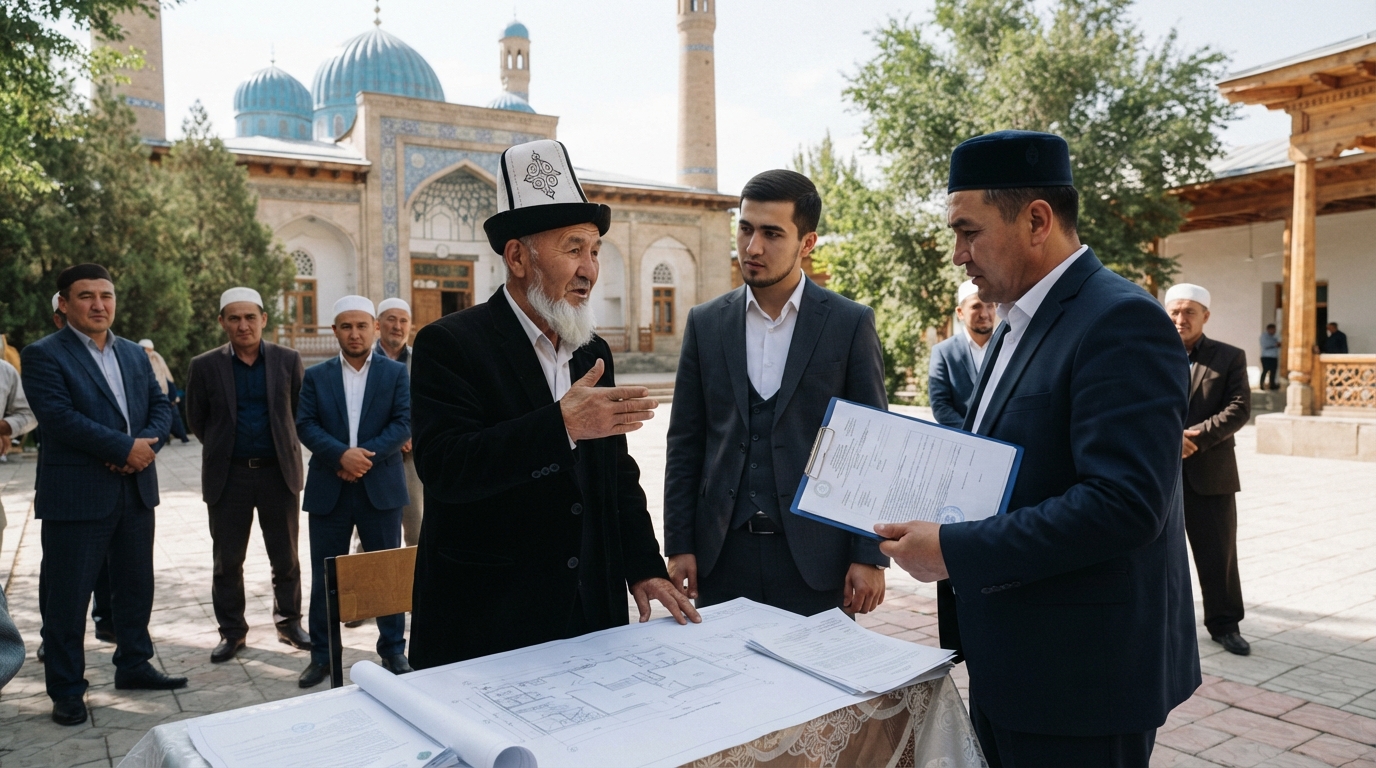
By February 1, 2027, all active mosques in Kyrgyzstan must be transferred to the balance sheet of the Spiritual Administration of Muslims of Kyrgyzstan (SAMK). In parallel, an audit of the documents of religious facilities is underway in the country: it is being determined who owns the land, whether the building was erected legally, and whether it has been put into operation. Bishkek is trying to build a unified management system for Muslim life, where there will be fewer independent centers of influence, and the accountability of the clergy to the Muftiyat will become more noticeable. Experts do not rule out that the re-registration could cause dissatisfaction among believers, but there are no grounds yet to assert that the audits will lead to protests.
According to SAMK data, there are 4,470 mosques in the republic. Many of them appeared thanks to donations from residents and patrons. Communities raised funds, found plots, built walls, but the processing of documents was often postponed. Now these gaps are to be eliminated. Preliminary results of the audit are expected before the end of the year. The Muftiyat emphasizes that it is a matter of streamlining documents, not closing mosques. The transfer of a private facility is possible only with the consent of the owner and in compliance with legal procedures.
The basis for this was the law "On Freedom of Religion and Religious Associations," signed on January 21, 2025, and entering into force on February 1. It provides for placing religious facilities on the balance sheet of the central governing body and allocates two years for their re-registration. For Muslims, such a center is the SAMK. The transfer to the balance sheet should not automatically be considered a seizure of property: the law allows for the registration of both ownership and temporary use of the building.
At the same time, the re-registration of mosques may turn out to be more sensitive than a routine document check. For residents who raised money for construction themselves, the question of what influence the community will retain is important. Who will appoint the imam, manage donations, and bear expenses? For now, there is no reason to speak of inevitable protests. But much will depend on whether the authorities and the SAMK can reach an agreement with owners and parishioners. Assistance in processing land and buildings is more likely to reduce tension, whereas pressure or the threat of closing a mosque could turn an administrative dispute into a conflict over the right to religious life.
The influence of the Muftiyat extends far beyond property issues. It appoints the heads of religious facilities and educational institutions, and participates in coordinating the construction of mosques and madrasas. The new rules link the building, the imam, education, and preaching into a single chain. The presence of a benefactor ready to build a mosque no longer removes the question of who will teach in it and to whom they will answer, the law states.
About 90% of Kyrgyzstan's residents consider themselves Muslim — this government estimate is cited in the U.S. report on religious freedom for 2023. But behind the general figure lies a heterogeneous environment. The basis is Sunni Islam of the Hanafi school of law, associated with Maturidi theology. It is precisely this tradition that the state and the official clergy propose as the pillar of religious harmony.
Over the years of independence, other Islamic trends have also spread in the republic. A prominent place is occupied by the missionary movement Tablighi Jamaat. It is not banned in Kyrgyzstan. There are followers of Salafism, Sufi traditions, and Turkish religious movements. These names designate different views and forms of religious life, rather than a single radical camp. Some communities exist without organizational registration, making it difficult to accurately assess their influence.
Theologian Kadyr Malikov called what is happening "jamaatization": the Muslim environment is fragmenting into communities with their own authorities. In his estimation, such fragmentation creates risks of external influence. But the rivalry of religious groups needs to be separated from the terrorist threat. A conservative preacher, a participant in a banned political organization, and a person preparing an attack are different cases requiring different responses, Malikov stressed.
Underground structures in the country, judging by reports from security forces, persist. In February 2025, the police announced the detention in Bishkek of alleged members of Hizb ut-Tahrir suspected of distributing materials and recruiting. In March 2026, the State Committee for National Security (GKNS) reported the detention of an alleged leader of the organization in the Suzak district. The movement is banned in Kyrgyzstan and advocates for a caliphate, although it publicly claims non-violent methods.
A different threat is posed by recruitment into the Islamic State (IS). In September 2025, the GKNS declared the detention of a Kyrgyzstani who, according to the agency, was recruited abroad and returned to commit a terrorist act. Last October, a person allegedly recruited into IS through social networks was reported. Such cases explain the authorities' anxiety, although it is premature to speak of the existence of a mass armed underground.
Therefore, control also extends to the Internet. Bloggers who systematically conduct religious preaching are required to register and obtain a certificate. Specialized education and the consent of the relevant religious center are required. As Nurgazy Kyrgyzbaev, a representative of the National Agency for Religious Affairs, clarified recently, single posts and comments do not require registration. It is a matter of establishing rules for those who constantly act as religious mentors.
Bishkek is consistent in this policy: the expansion of the Muftiyat's powers is supplemented by requirements for preachers and audits of religious facilities. Explaining the adoption of the law, President Sadyr Japarov warned of the continued activities of banned movements. At the same time, the head of the relevant agency, Azamat Yusupov, in an interview with local media, called the religious situation stable and noted the absence of conflicts between religious groups. According to him, the authorities are acting to prevent conflicts.
Religious scholar Indira Aslanova noted that viewing non-traditional communities primarily as a security threat narrows the space for diversity of beliefs. The state is interested in faith uniting society rather than becoming a reason for division. But achieving this through re-registration alone is impossible: along with control, educated imams, the trust of communities, and a clear distinction between religious disagreement and calls for violence will be needed, Aslanova believes.