

Will the State Assets Management Agency give a "fishing rod" to the hungry of Karakalpakstan?
Under the leadership of the State Assets Management Agency, a complex of targeted measures is being implemented in the Chimbay, Takhiatash, Khojeyli, and Shumanay districts of Karakalpakstan, designed to increase employment, involve the population in entrepreneurship, and ultimately reduce poverty. This was reported by the information service of the department. At the first stage, officials are studying the situation of families in need of support, as well as unemployed citizens. In the field […]
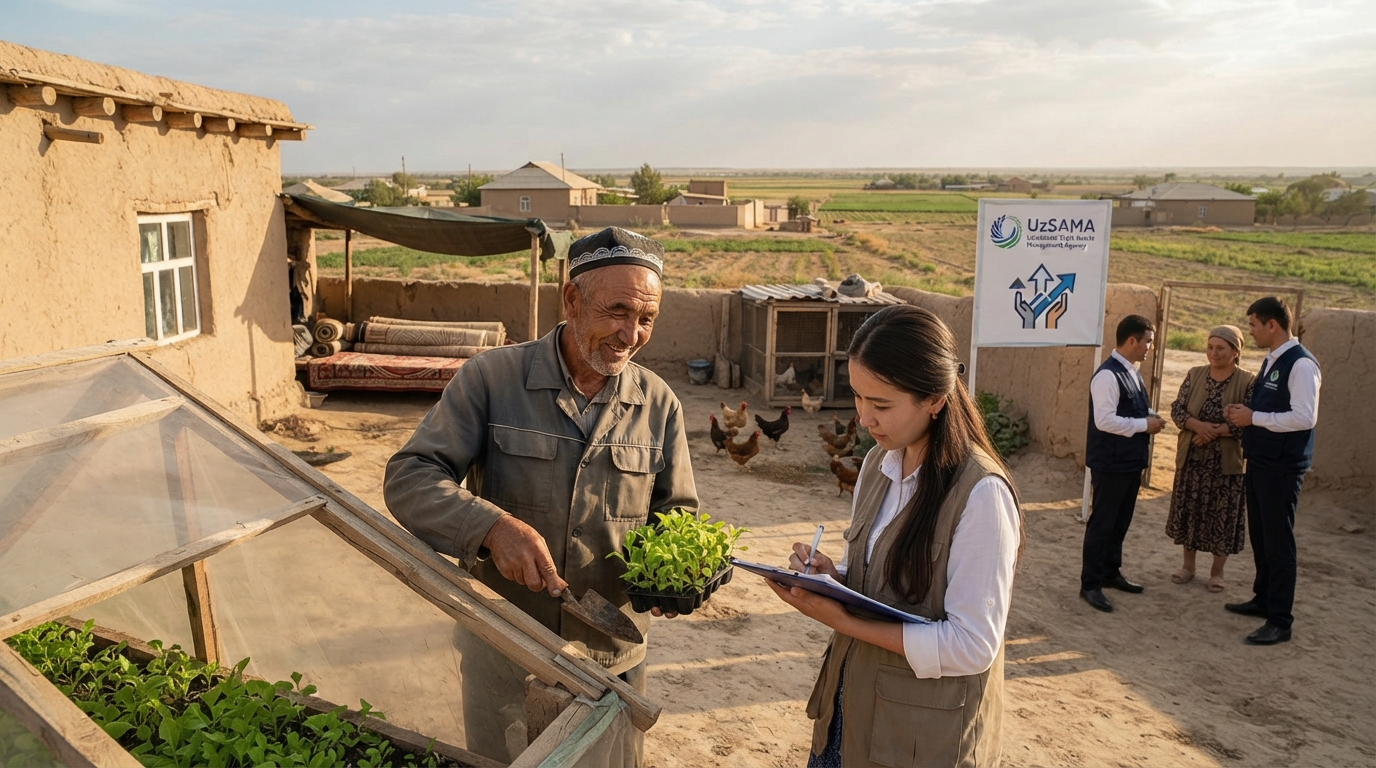
Will the State Assets Management Agency Give a "Fishing Rod" to the Hungry of Karakalpakstan?
Under the leadership of the State Assets Management Agency, a complex of targeted measures aimed at increasing employment, involving the population in entrepreneurship, and, ultimately, reducing poverty is being implemented in the Chimbay, Takhiatash, Khodjeyli, and Shumanay districts of Karakalpakstan.
At the initial stage, officials are studying the situation of families in need of support, as well as unemployed citizens. This takes into account not only income, but also the difficulties of a specific family, the skills of its members, their interests, and opportunities for earning an income.
Based on the results of this assessment, individual development plans are drawn up. Some are offered to master a high-demand profession, others to engage in entrepreneurship, and still others to receive preferential financing or secure permanent employment.
A separate focus is related to finding additional sources of income directly on the ground. In particular, attention is paid to more efficient use of household and leased plots of land, launching income-generating projects in mahallas, and developing family entrepreneurship.
Simply put, the logic of the approach is as follows: not just to provide assistance to a family, but to create conditions under which they can earn a living independently.
The goal declared by the Agency is to create new jobs, expand sustainable sources of income, and increase the economic activity of families. If these measures indeed lead to the emergence of stable earnings, the program could become one of the tools for reducing poverty in Karakalpakstan.
However, the main question remains practical: will families in need receive a real mechanism for independent earning? The results of this work will have to be evaluated not by the number of meetings held and families surveyed, but by how many Karakalpak families have actually gained the opportunity to earn more and more stably.