

Will a new code end 'rip-off parking charges'?
The prime minister says a new code will end "rip-off parking charges" - but will it work?
Will a new code end 'rip-off parking charges'?
Rosey Greenwood was told to pay £1,906 after taking more than five minutes to pay for parking.
"I was completely on edge, every single day," said Rosey Greenwood. "I had letters coming through - I had debt collectors after me."
Two years ago, Rosey was being told to pay £1,906 because she had taken too long to pay for parking.
Rosey had paid every time she parked at the Copeland Street car park in Derby, and she had bank records to prove it. But she had unknowingly breached the car park’s terms and conditions, which said drivers had to pay within five minutes of entering.
Rosey could not afford to pay £1,906 - she was due to get married and was also saving to buy her first home.
As she prepared to fight the case in court, her fiance emailed the BBC and asked us to "shed some light" on what was happening.
The case was then raised in Parliament by Derby North MP Catherine Atkinson, who described the charges - which had caught out countless other motorists - as a "five-minute rip-off charge".
The parking sector later banned the five-minute payment rule by updating its code of practice, but the government is going further by introducing a statutory Private Parking Code of Practice.
"These charges leave people feeling ripped off and out of pocket, so I'm putting a stop to them," Prime Minister Andy Burnham said.
But will the new code actually put the brakes on "rip-off" parking charges?
Prime Minister Andy Burnham said parking charges left people "feeling ripped off".
The government's new Private Parking Code of Practice was laid before Parliament on Tuesday.
It sets out standards that parking operators must follow.
Housing and communities minister Florence Eshalomi said the new code "will give drivers a range of rights and protections to make these unfair practices a thing of the past".
The code is now subject to a 40-day period of parliamentary scrutiny, during which MPs and peers can object before it is formally issued.
It will then come into force 21 calendar days after issue.
The five-minute payment rule - as shown on this sign - had already been banned by the parking sector itself.
In several respects, the code appears very similar to the private parking sector’s current code of practice.
For instance, Eshalomi said drivers would "now have a guaranteed minimum five minutes to decide whether to park", known as the consideration period.
However, the sector’s code already gives drivers a minimum consideration period of five minutes, so this does not appear to be new.
The government’s code also gives drivers a 10-minute grace period, external, to leave a car park after their permitted stay ends.
However, the sector’s code already gives drivers a 10-minute grace period, so this does not appear to be new either.
The government’s code sets the maximum parking charge at £100, or £60 if paid within a fortnight. That is also the same as in the sector’s code.
The government’s code says charges should be reduced to £20 on appeal.
The sector’s code already said charges should be reduced to £20 in those circumstances.
Parking operators will also still be allowed to add a £70 debt recovery fee, external, to each parking charge if drivers do not pay, along with court fees and legal costs.
Car park operators who break the rules should, in theory, lose access to DVLA data.
The government code says parking charges should be cancelled on appeal where the driver or a passenger in the vehicle suffers the onset of illness, where the driver or a passenger is delayed by an overrunning medical appointment, where the driver is delayed because of childcare arrangements, and where a vehicle breaks down.
By contrast, the sector’s code said these charges should be reduced to £20.
The government’s code says parking operators who fail to comply will lose access to DVLA vehicle keeper data, meaning they will no longer be able to issue parking charges.
Campaigners say this has not happened in practice, but the government insists it will happen in future.
There will also be what the government calls a "fully independent Scrutiny and Oversight Board".
Jack Cousens, head of roads policy at the AA, said the advantage of the new code was that it was backed by the government, rather than the parking sector itself.
"That means, if there are any changes to be made, it will come via the government and indeed via the independent scrutiny panel," he added.
"Up until now, the private industry have held the pen on changing the code of practice. Now the pen is firmly in the hand of the government."
Lynda Eagan does not think the new code will result in fewer parking charge notices being issued.
Both the AA and RAC have welcomed the statutory code of practice - which they campaigned for - but believe it does not go far enough.
For example, the AA says there needs to be a single and independent appeals process.
"Drivers need to have confidence that when they are making their representations, it's being heard by an independent body, as opposed to the private parking operators and their trade bodies marking their own homework," Cousens said.
The AA also believes the government needs to find an alternative to debt recovery fees and charges, which often "spiral" into the threat of court action and County Court Judgments.
This was how Rosey was asked to pay a total of £1,906 for 10 parking charges, and also how Hannah Robinson was asked to pay £11,390.
The RAC shares the same concerns.
"We've long called for the banning of debt recovery fees being added on top of parking charge notices, and a single independent appeals body to replace the two industry-run ones, but neither have been included [in the code] which is disappointing," head of policy Simon Williams said.
The government said it was "consulting as soon as possible next year on private parking debt recovery fees, including on whether to cut an existing £70 cap or scrap the fees altogether".
Parking campaigner Lynda Eagan, who helped Rosey, is sceptical about how much has changed.
"I've been screaming at the TV every time I see someone saying 'we've got these new things'," she said.
"They've tweaked a few things here and there, but it's not actually going to make an awful lot of difference to people.
"How, when not much has really changed, is that going to reduce the number of PCNs [parking charge notices]?"
In response, a Ministry of Housing, Communities and Local Government spokesperson said: "We don't accept these claims. We've introduced a new Private Parking Code of Practice that will have statutory force and independent oversight.
"We've introduced significant changes to make life fairer for drivers, including cancelling the £20 charge for circumstances outside a someone's control like an overrunning medical appointment, and helping motorists get a fairer outcome with strengthened requirements for appeals."
One thing Eagan is looking forward to is the new oversight board, although she is concerned it will not be truly independent.
The AA is more optimistic.
"We are hopeful that it could make some difference to some drivers, and we hope that it stops some of the more spurious claims being stopped at source, but we will be watching," Cousens said.
The International Parking Community said "any changes must remain fair to motorists while staying workable".
The two trade associations for parking operators, which wrote the sector’s existing code, are reviewing the government’s changes.
Alison Tooze, chief policy officer at the British Parking Association, said: "Overall, the code strikes the right balance between stronger protections for motorists and effective parking management, helping keep communities, businesses and local economies moving."
She said keeping a £100 parking charge was important.
"Evidence shows that meaningful deterrents support compliance and good behaviours, helping ensure parking remains available for those who need it and enabling parking to be managed effectively," she added.
A spokesperson for the International Parking Community (IPC) said: "The IPC has long supported a code that raises standards, and we are now reviewing it in detail to understand what it means for motorists, landowners and operators alike.
"Any changes must remain fair to motorists while staying workable, so that compliant motorists are not disadvantaged by those who choose to ignore the rules."
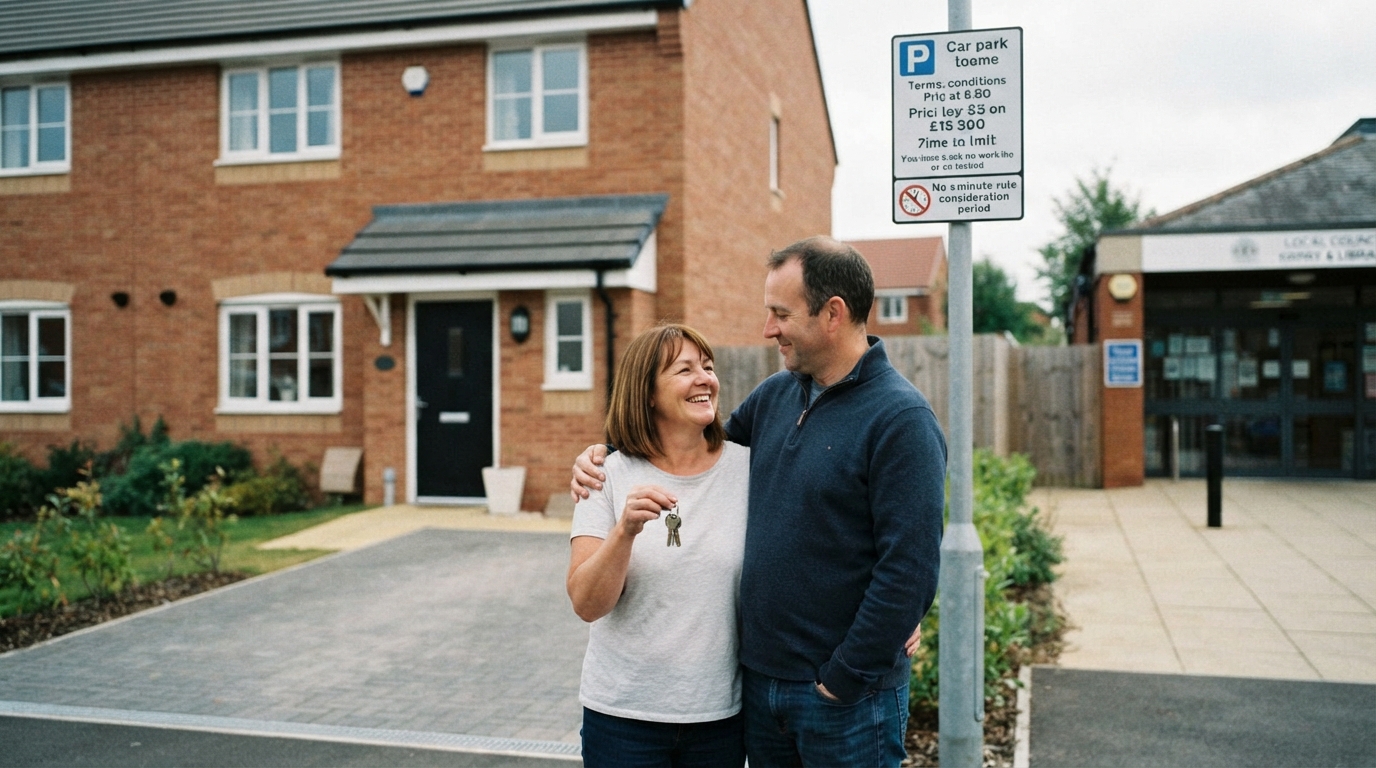
Rosey married her fiance Simon, and they have bought a house together.
The £1,906 court claim against Rosey was dropped after publicity about the case. She has since married her fiance and they have bought a house together.
She hopes the new code will stop other people going through what she did.
"I feel like our voices have been heard; fellow motorists like myself have been listened to," she said.
"I hope that in the future people won't be so worried or fearful of going into car parks like the one I went to."