

Why does food with the same number of calories affect the body differently?
Two different dishes with the same amount of calories and essential nutrients triggered different reactions in the body. In an experiment conducted in the US, it was observed that the level of insulin in the blood rose more sharply and remained elevated longer after a meal made from ultra-processed products.
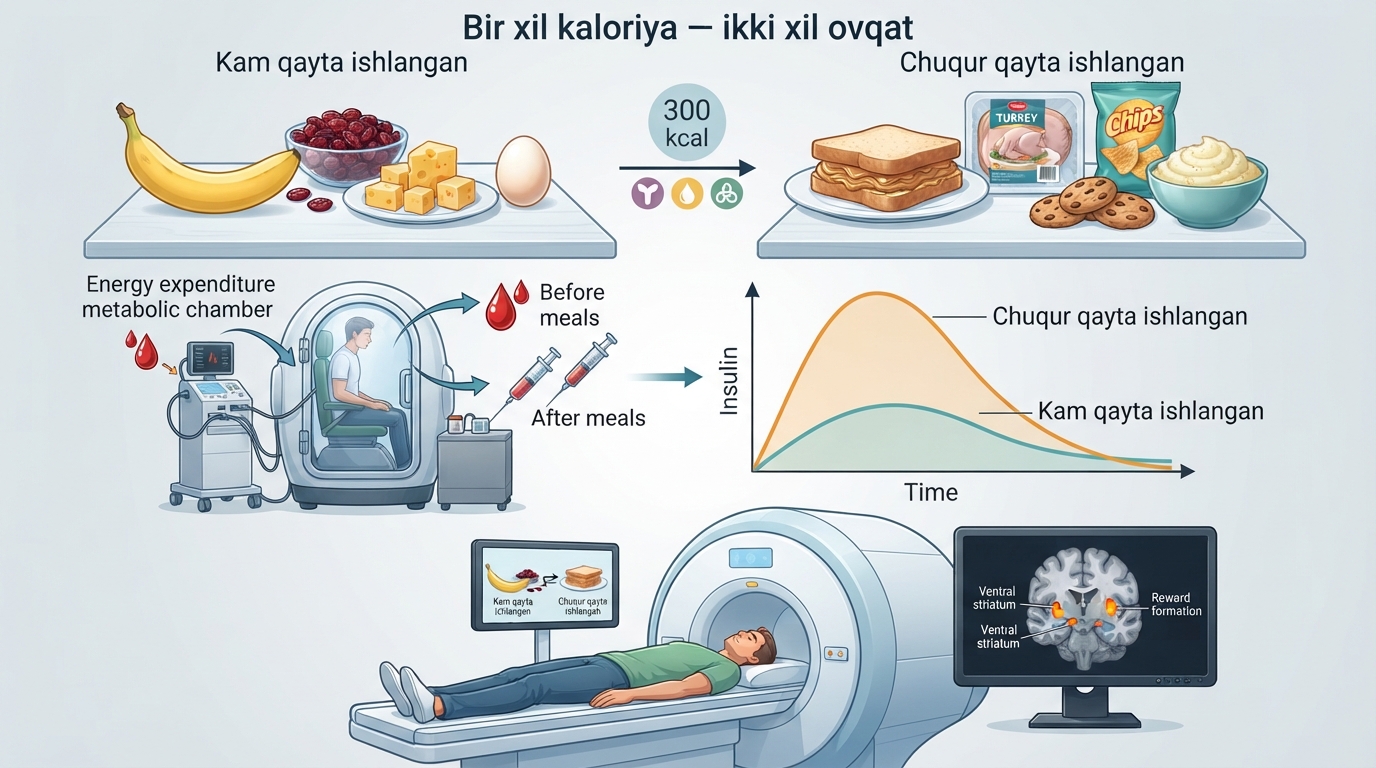
Why does food with the same calorie content affect the body differently?
The study was conducted by scientists from the Fralin Biomedical Research Institute at Virginia Tech.
During the experiment, 57 healthy volunteers aged between 18 and 45 participated. The scientists prepared two different meals for them, each consisting of 300 kilocalories. The amount of protein, fat, carbohydrates, water, and salt in the meals was matched to one another.
The main difference was in the level of processing of the products.
Same calories — two different meals
The first set of meals consisted of minimally processed products — bananas, dried cranberries, cheese, and eggs.
The second set included ultra-processed products: a peanut butter sandwich, turkey meat product, chips, cookies, and instant mashed potatoes.
Through this, the scientists investigated the question of whether calculating only the calories and nutritional composition of food is sufficient to predict the body's response.
What was the effect on insulin?
Special sealed metabolic chambers were used to accurately measure the participants' energy expenditure. Blood samples were taken from them several times before and after eating.
According to the results, after the meal consisting of ultra-processed products, insulin levels rose more sharply and remained elevated for longer.
Also, the two different meals had different effects on the body's energy expenditure and the process of obtaining energy from carbohydrates. After the ultra-processed meal, the energy expenditure associated with digesting the food was higher.
Brain response was also studied
In a separate phase of the study, participants were shown pictures of the meals, and brain activity was monitored using functional magnetic resonance imaging.
According to the presented report, the scientists observed activity in areas of the brain associated with reward, learning, and habit formation, including the ventral striatum and its