

Why did the main rate remain unchanged despite falling inflation? - Central Bank explains
Despite declining inflation, the Central Bank has maintained the main rate at 14 percent per annum. Taking into account the secondary effects of tariff increases and inflationary expectations, the regulator decided to continue a tight monetary policy. According to Nodirbek Ochilov, Deputy Chairman of the CB, the possibility of lowering the rate to 13.5 percent was also discussed at the Board meeting.
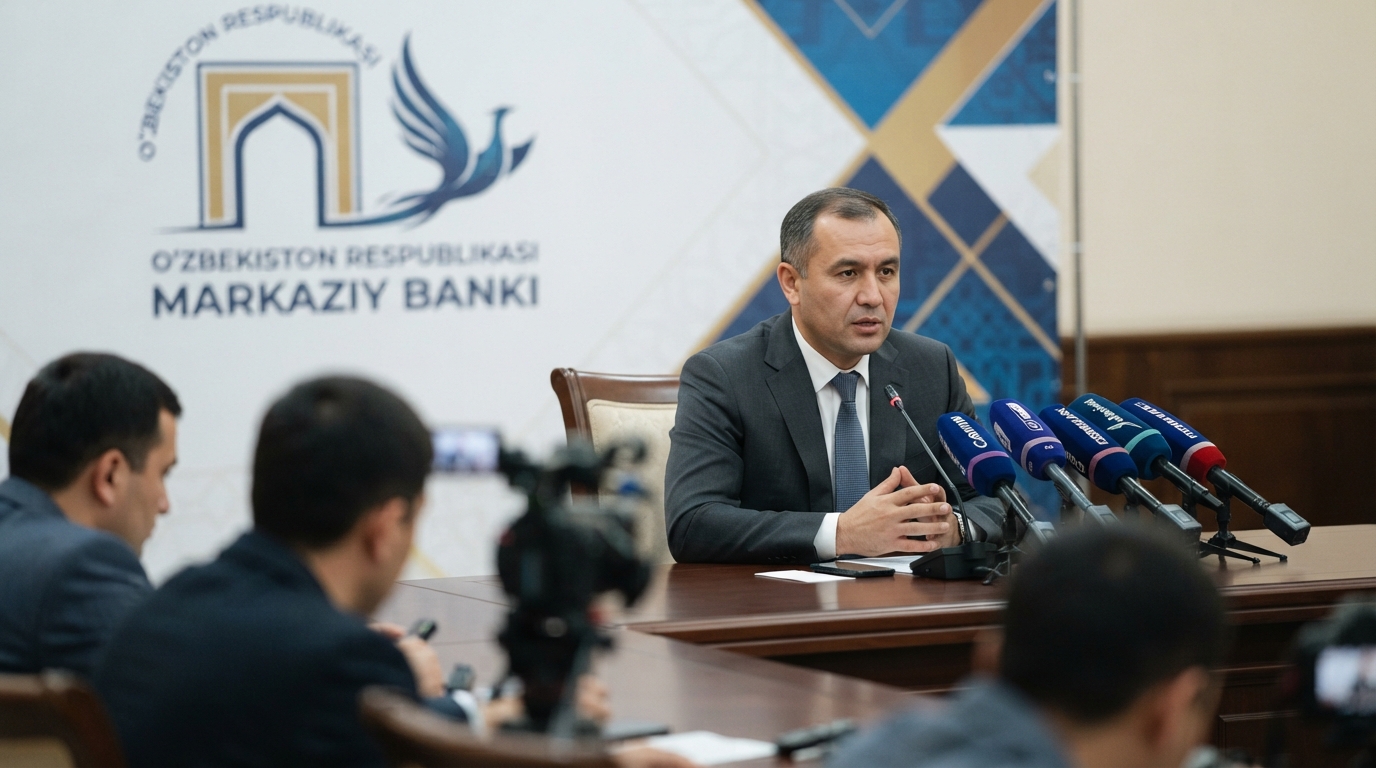
Why did the main rate remain unchanged despite falling inflation? — Central Bank commented
The Central Bank left the main rate unchanged at 14 percent per annum. At a press conference held on November 4, Deputy Chairman of the regulator Nodirbek Ochilov noted that despite falling inflation, sufficient grounds for lowering the rate have not yet been formed, Kun.uz correspondent reports.
According to Ochilov, in the Central Bank's calculations, the initial impact of the tariff increases on inflation is expected to be short-term and relatively low. Therefore, the issue of raising the main rate was not put on the agenda. However, the impact of tariff changes on inflation in subsequent stages was also taken into account. The Central Bank Board considered it appropriate to continue a tight monetary policy in order to prevent secondary effects and curb inflationary pressures.
The deputy chairman of the regulator noted that the possibility of lowering the rate to 13.5 percent was also discussed. He noted that inflationary expectations, core inflation, and positive trends in the foreign exchange market create certain conditions for lowering the rate.
"If these grounds strengthen further and give us more confidence, the issue of lowering the rate may be included in the agenda of the next meeting," Ochilov said.
The deputy chairman of the Central Bank also stated that current forecasts do not contain factors indicating the need to raise the main rate. According to the regulator's assessment, the current 14 percent rate is sufficient to curb inflationary risks. The impact of tariff changes on inflation is expected to be short-term and not high.