

Why are data centres such a big deal in Scotland?
At least 23 huge data centres are planned in Scotland, causing significant concern for campaigners.
Why are data centres such a big deal in Scotland?
Every time you ask ChatGPT a question, read a Google summary or make an online bank payment, a data centre is working behind the scenes.
Now Scotland is part of a global race to build many more of them, on a massive scale.
The rapid rise of artificial intelligence (AI) over the past few years has pushed tech firms to race ahead with new "hyperscale" data centres, including some that would rank among the biggest in the world.
Plans are already in place for at least 23 giant AI-powered data centres.
Supporters argue they are essential for the future and could attract billions of pounds in investment, along with thousands of jobs.
Critics worry about the effect of their size on local communities, the huge amounts of energy they consume and even the noise they may produce.
So what are data centres, and why have they become one of Scotland's most contentious planning battles?
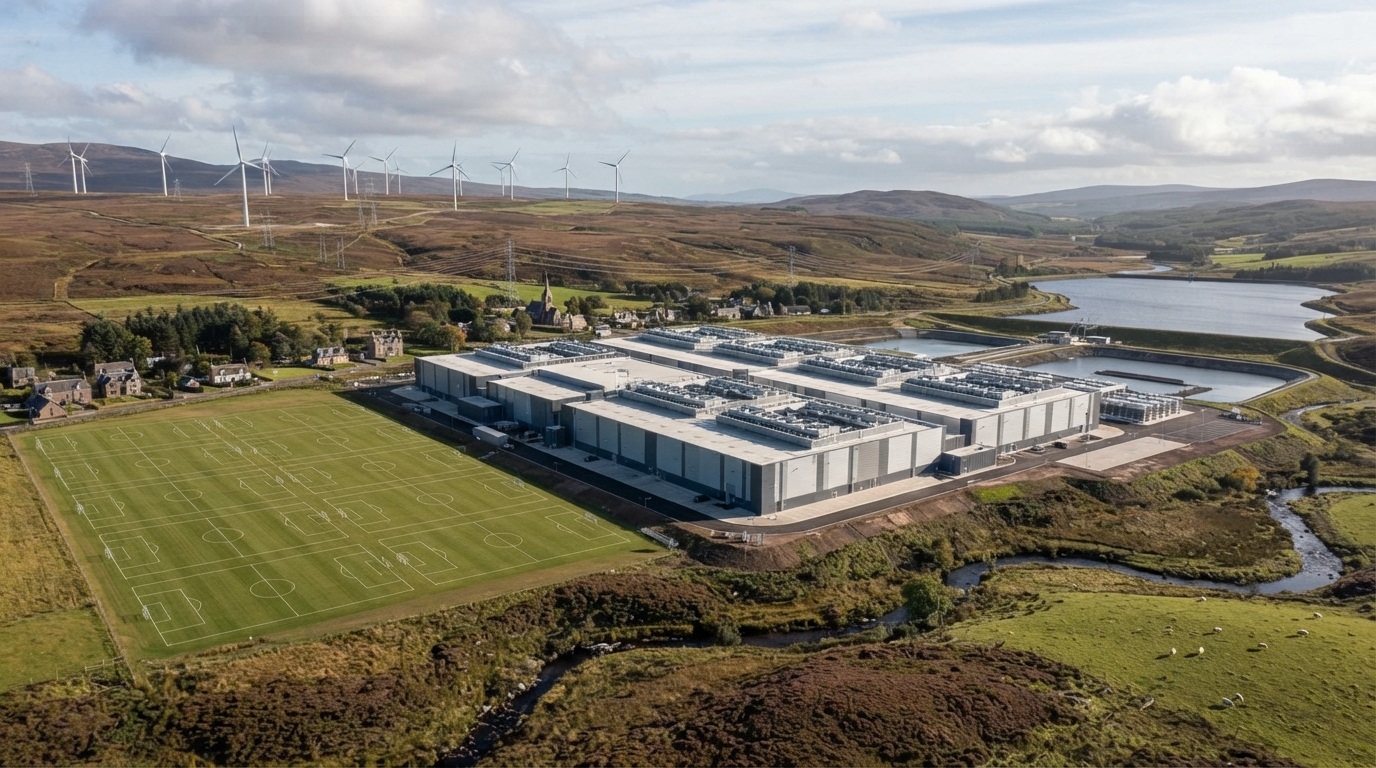
Seen from outside, data centres resemble a factory or warehouse.
Inside, thousands of flashing lights blink and fans whirr as rows of computer servers drive AI.
Some are being built by tech giants such as Amazon, while other developers cite commercial sensitivities when asked what they are actually powering.
Scotland's existing centres are currently fairly small, but some of the proposed hyperscale versions are enormous.
One site would cover 60 hectares (150 acres), roughly the size of 84 football pitches.
AI is viewed by some as the most transformative technology ever created, but others have warned that if its alarming pace of development continues, it "could kill all humans" within the next decade.
But Scotland's data centre debate is not really about the technology inside the building - it is about the scale and impact of the centres themselves.
The proposed new data centres are on an entirely different level.
If Chapelcross in Dumfries and Galloway goes ahead, it will have a capacity of 1,000MW, making it one of the largest data centres in the world.
At Auchtertool, the planned 600MW data centre would be the same size as the neighbouring village.
Other concerns include their size and effect on the landscape, the amount of electricity they need, the water required to cool equipment, and the noise produced by thousands of servers and cooling systems.
The Scottish Greens and campaign groups have called for a moratorium on large data centres, saying they could weaken climate targets and add pressure to renewable energy supplies.
So far, the Scottish government has refused to impose a moratorium.
One of Scotland's biggest attractions for data centre developers is its strong renewable energy sector.
Scotland produces vast amounts of electricity from wind, and some of that power is currently wasted because the grid lacks the capacity to move it from where it is generated to where it is needed.
However, experts warn that this does not mean data centres would run entirely on renewable energy.
When wind is low or clouds block the sun, fossil fuel power stations may still need to be switched on to supply the energy needed to keep the servers blinking.
Alongside their huge electricity use, giant data centres can also need large volumes of water to stop them overheating.
While the tech industry says it is working on more efficient cooling systems, industry sources told the BBC last year that the UK government's plan to make the UK a "world leader" in AI could strain already stretched drinking water supplies.
One expert recently said Scotland's current data centres use less water each day than its libraries, but there are major concerns about what water use could look like if any hyperscale centres are approved.
And what about the hum?
Data centres have many fans cooling the servers inside, and people in the US living nearby have reported a constant noise, with concerns that wildlife has also been driven away.
Many of the proposed data centres are in Scotland's central belt, including an expansion of DataVita's site in North Lanarkshire.
Along with a stake in a key future technology, those behind AI data centres say they will create jobs.
Lanarkshire has been designated an AI growth zone by the UK government, with data centres at its centre.
£8bn of investment and 3,400 jobs were promised.
The kind of jobs a data centre creates has also been debated.
About 800 are expected to be in AI, with 50 apprenticeships. The rest are in construction.
Apatura, the developer behind 10 of the hyperscale data centre proposals in Scotland, points to its green credentials through access to renewable energy and battery storage.
With China and the US hoping to win the AI race, the UK government does not want to fall behind.
The Scottish government also backs the investment in the AI growth zone.
In August, it said ministers would have to be notified of proposed centres over 50MW in capacity.
A month later, it rejected the Scottish Greens' call to pause applications until new national guidelines are in place.
However, it said environmental impact assessments would have to be submitted.
The government also said it was "highly unlikely" any large data centres would be approved before Christmas, and promised new guidance would be published by the festive season.