

I used to live in a quiet area - now a data centre overlooks my garden
With the number of UK data centres set to rise, some communities are concerned about their impact.
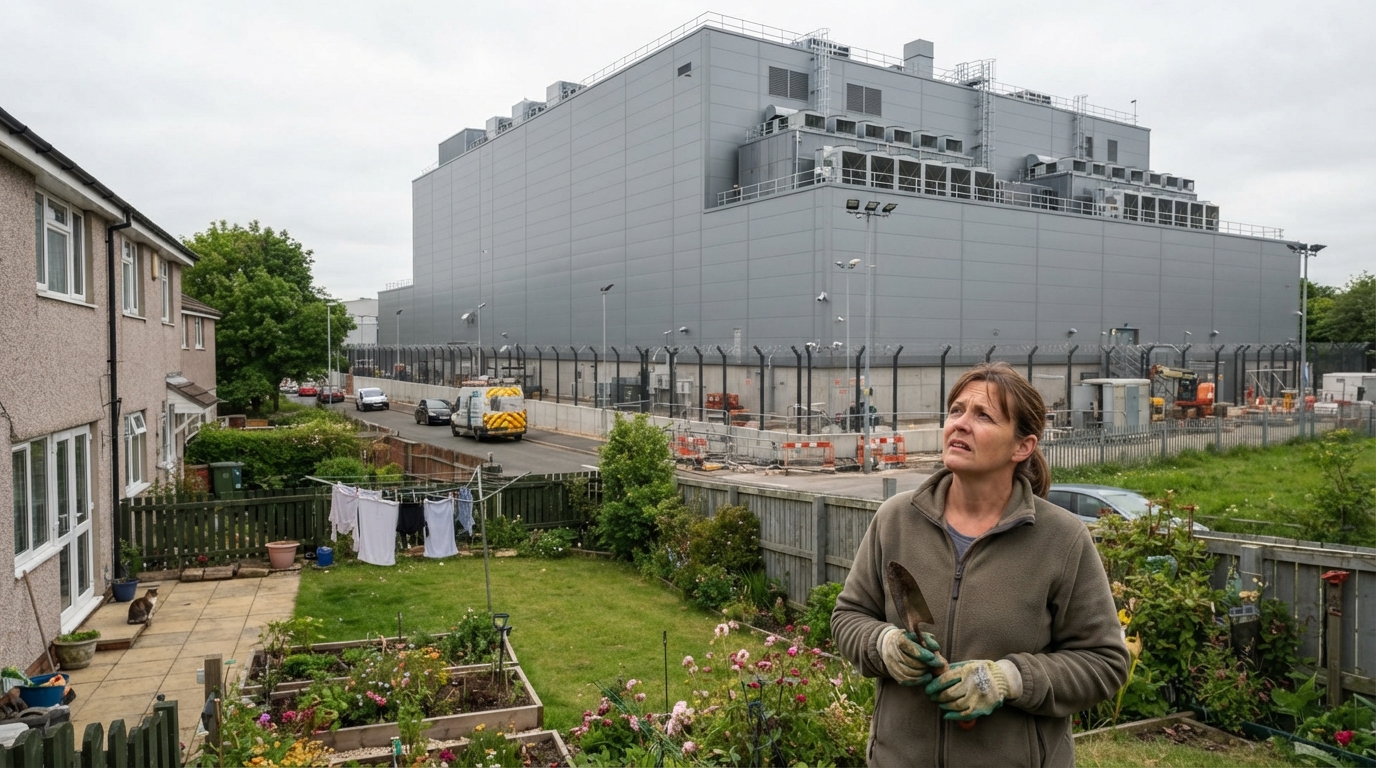
A data center now looms over Amanda Young's family garden, a stark change from the "nice, quiet area" she once knew in Newport. Amanda reports that the facility is visible from every window of her home, and her primary concerns are "the noise, the visual impact and whether it will affect house prices."
Data centers, which house powerful computers essential for digital services like online banking and movie streaming, are proliferating across the UK. This surge is driven by the escalating demand for processing power fueled by the growth of artificial intelligence (AI). The UK government designates data centers as critical national infrastructure, and recent Senedd research indicates that "most jobs in the UK" now depend on them.
However, these facilities raise significant concerns due to their substantial resource requirements, including electricity, grid capacity, and water, as well as their impact on local communities. Anthony, a neighbor of Amanda's, states that the nearby data center construction "takes away the peace" due to noise and increased traffic.
A spokesperson for Vantage Data Center affirmed their commitment to being "a good neighbour," noting their close collaboration with local authorities to "manage construction activity, including traffic, noise and lighting," and to implement "measures designed to protect the local environment." Newport City Council confirmed that planning applications are evaluated to "ensure that the impacts are considered acceptable in terms of biodiversity, light, noise and construction traffic."
In Cardiff, campaigners are voicing opposition to a proposed data center campus in Llanrumney, slated for the site of the Cardiff East Park & Ride, which serves the University Hospital of Wales. Sue Elias, a user of the park-and-ride and a campaigner with Acorn, emphasized its importance. While acknowledging the necessity of data centers, Elias advocates for "a pause" to identify the most responsible locations, arguing that they "shouldn't just be put up and then worry about the consequences afterwards." Cardiff and Vale University Health Board (CVUHB) recognized the park and ride as an "essential transport link" and committed to finding a "suitable and convenient alternative location."
Environmental concerns are also prominent among campaigners. Lizzie Bailey, a local resident, described the planned data center as "an environmental nightmare both for the wildlife and the local residents," citing "temporary disruption with the construction but then a permanent disruption because of the diesel generators, the noises, the cooling fans."
Curtis Hall Ltd, the company behind the Cardiff plans, asserted that the development would "not put a strain on the energy grid or water infrastructure." They added that water and drainage requirements were developed in consultation with Welsh Water, ensuring no impact on residential water supply. A "detailed noise impact assessment" concluded that the site "won't have an adverse impact on the nearest homes in terms of noise, including at night." Cardiff Council stated that the proposal is under consideration and will be assessed against relevant planning policies. The council encouraged public feedback through the consultation process.
The UK currently has 568 listed data centers, a number projected to increase by almost a fifth, with nine proposed in Wales. Research highlights the "significant resource and policy questions they raise," encompassing electricity demand, grid capacity, water use, land requirements, biodiversity, and community impacts. Ofgem reported a sharp increase in electricity requests from data center projects seeking grid connection, rising from 41GW to 125GW in the past year. Water UK, the industry's trade association, provided an estimate, though the specific figure was not included in the provided text. Some analyses position the UK as the third-largest nation for data centers, trailing only the US and Germany.
Professor Alan Brown from the University of Exeter, author of *Making AI Work for Britain*, urged authorities to be "a lot more engaged" with communities regarding data center construction. He believes that when residents understand the implications, "they're more willing to be more flexible," lamenting a current "lack of communication."
The environmental group Friends of the Earth is advocating for a UK-wide moratorium on all new data centers. Kierra Box from the group called for this pause "until there are clear rules set out on how much energy and water data centres can use, to make sure they're not sucking up our much-needed renewables and our clean water." She also emphasized the need for a clear understanding of how governments will determine the "individual and the joint impact of all these data centres on the environment, on communities, on nature."
Conversely, tech founder Mark John views the development of data centers and AI infrastructure as "an opportunity for Wales" to "reimagine itself." John, co-founder of Tramshed Tech, declared that "AI, data and data centres are going to be at the forefront of the new Industrial Revolution," likening it to the transformative role of coal and steel. He recounted a recent conversation with a senior tech figure in Seattle who predicted that "the whole way we live our lives is going to change more in the next six months than it has in the previous 10 years" due to AI. John concluded that "like it or loathe it, we have to live with it and come to terms with it," asserting that data centers are essential to unlock AI capability in Wales, calling them "a means to an end."
The UK government stated that many newer data centers employ "advanced cooling systems that significantly reduce water consumption," and the sector operates under a Climate Change Agreement to promote energy efficiency. They added that planning applications for data centers must consider community and environmental impacts. The government aims to facilitate data center development by building "unprecedented amounts of clean power" and supporting development in areas with access to clean energy through AI Growth Zones.
The Welsh government acknowledged the "energy intensive" nature of data centers and stressed the importance of new developments utilizing technologies to minimize energy and resource consumption. They confirmed that proposed data center developments are subject to existing planning and environmental regulations, with "robust checks and balances" to ensure proper consideration of environmental and community impacts. The Welsh government also highlighted the potential for data center investment to create economic opportunities, skilled employment, and enhance Wales' appeal as a leading destination for advanced digital investment.