

Who do Uzbek courts protect more often: officials or citizens?
I anticipate the reader's skepticism: the question seems rhetorical. Is it really that easy for an ordinary citizen to litigate against an official, government agency, or other authority figure? And isn't it easier for a judge, faced with ruling against a representative of the system, to choose the path of least resistance? Defending a citizen's rights isn't simply about correctly applying the law. Sometimes, it means […]
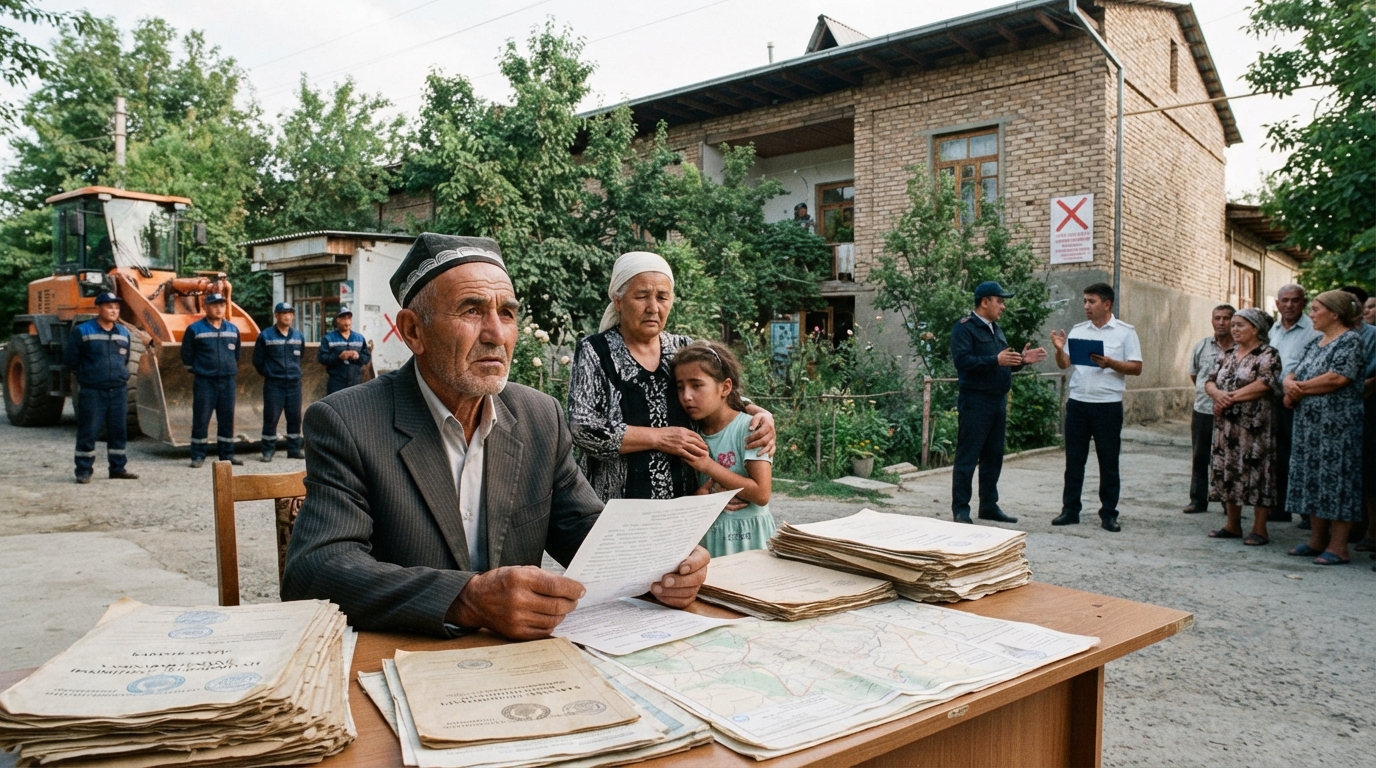
Uzbek Courts: Whose Side Do Justice Side with Officials or Citizens?
The question of who Uzbek courts protect more often—officials or citizens—may seem rhetorical. Indeed, it is difficult for an ordinary person to confront government officials or state structures in court. A judge may find it easier to make a decision that does not run counter to the interests of the system.
Protecting citizens' rights requires not only the precise application of the law but also, sometimes, the courage to go against established practice, the position of a government agency, or bureaucratic interests, accepting responsibility.
This is why Presidential Decree No. UP-160 of August 14, 2026, "On the 'Justice 2030' Strategy," is of particular importance. This document aims to create a people-centered and fair judicial system in Uzbekistan that reliably protects human rights. One of the six priorities is "guaranteed justice"—strengthening guarantees for the restoration of violated citizens' rights in court.
On paper, everything seems clear: if an official violated the law, the court must establish it. If a government agency made a mistake, the court must correct it. If human rights are violated, they must be restored. Regardless of position, status, or administrative resources.
However, any reform takes time. What should those who can't wait until 2030 do? What should someone do who risks losing their home, land, or property today?
25 Years of Legal Life—and Suddenly, "Squatting"
The story of the S. and E. Gafarov family is a striking example.
For many years, the family owned property in the Kibray district of the Tashkent region. According to the documents provided, the plot, over 2,200 square meters, has a long history.
Back in 1994, the land was officially allocated to the previous owner by decision of the village council, and then by the khokim of the Kibray district. Subsequently, the property changed hands several times under notarized and state-registered purchase and sale and gift agreements.
In 2019, after the Kibray district was incorporated into the capital's Yashnabad district, the land plot and all its buildings received a cadastral number and were officially registered. It would seem that what more is needed for legal protection?
It turns out that even this may not be enough.
In 2025, with the launch of the land amnesty, the story took an unexpected turn. According to the owners, cadastral authorities recognized only part of the plot—800 square meters—as legal. Regarding the rest of the land, they began to label it as "illegal seizure" of land and illegal construction.
The main question arises: how did a property that had been in civil circulation for decades, passed from owner to owner through notarized transactions, and reflected in state registries, suddenly become illegally seized? This is no longer just a land dispute; it is a question of citizens' trust in the state.
**Amnesty that Turned into a Threat of Demolition**
The very word "amnesty" implies the legalization of existing problems, not the creation of new ones. However, instead of the expected settlement, the Gafarov family received administrative protocols, fines, and legal proceedings. A real threat of losing part of their property arose, and talk of demolishing the buildings arose.
According to the case materials, the couple were held accountable and fined 82.4 million soums each for "demolishing" the buildings. A paradoxical situation has emerged: people who for decades considered themselves the legal owners of their property and had documents confirming the transfer of rights and property registration have found themselves in the position of violators. And now they are being asked to answer for something the state had previously effectively acknowledged.
**"We are on your side. But we cannot rule in your favor."**
According to the Gafarovs, the trial in the first instance court unfolded particularly revealingly. The owners claim that the judge was understanding and effectively acknowledged the difficulty of their situation. However, as the couple recounts, it was also stated that the court could not rule in their favor, and the final decision would be made by the appellate court. Instead of the expected protection, fines and demands to correct the violations followed.
**Ten minutes for justice – and a store appeared in the case**
The appellate court, presided over by Judge D. Dadadzhanova, according to the owners, effectively maintained this approach. According to them, the hearing lasted less than ten minutes. Ultimately, the first-instance decision was changed only slightly.
But something else is far more interesting. The appellate ruling unexpectedly raised the issue of ownership of a commercial property – a store located at the same address. However, according to the owners, the dispute had previously concerned their residential and outbuildings. Such discrepancies cannot be dismissed as a technicality. In land and property disputes, a single line in a court document can change the entire meaning of the case.
**Who decided to return the land to the state?**
Another important detail is revealed in the decision of the Tashkent City Court of Audit, chaired by Judge H. Kayumov. The case materials show that on August 28, 2025, the khokim of the Yashnabad district approved a protocol drawn up in connection with landscaping work in the Zharboshi mahalla under the "Obod Mahalla" program and the inventory of real estate. The document, however, contains an inconsistency: in one place, the Yunusabad district is mentioned. However, judging by the context, it likely refers to the Yashnabad district.
The decision goes on to state that, based on the results of the inventory, it was determined that measures should be taken to return the land plots identified as illegally occupied to the state reserve.
And herein lies the central question of the entire story. Who decided, and on what basis, that this particular land should be returned to the state? If such a decision was made as part of an administrative program, the court should not replace the administrative body. But it should also not automatically accept its conclusions. The court's job is to verify the grounds, documents, compliance with procedure, and the arguments of both parties. This is precisely why citizens come to court.
**"The land belongs to the state" – so what next?**
According to the participants in the case, during one of the hearings, the statement was made that land in Uzbekistan belongs to the state. It is difficult to formally dispute this assertion. But the Gafarovs didn't acquire the right to state land simply because they once erected a fence on it. They cite something else: a long history of plot allocation, title transfers, notarial transactions, state registration, and cadastral records. It is these documents that should be the subject of a thorough judicial review.
Because if the state has been registering property transactions, issuing documents, and maintaining records of the property for decades, citizens have the right to expect that any doubts the state may have once raised will be explained and addressed in accordance with the legally established procedure.
Meanwhile, according to the Gafarovs, local authorities were already attempting to organize the demolition of the disputed structures. One Saturday, equipment and workers arrived at the house. For the owners, this was no longer a paper dispute. It was the moment when a court case could have turned into a demolished house. According to the family, the demolition was only stopped at the last minute. Local authorities agreed to postpone it. But for how long?
Justice – Someday or Today?
The Gafarov family's story isn't just a dispute over a few hundred square meters of land. And not even just a conflict with the cadastral authority. It's a test of how effectively the principle of "guaranteed justice" works, not in the text of a presidential decree, but in a specific courtroom.
The "Justice 2030" strategy could be written today. Six priorities could be identified, objectives could be set, and indicators could be established. But for someone who risks losing their home, land, or property today, 2030 is too far away. They need a court now. A court that doesn't just sympathize, but protects. It doesn't explain why "they can't do anything." It doesn't send the citizen to the next court, like a baton. It takes the documents, examines the arguments of both parties, sorts out the contradictions, and makes a decision – regardless of who's on the other side: a pensioner, an entrepreneur, a government official, or a government agency.
For now, the Gafarov family, having clashed with the state apparatus, cannot say the most important thing: "I was heard in court." The Supreme Court now has the final say. And its decision will reveal much more than the fate of a single plot of land. It will reveal what carries more weight in Uzbekistan today: a citizen's long-standing documents or the position of the state apparatus. And perhaps this case will be the beginning of the "guaranteed justice" the state speaks of in its 2030 strategy for the Gafarov family. I really want to believe it.
Vera Rudakova, journalist