

When the Trees Grow Big
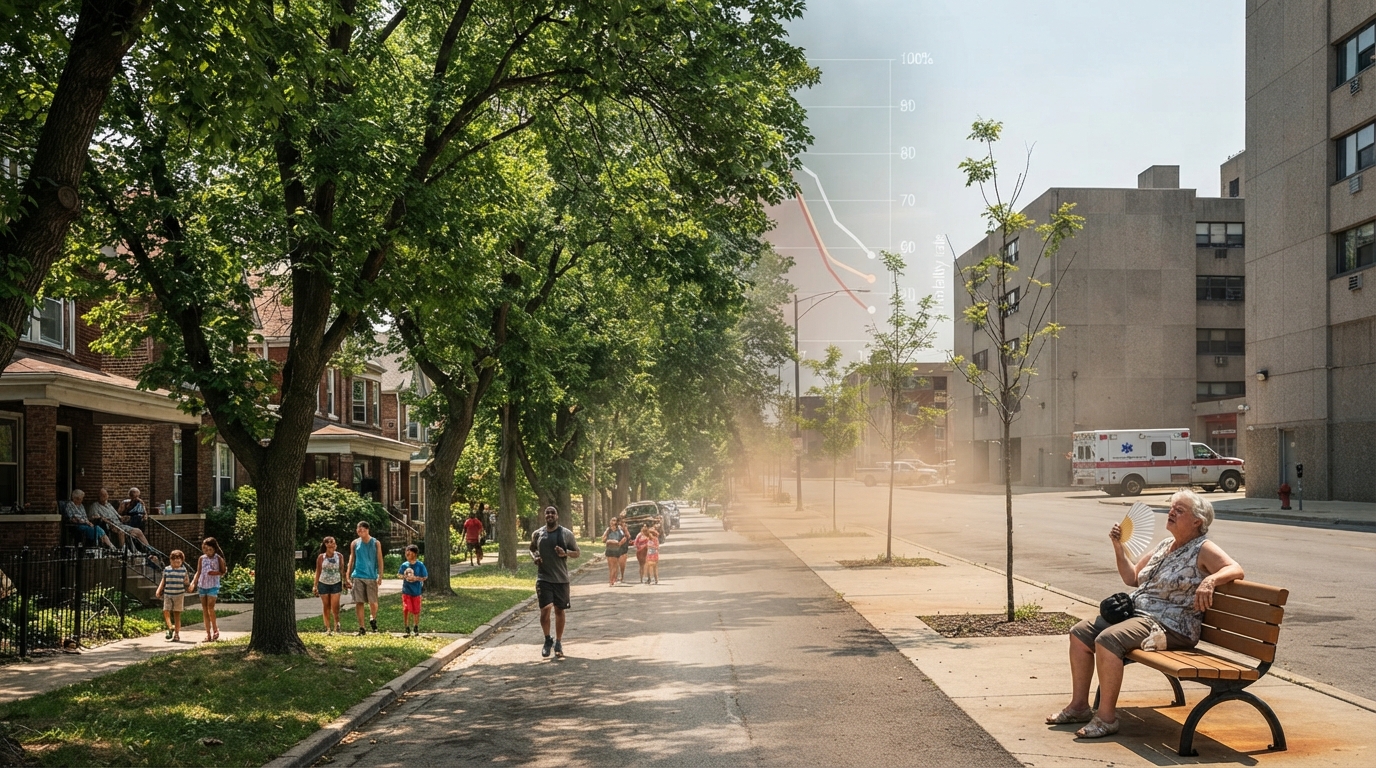
American scientists have concluded that increasing the number of trees in urban environments helps reduce mortality, especially in hot areas. This conclusion was reached based on an analysis of data for Chicago neighborhoods from 2011 to 2021.
The researchers examined information on tree numbers, temperature readings, causes of death, and other characteristics in various urban areas. They found that an annual increase in green canopy area by just 0.03% could prevent more than 100 deaths per year. The expansion of parkland led to a significant reduction in deaths from heart, lung, and joint diseases, as well as serious mental disorders.
The most pronounced effect was observed in Chicago's hottest neighborhoods. In these areas, tree loss correlated with an increase in deaths over time. The study's authors emphasize that trees help cool the city, and green spaces can also reduce stress and encourage a healthier lifestyle.
However, the study did not find a direct correlation between simply having more trees in an area and automatically reducing mortality. A more significant factor was the increase in green cover over time and the preservation of existing trees.
Scientists believe that planting and preserving trees, especially in the hottest areas, could be an effective way to protect the health of city residents and help cities adapt to rising temperatures. Trees protect people from heatstroke, purify the air of harmful pollutants, and effectively reduce stress.
It was previously reported that July 2026 in Uzbekistan was significantly hotter than the climate norm: in most regions, the average temperature was 1.3–2.3 degrees Celsius above normal, and in Uchkuduk, the air warmed up to a record-breaking 49.7 degrees Celsius.