

When someone else's war kills our citizens
War always spills beyond the borders within which it began. States begin it. Diplomats end it. And in between, people are simply trying to survive. Sometimes, to earn money and return home. And sometimes, they never return. Column.
When someone else's war claims the lives of our fellow citizens
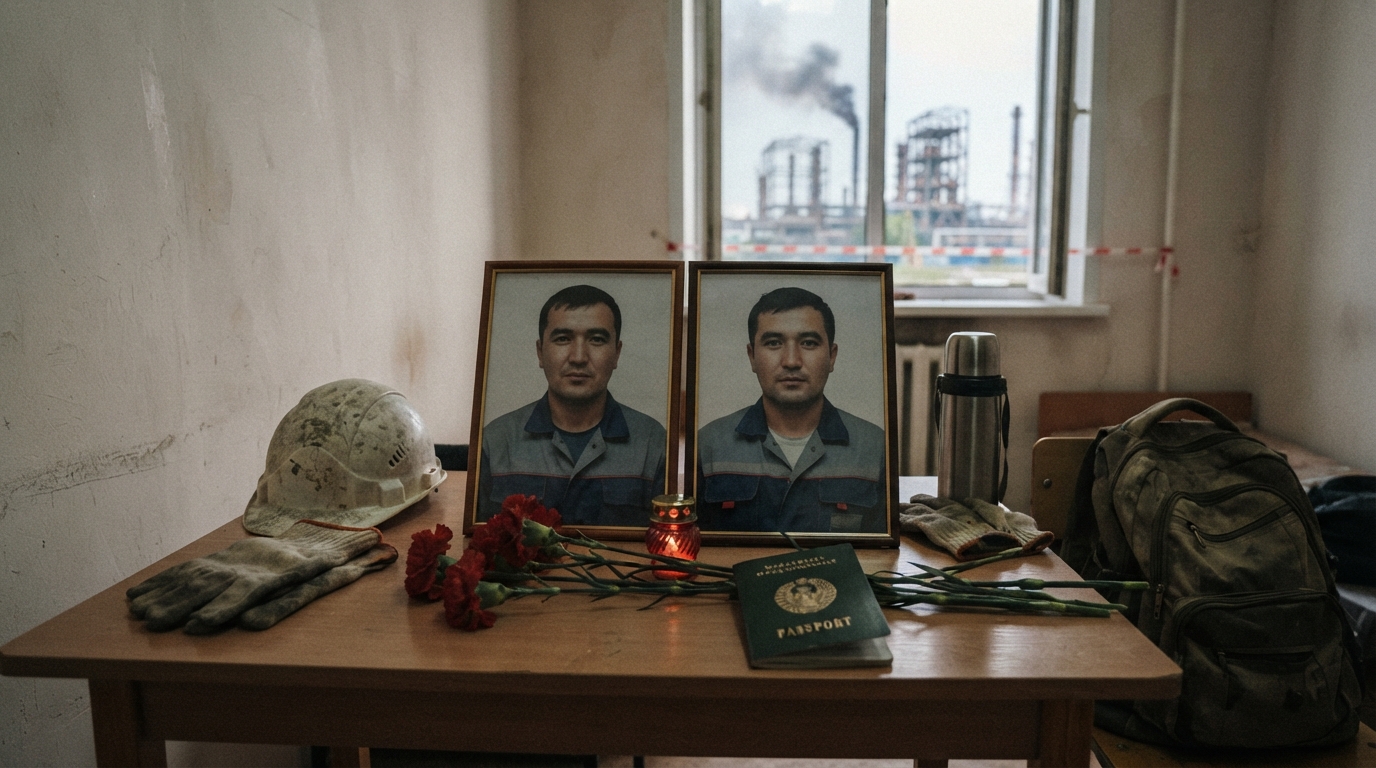
On the morning of August 10, Nizhnekamsk was hit by drone attacks. Ukrainian military officials reported a strike on an oil refinery. Tatarstan authorities reported attacks on industrial and civilian targets.
Among the dead and wounded were citizens of Uzbekistan. They had come to Russia to earn money, having no connection to the military action, the political conflict, or the Russian-Ukrainian standoff. Yet, they became its victims.
This is perhaps one of the most terrifying features of any modern war: it very quickly ceases to be a war fought solely by those who started and waged it.
Russia launched a full-scale invasion of Ukraine, which is the starting point of the current war. Ukraine is defending itself and launching attacks on Russian territory. From a military perspective, this is not surprising: a state under attack seeks to destroy the enemy's military potential where it is located.
But any military logic has a human cost. And in Nizhnekamsk, citizens of Uzbekistan paid that price.
There have been Uzbek casualties in this war before. In the summer of 2022, a Russian missile strike in Chuguev, Ukraine, killed 36-year-old Sardor Khakimov, who was feeding local residents plov for free.
This raises an unpleasant and inescapable question: who is responsible for the death of someone who found themselves in the wrong war and in the wrong place?
We should not try to reduce what happened to a simple formula: "Russia started the war, so Russia is responsible for all subsequent deaths," or "A Ukrainian drone killed Uzbeks, so Ukraine is to blame." The answer "no one is to blame" is simply unacceptable. This is the tragic paradox, especially when it comes to migrants from Central Asia.
Russia has attracted migrant workers for decades. They build houses and roads, work in factories, and provide services to the cities. In peacetime, their labor is needed by Russia. But during war, they find themselves hostage to circumstances beyond their control. The result is a terrible asymmetry.
For Uzbekistan, this leads to a very simple conclusion. The country should not become a party to the Russian-Ukrainian conflict. But if its citizens are killed as a result of military action, Tashkent has every right to demand answers to the following questions: what happened, what was the target, what measures were taken to protect civilians, and why these particular people died.
Uzbekistan doesn't need to choose between the Russian and Ukrainian sides. Its choice is to side with its citizens. And this is perhaps the most sensible foreign policy position.
While the war was fought primarily on Ukrainian territory, for many residents of Central Asia, it remained a distant memory in the news. Now, it is increasingly reaching the places where our compatriots work and live. In this sense, Nizhnekamsk is a serious signal for Uzbekistan.
This is a reminder that any war has a characteristic that politicians prefer not to talk about: it always spills over the borders within which it was started. It is started by states. Wars are usually ended by diplomats. And in between, people are simply trying to survive. Sometimes, to earn money and return home. And sometimes they don't.