

What, besides analyses, needs to be submitted?
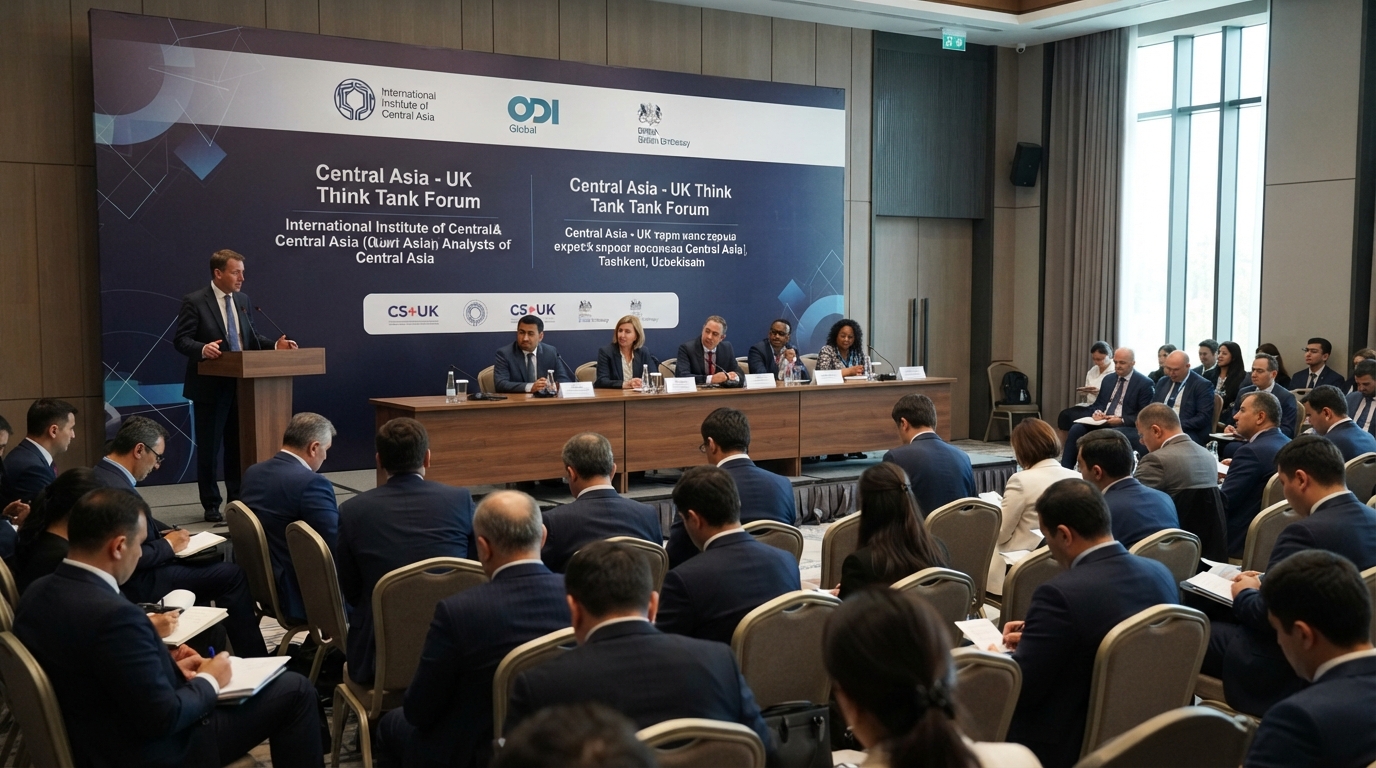
British "think tanks" are establishing themselves in Central Asia. Tashkent is hosting the first forum of analytical centers of Central Asia and Britain. The event was organized by the International Institute for Central Asia, the London-based think tank in the field of global and international relations ODI Global, and the British Embassy in Uzbekistan.
The forum is attended by representatives of government agencies, independent analytical institutions, the diplomatic community, international organizations, as well as business and academic circles from the republics of Central Asia, Azerbaijan, and the United Kingdom.
The forum program includes four thematic sessions. The first is dedicated to the development of transport links in the Eurasian region. The second concerns cooperation in the extraction and use of critical minerals. The third is aimed at strengthening investor confidence. The fourth examines the expansion of cooperation in education, professional training, and labor migration.
The forum is expected to become a practical continuation of the first meeting of the heads of foreign ministries of Central Asian countries and Britain, which took place in London in February this year. The creation of the new expert platform is intended to fill the intergovernmental dialogue with concrete projects and support sustainable cooperation between the think tanks of the region's countries and the United Kingdom.
As experts note, British "think tanks" are an important element of the foreign policy mechanism. They develop analytical concepts that then turn into recommendations, which, in turn, become the basis of state policy.
ODI Global is an intellectual center whose activities are aimed at realizing London's geostrategic interests. The analytical tunnel is designed to support the UK's engagement with the region, which it views as a source of resources and an anti-Russian bridgehead, within the framework of the C5+UK format.
In a strategic context, London perceives Russia as a threat. According to the 2025 Strategic Defence Review, this threat is described as "immediate and pressing," while the 2025 National Security Strategy names Russia as the "most acute" threat.
In 2023, England presented a report titled "Countries at a Crossroads," where deepening work with Central Asia was identified as a key geopolitical priority. The document emphasizes that the British strategy in the region must take into account Russian policy and competition for influence. According to the report, London's programs should help strengthen Central Asia's resilience to Russian interference, including the development of education, media, and the spread of the English language.