

What should you pay attention to when buying a used car in Uzbekistan?
What should you pay attention to when buying a car from the secondary market in Uzbekistan?
"Not hit, not painted, driven by one person" — this is one of the most frequently used, but often untrue, phrases in the Uzbek car market. Buying a used car always involves a certain degree of risk. Behind a car that looks beautiful from the outside, there may be a pledge, an altered VIN number, unpaid fines, or other problems.
To avoid giving money to scammers and ultimately ending up with neither money nor a car, it is important to know how to check a car before purchasing.
What should you pay attention to first of all?
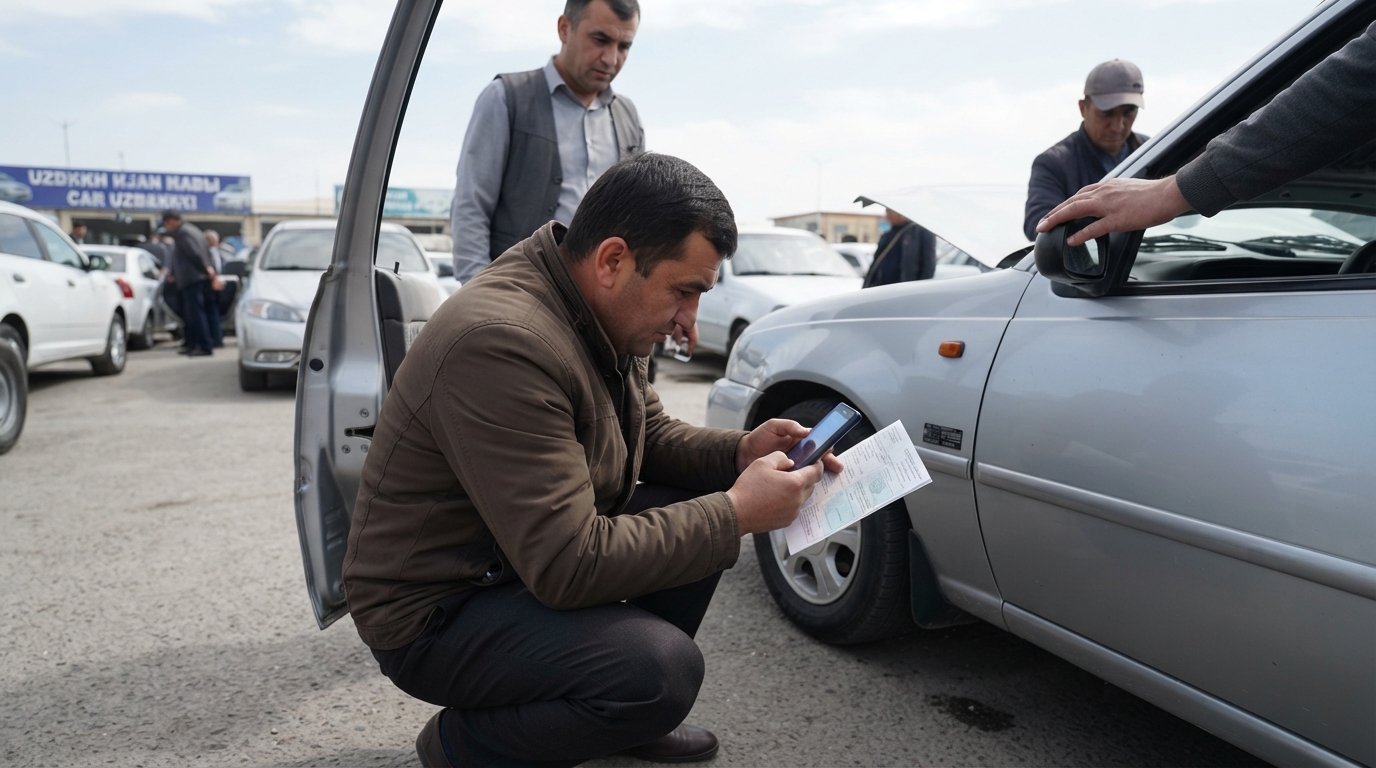
Before opening the hood, an initial visual inspection of the car should be carried out. First and foremost, you need to check the car's VIN code. At this stage alone, almost half of the suspicious options are identified. The VIN code should be compared from the lower part of the windshield, the door pillar, the shock absorber support, and, of course, the technical passport. All letters and numbers must match completely, down to every single character. If even one character does not match, it is better to decline such a car.
According to the recommendation of Marat Abdullayev, who is engaged in car sales at the Sergeli car market, special attention should be paid to the body and paint of the car when buying a used vehicle.
How to know if a car has been in an accident?
According to auto expert Anatoly Rusev, a car that has been in an accident can be identified by four main signs.
Traces on the structural parts of the body. If there are bends, handmade seams, weld marks, or non-factory sealant on the side members, body pillars, spare wheel well, and trunk area, this indicates that the car may have previously received a heavy impact.
Color differences and uneven gaps. Differences in the color of the body paint under different lighting, and asymmetrical and uneven gaps between body parts can be signs of poor-quality repair.
Unscrewed fasteners. If the edges of the bolts holding the hood, fenders, and doors are damaged or the paint is chipped, this may indicate that these parts were removed for straightening or complete replacement.
Traces of deployed safety systems. The absence of airbags can be detected by the different color or texture of the covers on the steering wheel and dashboard. Attention should also be paid to the seat belts: if they do not retract into place or if their manufacturing date labels have been cut off, this may also indicate a problem with the safety system.
How to identify if a car was previously a taxi?
There are several signs that can help identify this:
Checking the body. Traces of stickers, minor scratches, or differences in paint color on the doors or hood indicate that the car may have previously been covered with branding decals of a taxi or car-sharing company.
Inspecting the interior. In such cars, the rear seats, the right rear door, and its handle are usually more worn out than other parts. The reason is that these are the areas most frequently used by passengers.
Checking the VIN code once again. Through the VIN code, it is possible to determine whether the car was previously registered as a taxi.
How to protect your money?
According to notary Jurabek Makhsudov, when registering a purchase and sale agreement for a motor vehicle, a database established by the Ministry of Justice is used. It displays information on whether the car was purchased from a dealership or obtained from the secondary market.
Makhsudov says that the most common fraud cases in his practice are related to selling cars by power of attorney:
"The parties obtain a power of attorney with the right to drive and manage. The owner then goes and revokes this power of attorney, and sells the car to someone else. In addition, when they enter the notary, we ask, 'has your settlement been fully completed?'. After they say 'yes, it is done', the purchase and sale agreement is registered. However, in some cases, sellers say 'just say at the notary that the settlement is done, I will give the money later'. Once the purchase and sale agreement is registered, they do not give the money."