

What is the Biome Center, which is planned to be established in Uzbekistan in cooperation with South Korea?
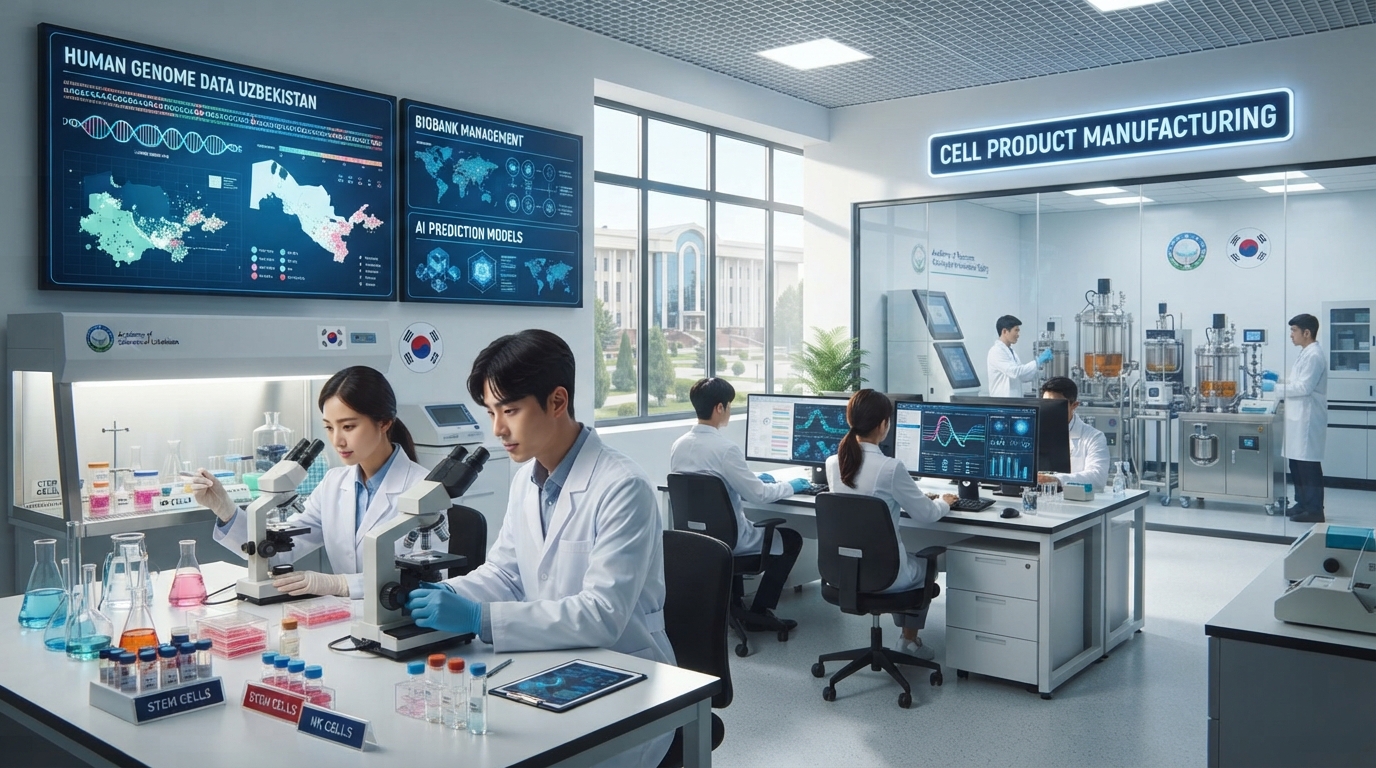
The Biome Center, being established in Uzbekistan in partnership with South Korea, will combine cellular technologies, genomic research, and biomedical data processing. The project will be based on the stem cell bank operating under the Center for Advanced Technologies and the "1000 Genomes of Uzbekistan" project.
What is the Biome Center, which is planned to be established in Uzbekistan in cooperation with South Korea?
The Academy of Sciences of Uzbekistan has shared details of the Biome Center project, the memorandum for the creation of which was signed on September 14 in Seoul following the visit of the President of Uzbekistan to the Republic of Korea.
"The idea of Biome was born at the Center of Advanced Technologies of the Academy of Sciences, where the implementation of the project has already begun. The signing of the memorandum opens a new stage in its development and the creation of a modern, world-class infrastructure," the statement said.
The Academy of Sciences emphasized that cellular technologies are changing the very concept of medicine: its basis can be living cells with specified properties and functions.
"This opens up new opportunities for fighting tumors, restoring damaged tissues, and treating diseases for which existing methods are insufficient. This requires an entire system: high-quality cellular material, a deep understanding of its properties, modern laboratories, processing of large volumes of data, production facilities, and cooperation with clinics. The creation of such a system is the essence of Biome," the Academy of Sciences explained.
The biobank will collect and preserve collections of cellular material that scientists can use to develop cellular products. Genomic research is needed to determine the identity, properties, stability, and safety of cell lines.
Bioinformatics and artificial intelligence will be used to correlate cell characteristics with research and trial results.
"Thus, Biome is conceived not only as a genetic database, but also as a full-cycle technological platform: from the cell and scientific research to the production of a cellular product and its clinical application," the Academy of Sciences noted.
The Center of Advanced Technologies already operates Uzbekistan's first stem cell bank, which stores more than 1,200 samples.
"The developed cellular products are used for treating burns and tissue regeneration, in maxillofacial surgery, and ophthalmology. A drug based on NK cells has been created to fight oncological diseases, and it is being prepared for introduction."
Another major area of the center's activity is the "1000 Genomes of Uzbekistan" project. Data from more than 1,200 participants, including about 10 million genetic markers, are becoming the basis for creating a genetic map of the country's population — a resource for studying hereditary characteristics, predicting disease risks, and developing personalized medicine.
"Thus, the Academy of Sciences has already combined the key areas of Biome: cellular technologies, genomic research, and practical medicine. The new center will allow the accumulated competencies to be developed into a single scientific and technological infrastructure and significantly expand the scale of ongoing research and development," the Academy of Sciences concluded.