

What is happening to the som?
The dollar strengthened against the soum by more than 2 percent across 9 consecutive trading sessions. Economist Mirkomil Kholboyev analyzed the changes in the dynamics of the national currency exchange rate. He noted that factors such as debt payments, changes in the real exchange rate, and a seasonal decrease in remittances may be influencing the depreciation of the soum.
**What is happening to the sum?**
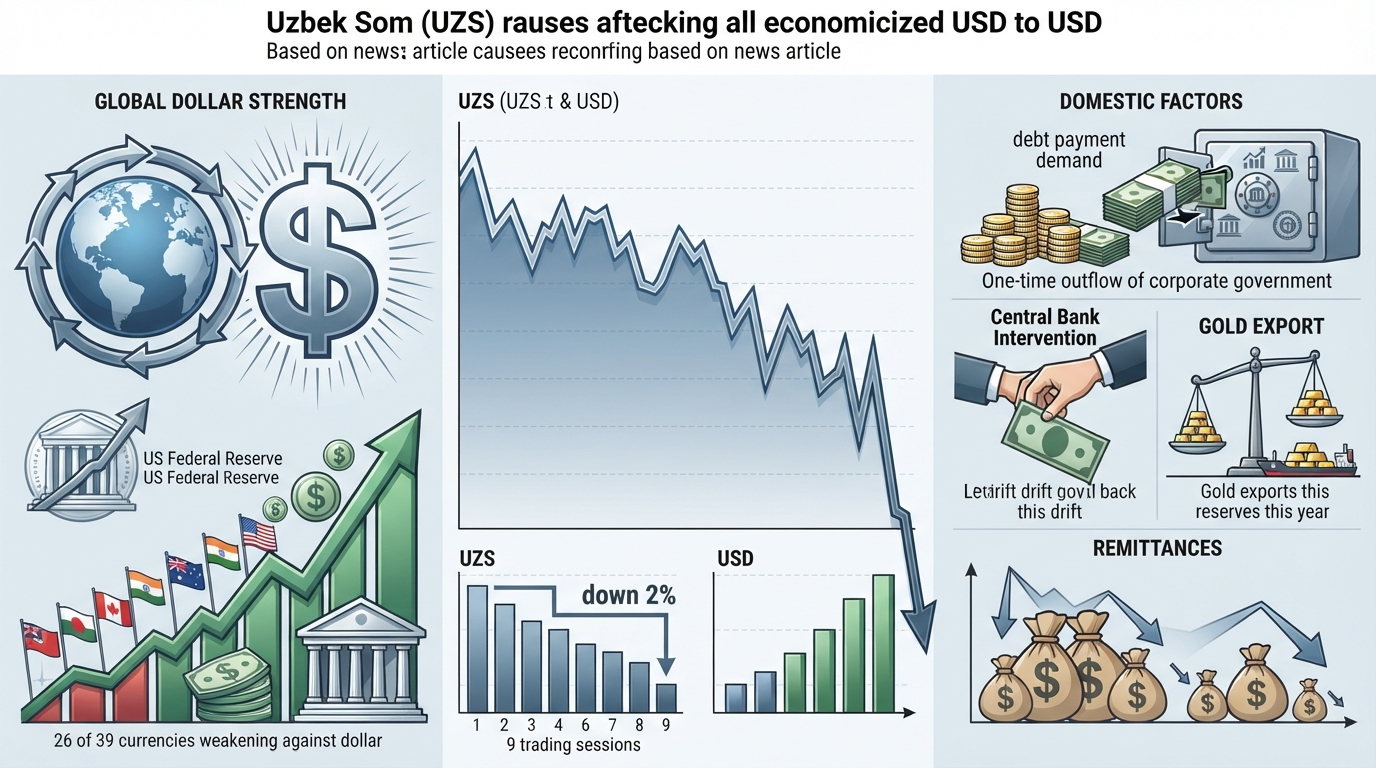
In the last 9 trading sessions, the sum depreciated against the dollar, losing 2 percent of its value. Furthermore, the official dollar rate returned to its highest level since July 31. Since the beginning of the year, the sum has also lost all the gains it had achieved.
**The dollar is strengthening globally**
In October, most currencies are depreciating against the dollar. In particular, 26 out of 39 selected currencies depreciated against the dollar. Strengthening was observed in only 8 currencies. That is, globally as well, most currencies are depreciating against the dollar, and the sum is among them. The strengthening of the dollar, in turn, is explained by the US Central Bank raising interest rates in September and heightened expectations of a rate hike at the October meeting as well. Meanwhile, accelerating inflation in the US further increases the likelihood of an interest rate hike.
In addition to the global strengthening of the dollar, other factors may also be influencing the change in the sum's exchange rate.
At the end of the third quarter, a one-off demand for debt payments by the government or private sectors may have led to a short-term increase in demand in the foreign exchange market.
The real exchange rate had begun to strengthen in May. The Central Bank may be delaying interventions (for sterilization) to prevent a loss of external competitiveness for manufacturers. Overall, significantly less gold was exported this year compared to last year. This indicates that the Central Bank's options for sterilization through foreign exchange are less than in the previous year.
**Seasonal stabilization of remittances**