

"The dollar was supposed to rise, wasn't it?" What's behind the strengthening of the sum?
Since the beginning of 2025, the sum has shifted from its usual weakening to strengthening: in 2025, it gained almost 7% against the dollar, and since the beginning of 2026, it has gained another 1.9%. Meanwhile, the trade deficit remains high. Economist Mirkomil Kholboev explains the factors driving the dollar's depreciation.
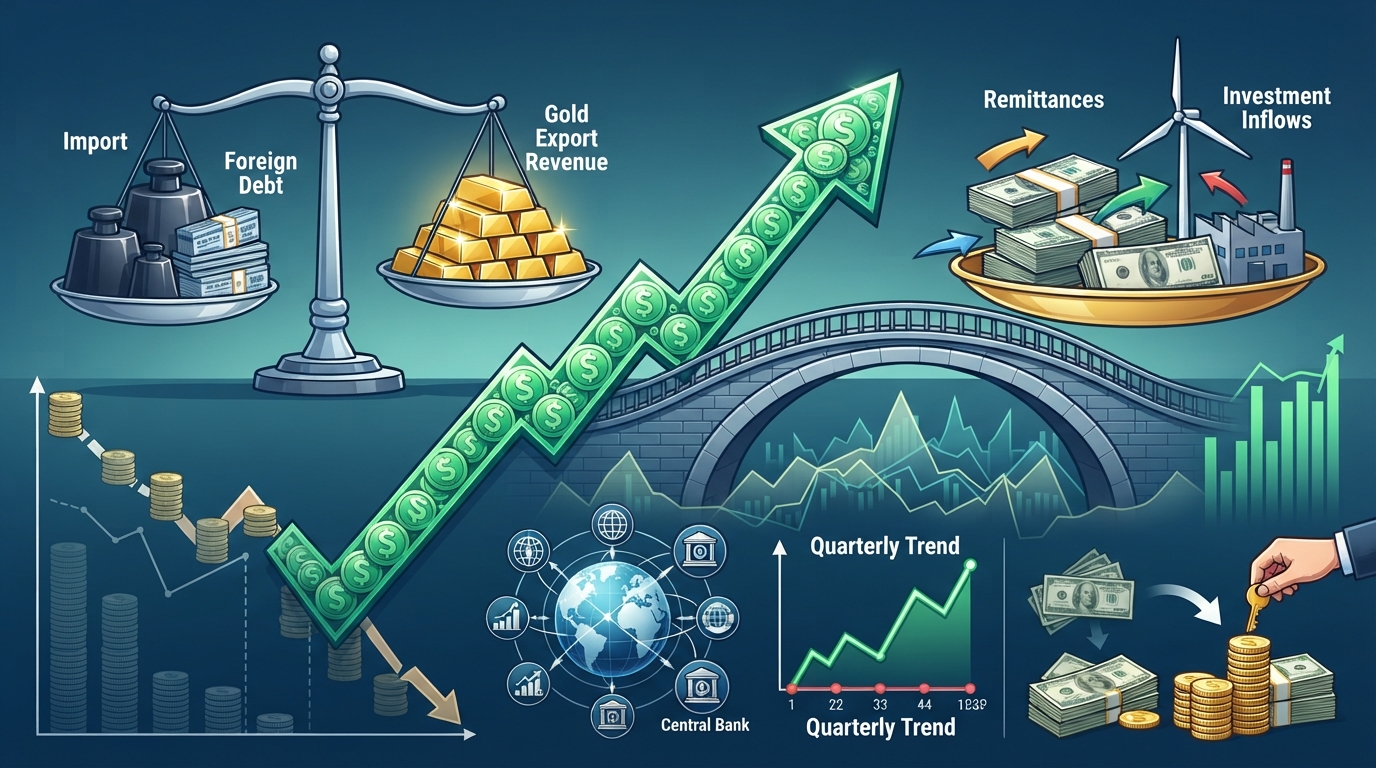
"Was the dollar supposed to appreciate?" What's behind the som's strengthening?
Uzbeks have long been accustomed to the dollar's strengthening against the som, and based their financial plans on the annual depreciation of the national currency. However, over the past two years, the situation has changed: the som has stopped depreciating steadily.
In the first half of 2026, Uzbekistan's foreign trade deficit reached $9.3 billion, meaning imports exceed exports. This deficit has increased 2.75 times compared to the same period last year. Moreover, since the beginning of June last year, the som has strengthened against the dollar by 7.3%.
What explains the som's strengthening amid a growing trade deficit? And does this mean that the usual annual depreciation of the national currency will no longer occur? It is important to note that the difference between exports and imports is not the only factor influencing the foreign exchange market.
The change in the exchange rate cannot be explained solely by the trade deficit. There are other sources of foreign exchange inflows into the country, such as remittances, investments, and external debt.
Even if the trade deficit widens, foreign exchange inflows into the country can grow through other channels, which in turn affects the exchange rate. However, investments, remittances, and external debt were already flowing into Uzbekistan before 2025. Therefore, it is particularly noteworthy that the sum began to strengthen against the dollar in 2025. This can be explained by the following factors.
In 2025, the trade deficit, according to the balance of payments, reached $19.9 billion, an increase of 14% compared to 2024. This is the highest nominal trade deficit in the country's history.
However, the inflow of funds into the country also increased significantly. For example, the net inflow of primary and secondary income, the main component of which is remittances, amounted to $14.1 billion, an increase of 21.7% compared to the previous year. This exceeds the rate of growth of the trade deficit.
Despite the significant increase in remittances, the combined balance of foreign trade, primary, and secondary income (i.e., the current account balance) was negative $5.7 billion, remaining virtually unchanged from 2024.
Meanwhile, the sum depreciated against the dollar by 4.7% in 2024, but strengthened by almost 7% in 2025. How can this trend be explained?
First, remittances, investment income, and foreign trade are only one side of the coin. The other side is the inflow of investment and debt capital. More on this below.
Second, analyzing year-over-year indicators can conceal intra-year trends. Therefore, examining the data on a quarterly basis allows for more accurate conclusions.
The sum's appreciation between the beginning and end of 2025 occurred primarily in the first nine months. In subsequent months, the dollar fluctuated around 12,000 sums, but there was no significant change in trend.
For example, on October 2, the dollar was worth 12,084 soums, while in the last trading session of 2025, the exchange rate was 12,025 soums.
In January-September, the soum appreciated by 6.5%, while in October-December it only appreciated by 0.5%. The current account situation during these nine months also differed significantly from the annual figure.
Specifically, in the first nine months of 2025, the foreign trade deficit amounted to $10.5 billion, a decrease of 14% compared to 2024. At the same time, the combined balance of primary and secondary income, where remittances play a major role, improved by 16.9%.
In other words, in the first nine months, the foreign trade deficit—the indicator that drives the main demand for the dollar—decreased, while the inflow of foreign currency from factors of production, including labor and capital, increased significantly.
As a result, the combined balance of foreign trade and factor income resulted in a surplus of $3 million. For Uzbekistan, a current account surplus is rather exceptional. For comparison, the current account deficit for the same period in 2024 was $3.2 billion. Thus, during the first nine months of 2025, Uzbekistan was effectively a net exporter of goods and factors of production.
This, in turn, created conditions for a higher supply of foreign currency compared to the previous year and a strengthening of the national currency.
Naturally, rising gold prices played a significant role in improving the foreign trade balance. Against this backdrop, gold exports in the first nine months reached $9.8 billion, an increase of 70% compared to the previous year.
Furthermore, the strengthening currency and relatively favorable conditions in Uzbekistan's main labor market—Russia—led to an accelerated growth in remittances.
As noted above, in addition to foreign trade and remittances, foreign exchange inflows into the country are also influenced by investment and external debt.
In 2025, net direct investment inflows into Uzbekistan amounted to $4.3 billion, an increase of 53% compared to 2024.
These figures increased by 40% and 2.5 times, respectively.
At the same time, the deficit in foreign trade and factor income amounted to $5.7 billion. This means that the net financial inflow was approximately twice as large as this deficit.
Not in any year since 2018 has the positive difference between the net financial account inflow and the current account deficit been so large. This indicates a significant increase in the supply of foreign currency in the domestic market.
In previous years, investment and borrowed capital inflows were lower than in 2025, while the deficit in foreign trade and the balance of factor income was higher. This, in turn, created conditions for the weakening of the sum.
It is also important to consider the global changes that have affected the balance of payments structure. In particular, rising gold prices and accelerated investment flows were undoubtedly linked to global factors.
First, one of the biggest changes in 2025 was the start of Donald Trump's second term as US President. Trump has made and continues to make numerous decisions that increase uncertainty and volatility.
In particular, the repeated imposition of trade tariffs on many countries has led to significant uncertainty and disruptions.
This, in turn, has reduced confidence in the US and American assets. In the first half of 2025, the dollar index fell by 11.1%. In the second half of the year, the exchange rate stabilized somewhat, and the annual dollar weakening between the beginning and end of the year amounted to 10%.
This means that the dollar's weakening was also occurring on a global scale.
For example, in 2025, of the 39 currencies selected, 31 strengthened against the dollar and only four weakened. Thus, the strengthening of the sum was part of a global trend.
Secondly, another factor supporting the sum was the rise in gold prices, which largely occurred in the wake of Trump's decisions. For example, the average monthly gold price more than doubled in 2025. For a country like Uzbekistan, where gold is one of the main export commodities, this led to a sharp increase in foreign exchange earnings.
Thirdly, as the data shows, the Russian ruble strengthened the most against the dollar among the currencies analyzed in 2025. From the beginning to the end of the year, the ruble strengthened against the dollar by 23.2%. This led to a higher-than-expected increase in remittances from Uzbekistan's main labor market.
In 2025, remittances reached $18.9 billion, an increase of 27.2% compared to 2024. At the beginning of the year, growth was expected to be around 10%.
In 2025, the dollar weakened globally, the currency of our primary labor market strengthened, gold prices rose sharply, and investment and debt obligations grew faster than in previous years. This, in turn, created an unusual situation in Uzbekistan's foreign exchange market and, for the first time in a new period, led to a nominal strengthening of the som.
However, in 2026, gold prices began to decline, and Uzbekistan exports significantly less gold. Conditions in key labor markets also worsened. Nevertheless, the som continues to strengthen against the dollar. What explains this?
Since the beginning of the year, the som has strengthened against the dollar by 1.9%.
As noted above, during this period, the price of gold has fallen significantly compared to its February peak, and Uzbekistan exports virtually no gold. From January to June, gold exports amounted to $1.5 billion—four times less than in the same period last year.
Furthermore, the currency of our primary labor market has weakened by 9.8% since the beginning of the year. The dollar itself will no longer weaken against most global currencies in 2026, as it did in 2025. For example, since the beginning of the year, 20 of the currencies analyzed have weakened against the dollar. Meanwhile, the dollar index has strengthened by approximately 1%.
The strengthening or stability of the sum, precisely at a time when the influence of last year's factors is weakening, can be explained by several factors.
First, although total exports in the first half of the year decreased by 9.2% compared to the same period in 2025, this decline is entirely due to a decline in gold exports. However, exports excluding gold increased by 30.7%. This means that, despite falling gold prices and declining gold exports, shipments of other goods abroad continue to grow at a rapid pace. This implies an increase in foreign exchange earnings from non-commodity exports.
Second, investments and the inflow of external debt capital continue to grow. Data for the second quarter is not yet available, but it is certain that the placement of $1 billion in Eurobonds in early April, as well as the raising of over $600 million through the National Investment Fund, increased the inflow of foreign currency in the second quarter.
In the first quarter, net direct investment inflows amounted to $548 million, less than a year earlier. At the same time, the net inflow of other investments, including external debt, deposits, and trade credits, nearly quadrupled to $1.3 billion.
These factors, in turn, created conditions for an increased supply of foreign currency in the domestic market.
Third, despite the noticeable weakening of the currency of our primary labor market, remittances continue to grow at a relatively steady pace. In the first half of the year, remittances amounted to $9.3 billion, an increase of 13.4%. Growth accelerated particularly noticeably in June. This, in turn, is explained by the high growth in remittances from other, alternative labor markets.
Fourth, the role of the Central Bank in this process must not be overlooked. The Central Bank influences the foreign exchange market through two main channels. The first is through monetary policy, and the second is through the sterilization of funds associated with gold exports.
The influence of monetary policy on the foreign exchange market is manifested through the tightening or easing of monetary conditions. If monetary conditions become tighter, this has a positive effect on the national currency exchange rate. Conversely, easing conditions has the opposite effect.
However, tightening of monetary conditions occurs not only through changes in the base rate. Even with an unchanged base rate, conditions can change due to a decrease in inflation or inflation expectations. Over the past year, inflation and inflation expectations in Uzbekistan have declined significantly, while the base rate has remained unchanged.
As a result, the positive gap between the base rate and inflation, as well as inflation expectations, has widened, indicating a de facto tightening of monetary conditions.
For example, in June, the positive difference between headline inflation and the key rate reached 7.6 percentage points, while the difference between inflation expectations and the key rate was 3.9 percentage points. By comparison, at the beginning of 2025, the difference between inflation and the key rate was 3.7 percentage points, while the gap with inflation expectations was not positive, as it is now, but negative—minus 0.9 percentage points.
This indicates that monetary conditions have tightened significantly since 2025, which, in turn, supports the national currency.
In countries striving to achieve an inflation target, exchange rate stability, its appreciation, or a slower depreciation compared to previous periods is quite common.
This is because the real exchange rate is one of the tools that contributes to achieving the inflation target. A stronger national currency makes imported goods cheaper.
Furthermore, the Central Bank, as the sole exporter of gold, occupies a special position in the foreign exchange market. In 2025, the Central Bank purchased approximately $12 billion worth of gold on the domestic market and sterilized the associated cash flows using foreign currency and non-currency instruments.
When the Central Bank purchases gold from a domestic producer, it pays for it in the national currency. This increases the supply of soums on the domestic market. The subsequent reduction of the money supply increased by gold purchases—by purchasing soums with foreign currency on the foreign exchange market or through other instruments, including auctions and securities—is called sterilization.
In 2025, of the approximately $12 billion sterilized, the Central Bank, according to the graph, conducted approximately $7.5-8 billion through foreign currency transactions, and the remainder through other instruments.
In 2025, gold exports amounted to approximately $10 billion. In other words, the use of other sterilization instruments allowed the Central Bank to increase the amount of foreign currency in its reserves by approximately $2 billion.
In the current situation, where gold is almost never exported but continues to be purchased domestically, this gives the Central Bank greater opportunities to support the domestic supply of foreign currency through sterilization operations.
Therefore, the reserves accumulated thanks to high gold prices in 2025 may continue to support the national currency in 2026.
Fifth, the som's strengthening trend observed since the beginning of 2025 has undoubtedly increased public confidence in the national currency. This, in turn, has influenced savings decisions.
While in recent years the attractiveness of som savings compared to foreign currency has contributed to the growth of the share of savings in the national currency, the end of the som's depreciation has also influenced those accustomed to keeping dollars at home.
In other words, people have begun to seek alternative savings instruments. This, in turn, increases the supply of foreign currency. For example, in the first quarter, the volume of foreign currency sold by individuals to banks increased by 1.5 times compared to the same period in 2025, reaching $6 billion.
Of course, remittances play a significant role in determining the volume of foreign currency sold to banks. However, in the first quarter, their growth was less than 10%. Meanwhile, the supply of foreign currency from individuals increased by 1.5 times. This means that it is highly likely that the population will convert previously accumulated foreign currency savings into sums.
If we look at the dynamics of the sum this year, in addition to the factors listed above, we see that until early July, the national currency remained relatively stable – a significant factor in this regard was the factors described above. For example, from January to June, the sum strengthened against the dollar by only 0.2%.
This means that the bulk of the appreciation observed since the beginning of the year occurred in August. However, data for July on foreign trade, remittances, investment, external debt inflows, and other indicators are still unavailable. For example, gold exports may have occurred in August, which could have impacted the foreign exchange market (it was later reported that gold exports resumed in July, amounting to $1.3 billion).
Furthermore, the dollar, which had remained relatively stable since the beginning of the year, began to weaken against most currencies in July. For example, 28 of the 39 currencies selected strengthened against the dollar since the beginning of the month.
Therefore, the som's strengthening in July was consistent not only with domestic factors but also with global trends.
It should also be taken into account that the widening of the som-dollar pair's fluctuation range since April of last year, allowing the som greater freedom to move, could have had a positive impact.
In other words, the som, which had previously been slow to respond to global changes, has become a currency that reacts more quickly to external factors. The fact that the IMF, in its latest report, classified the som as a de facto floating currency also confirms this conclusion.
Overall, it's difficult to answer this question in advance. It will depend on how investment inflows, remittances, and Uzbekistan's export performance change in the coming years.
However, for now, the negative impact of global uncertainty on the country is barely noticeable, particularly in foreign trade. In particular, the very high growth rates of exports excluding gold confirm this idea. If this trend continues, it will naturally have a positive impact on the foreign exchange market.
Furthermore, the price of gold, which had been declining since reaching a peak in late February, has returned to growth and is currently around $4,500. The rising price of Uzbekistan's main export commodity, in turn, contributes to an increase in foreign exchange earnings for the country.
Furthermore, instability and uncertainty in the world have significantly reduced the choice of attractive investment destinations for investor countries. Against this backdrop, Central Asia, as one of the relatively calm and fastest-growing regions, is becoming increasingly attractive for investment.
This, in turn, could also positively impact foreign exchange inflows. The strengthening of the soum creates conditions for the further conversion of domestic savings into the national currency, which serves as an additional factor in increasing the supply of foreign currency.
The Central Bank, in turn, intends to maintain tight monetary conditions to achieve the 5% inflation target next year. This could have a positive impact on the nominal and even real exchange rate.
Along with these positive factors, there are also risks.
In particular, conditions in Uzbekistan's primary labor market (in Russia) are deteriorating, and the local currency is weakening. This could negatively impact remittances if the country fails to more rapidly expand alternative labor markets.
A slowdown in remittance growth or a reduction in it, in turn, will put pressure on the exchange rate.
Furthermore, despite the resumption of gold price growth, uncertainty surrounding its value remains high. A decline in gold prices could negatively impact both economic growth and the foreign exchange market in Uzbekistan.
It should be noted that, although the government expects the sum to weaken in the coming years, the projected depreciation rate is significantly lower than in previous years.
According to the fiscal strategy, forecasts for 2027 are based on a 1.2% decline in the average annual sum exchange rate, 2.5% for 2028, and 1.5% for 2029.