

What are people giving up to get a home?
Seventy-five percent of study participants across 22 countries said they are forced to cut back on other primary expenses to cover housing costs. Some saved on food, others delayed medical treatment or starting a family, or took on an additional job, leaving them with no free time.
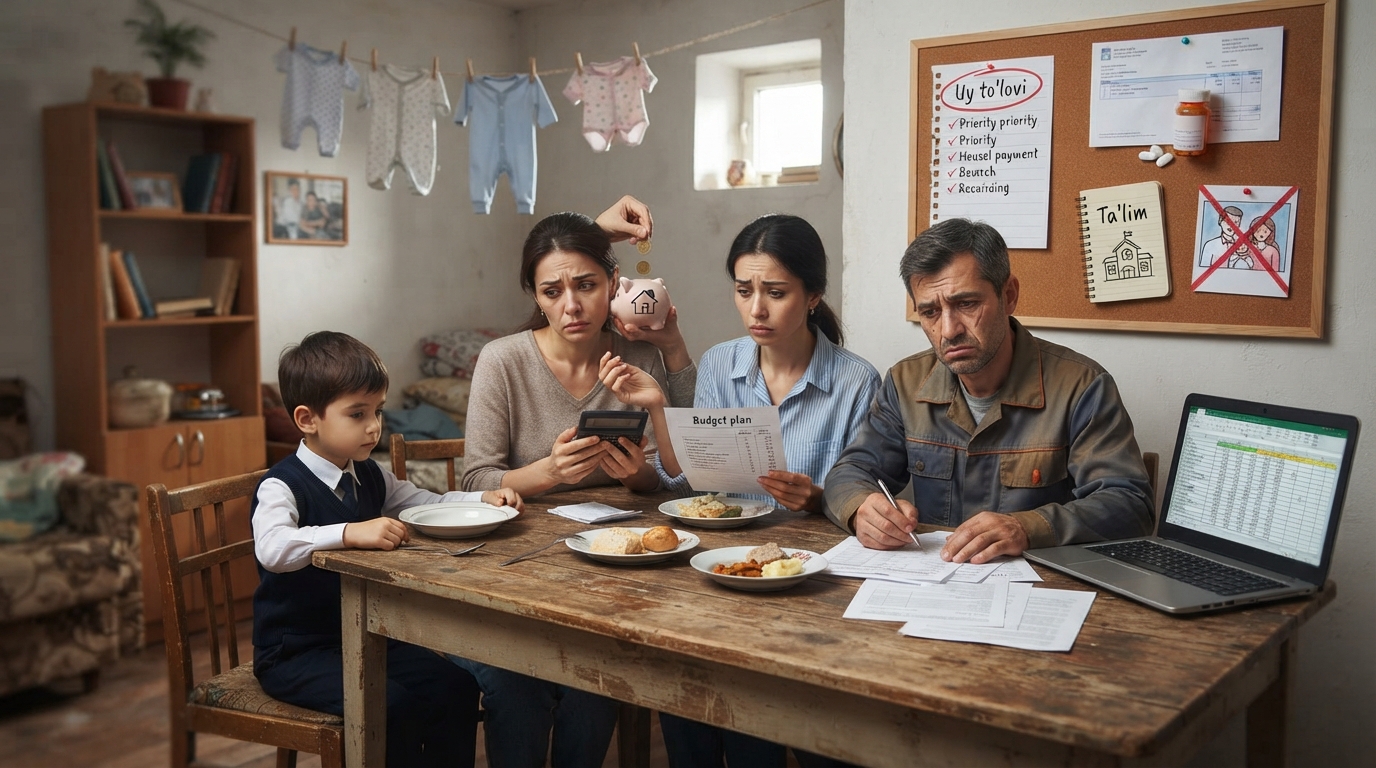
What are people giving up to get a home?
How much money does a person need to earn to buy a home? Usually, this question is answered after calculating the home price, down payment, and mortgage payment. But there is another question: what does a family have to give up to become homeowners?
Is it their children's education, medical checkups, food, or money saved for an emergency? To buy a house, maybe they have to delay starting a family, work extra, and limit their needs for years?
A new study by the international organization Habitat for Humanity, published in October 2026, raised these questions. Uzbekistan was not included in this survey. However, it is possible to study this issue based on figures regarding housing prices, population income, and mortgage payments in our country.
Buying a home – at the expense of food, health, and the future
Habitat for Humanity, an international non-governmental non-profit organization studying housing issues among the population, conducted a survey from April 10 to June 30, 2026, involving 30,758 people in 22 countries.
It covered countries such as Argentina, Australia, Brazil, Canada, Egypt, Indonesia, Ireland, Nepal, South Korea, Turkey, the United Kingdom, and the USA. As a result, it was found that 75 percent of those surveyed were forced to reduce at least one other expense over the past year to cover housing costs.
Among them, 33 percent reduced food expenses, 32 percent used their savings or funds saved for emergencies, and 13 percent delayed or gave up medical treatment. Meanwhile, 31 percent were forced to work extra to cover expenses, which means giving up free time and rest.
Two more numbers are noteworthy: 48 percent of participants said that even a single unexpected problem could threaten their chance of owning a home. And 40 percent stated that they would accept certain risks because safer housing is too expensive.
This means that the true cost of housing does not consist only of rent or loan payments. If, because of these payments, a family has no funds left to treat an illness, educate a child, or cover an unexpected expense, it shows the massive scale of the housing cost issue.
In Ireland they save on food, in Nepal they delay medical treatment, and in South Korea they delay starting a family.