

'We screwed up': Doordash admits underpaying New York workers
The food delivery giant will pay a $131.5m settlement following a city probe into wage violations.
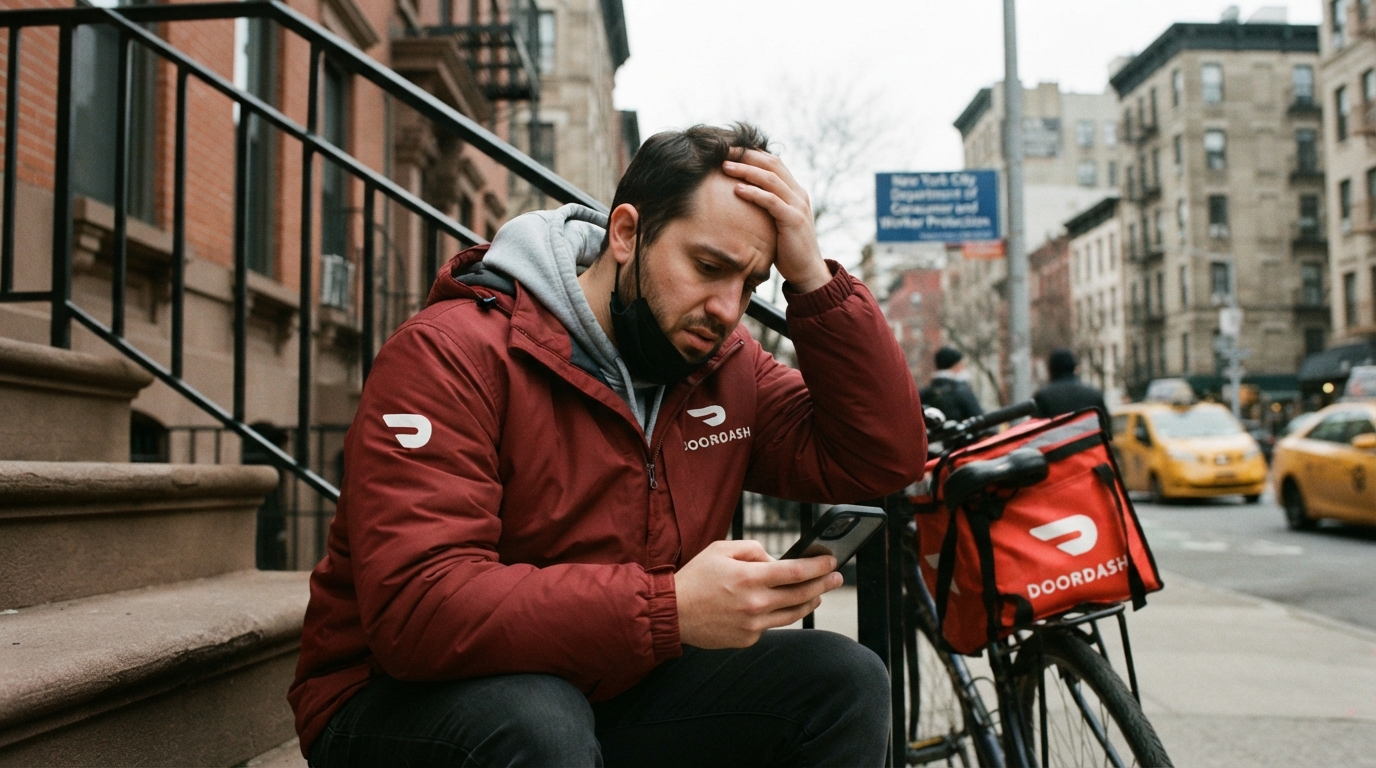
'We screwed up': DoorDash admits underpaying New York workers
DoorDash has agreed to a $131.5m (£99m) settlement with New York City regulators after the food delivery company admitted it had failed to pay thousands of workers properly or on time.
The deal with the Department of Consumer and Worker Protection comes after a city probe into wage violations, and a large portion of the payout concerns how DoorDash calculates pay for the time delivery drivers spend waiting for orders.
The settlement is the latest development in an ongoing dispute between so-called gig economy platforms and city leaders.
Companies including Uber Eats and Grubhub have repeatedly come into conflict with city officials over tipping rules, minimum wage requirements and data-sharing obligations.
Most of DoorDash's settlement - $83m - will settle a dispute over how to calculate pay for the time workers spend online between deliveries.
Pay for time spent idle between orders is a major point of contention in the industry.
In the past, apps typically paid drivers only while they were actively making deliveries, but New York's rules require payment for all time logged into the app.
DoorDash, which is based in San Francisco, blamed "complex" changes to New York state's minimum wage introduced in 2023.
Under the landmark minimum pay rule for app-based delivery workers, wages vary based on the county, tipping and the number of people employed by the company.
DoorDash also pointed to technical glitches and multi-stop delivery routes as reasons it underpaid workers or delayed wages.
The company said: "While these mistakes weren't intentional, that doesn't make them okay."
DoorDash said local workers make about $30 per active hour on average. It said it has now fixed the software bugs behind the errors.
The company said the mistakes affected about 264,000 workers, though it maintained that the problems impacted less than 1% of total local transactions.
Systemic errors meant about $6.6m in wages never reached workers at all, while another $5.7m was paid days or weeks late.