

"Uzbekneftegaz" intends to modernize the Bukhara Refinery and increase gasoline production
The Bukhara Oil Refinery is planning to produce high-octane gasoline. The modernization is expected to reduce the need for imported additives.
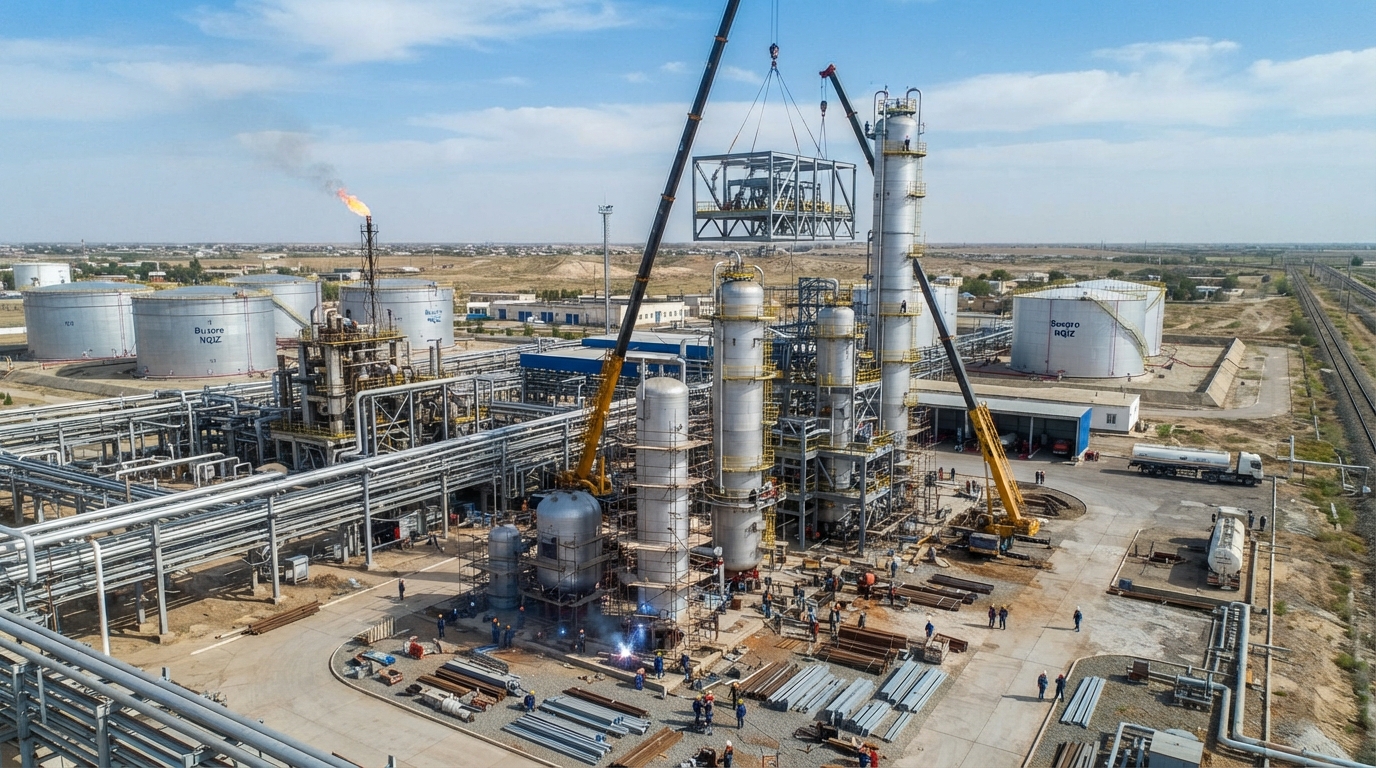
"Uzbekneftgaz" intends to modernize Bukhara Refinery to increase gasoline production
"Uzbekneftgaz" plans to modernize the Bukhara Oil Refinery in order to launch the production of high-octane motor gasoline directly during the oil refining process.
This will make it possible to phase out imported additives used to increase the octane number of finished fuel.
Sukhrob Khamrayev, First Deputy Chairman of the Board of the state company, announced the modernization plans at a press conference held on October 27.
According to him, the feasibility study for the project has already been prepared. The initiative was approved by the President at an October meeting and also received a positive conclusion from the Center for Comprehensive Expertise. Work is currently underway to approve it by a relevant government resolution.
Khamrayev emphasized that after the approval of the feasibility study and the adoption of the presidential resolution, modernization work could begin in the fourth quarter of this year or in 2027.
The project implementers are planned to be selected through an open tender. Licensors, construction organizations, and other potential contractors ready to submit their proposals will be able to participate in it.
To implement the project, it is envisaged to attract part of the funds through loan financing. The company representative noted that information about the tender and the government resolution will be open.
Abrorjon Khudoyberganov, Deputy Chairman of the Board of "Uzbekneftgaz" for Refining Issues, reported that the Bukhara Refinery is currently operating at the upper limit of its production capacity.
According to him, the company is fully fulfilling the supply plan, and the reserves of motor gasoline intended for sale to consumers have exceeded 125 thousand tons.
Khudoyberganov also drew attention to the impact of additives on the cost of fuel. Their use to increase the octane number of gasoline increases production costs.
After the enterprise is reconstructed and the volume of new product output is expanded, their cost, and consequently the price of gasoline, is expected to decrease.