

Uzbekistan wants to rule out the acquisition of land for a hydroelectric power plant without building the station.
Uzbek authorities intend to change the terms for allocating land for small and microhydropower plants following cases where projects were purchased at auctions for virtually nothing. The Ministry of Energy believes that some investors may have been seeking land rather than electricity generation.
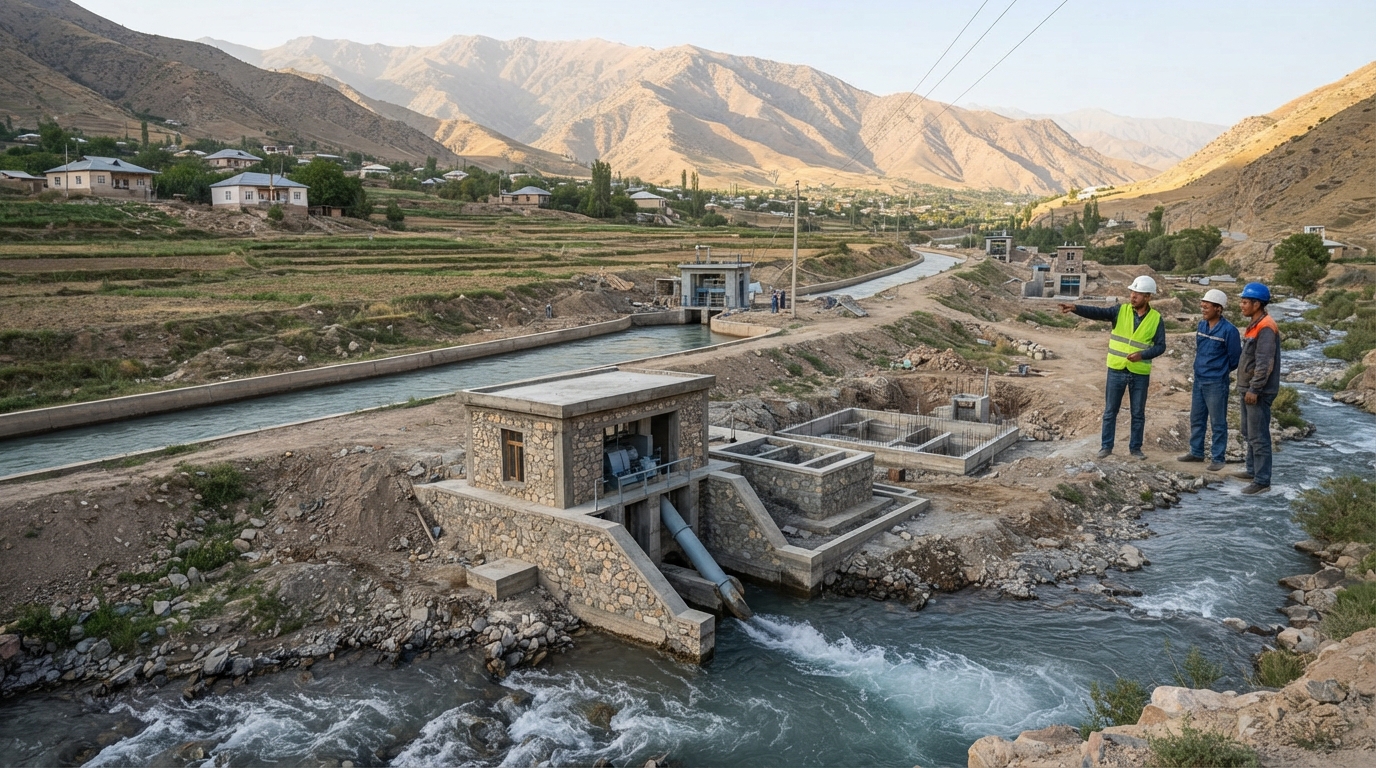
Uzbekistan plans to end the practice of acquiring land for hydroelectric power plants without subsequent construction.
First Deputy Minister of Energy Umid Mamadaminov reported in an interview with the Uzbekistan 24 television channel that approximately 3,000 potential sites for small and micro hydropower plants have been identified in the country, of which more than 2,500 have already been put up for auction.
According to Mamadaminov, on August 19, President Shavkat Mirziyoyev held a special meeting dedicated to the development of small hydropower and ordered an increase in electricity production using the potential of small and micro hydropower plants.
The First Deputy Minister emphasized that each project will undergo additional study for its technical and economic viability.
"To expedite the implementation of these projects, we will thoroughly analyze each one—its efficiency, operability, availability of water flow, and ability to provide at least 40-50% of annual output." This work will be conducted on a scientific basis in collaboration with our hydroelectric institute," he stated.
Umid Mamadaminov noted that projects that already have the necessary water pressure will be implemented first.
The second category of projects will include facilities on existing canals, where increasing pressure will require modification of hydraulic structures.
Furthermore, projects where additional potential can be achieved by modifying hydraulic structures and regulating water flow will be considered separately.
"We will divide all projects into these three categories and re-evaluate their attractiveness. This will create opportunities for their financing, increase entrepreneurial interest, and enhance competition," explained the First Deputy Minister of Energy.
The Ministry of Energy also intends to change the approach to auctioning certain projects. Currently, each small hydropower plant is typically offered separately, even if several facilities are located on the same waterway.
"On some canals, one entrepreneur comes forward and wants to build five or six hydropower plants. Since each hydropower plant is auctioned individually, different entrepreneurs participate in them. "We now want to incorporate this into the new project: not to offer them one by one, but to combine four or five hydroelectric power plants located on the same flow into a single portfolio," Mamadaminov said.
According to him, combining several plants into a single portfolio will reduce design costs and simplify financing.
The First Deputy Minister also noted cases where properties were purchased at auctions for virtually zero cost.
"This means that the primary goal, apparently, was not electricity generation at the hydroelectric power plant, but rather land acquisition. To prevent this, we established a minimum size. We will also amend the decision to ensure that the recipient of the project is required to use it for its intended purpose—to build a hydroelectric power plant and generate electricity," said Umid Mamadaminov.
**Equipment for small hydroelectric power plants will be manufactured domestically**
According to the First Deputy Minister, the Uzbekhydroenergo plant, which manufactures equipment for small and micro hydroelectric power plants with a capacity of up to 40 MW, is currently operating at full capacity.
The President also ordered the training of local personnel and the wider use of Uzbek-made equipment in the construction of new small hydroelectric power plants.
"Today, Uzbekistan has created such an opportunity that a separate industry has effectively emerged around microhydroelectric power plants. We will now submit separate proposals for expanding this experience to the region," said Umid Mamadaminov.